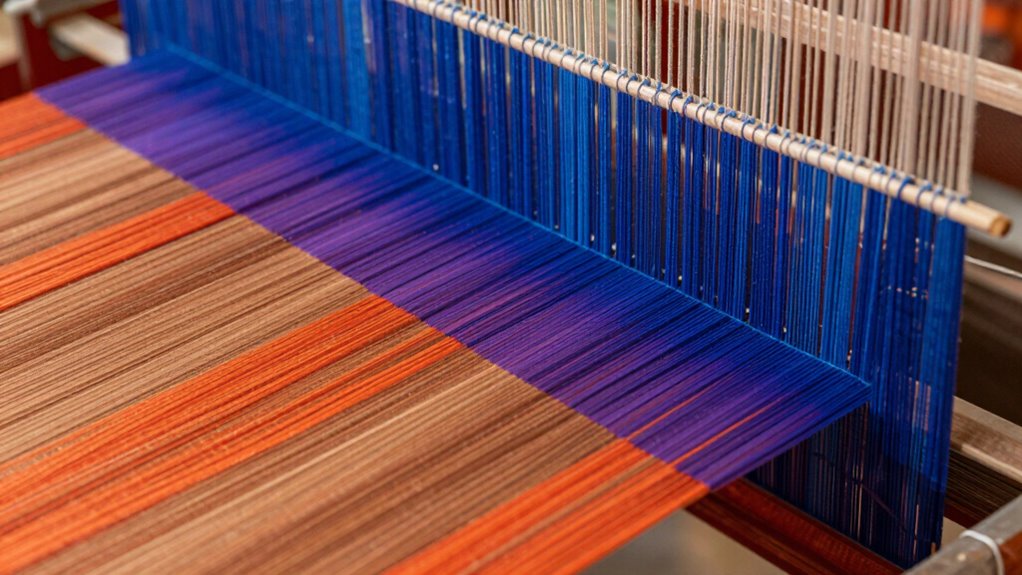
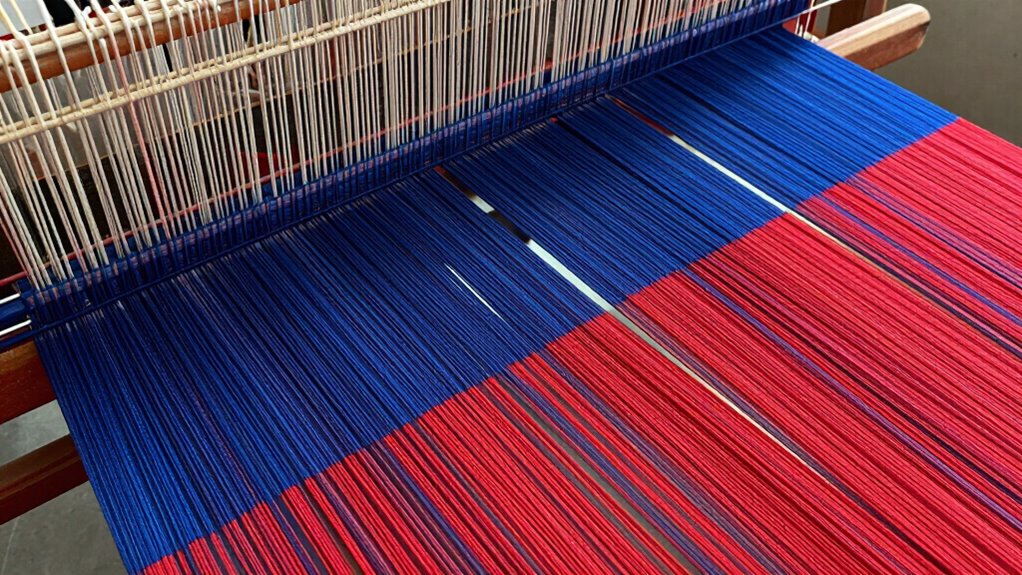
Weaving involves key terms like warp, which are the lengthwise threads stretched on a loom, and weft, the crosswise threads that interlace with the warp. The shed is the space created when warp threads are separated, allowing the weft to pass through smoothly. Understanding these basics, along with tools and techniques, helps you create quality textiles. Keep exploring, and you’ll discover more about how these elements come together to produce beautiful fabrics.

Get art and craft supplies delivered free with Prime
- Fast, free delivery on millions of items
- Prime Video, Amazon Music and more included
- Member-only deals all year
Key Takeaways
- Warp threads run lengthwise on the loom, providing the fabric’s structure.
- Weft threads are woven crosswise through the warp to create the fabric.
- The shed is the space created when warp threads are separated, allowing the weft to pass through.
- Different weave types (plain, twill, satin) determine fabric texture, strength, and appearance.
- Loom parts like heddles and treadles control warp movement and shed formation, essential for weaving.
Popular right now

De'Longhi Stilosa Compact Manual Espresso Machine with Milk Frother

Vitamix 5200 Professional-Grade Blender, 64 oz. Container, Black

Ninja Foodi DZ201 8-Quart DualZone 6-in-1 Air Fryer
As an affiliate, we earn on qualifying purchases.
What Is Weaving and Why Does It Matter?
Have you ever wondered how fabric gets its strength and texture? Weaving history reveals a craft that dates back thousands of years, shaping cultures and societies. It’s more than just making cloth; it’s an essential way to express identity, tradition, and artistry. Different civilizations developed unique weaving techniques, giving each piece cultural significance. For example, intricate patterns in indigenous textiles often symbolize stories or social status. Understanding weaving helps you appreciate the skill and history behind everyday fabrics. It also demonstrates how textile techniques have evolved over time, blending tradition with innovation. Connecting with these methods allows us to see the craftsmanship and cultural values embedded in our clothing and textiles. Moreover, the development of weaving tools and fiber processing methods has played a crucial role in advancing this craft. The introduction of new fiber processing techniques has further expanded the possibilities for textile design and durability. Additionally, the use of affordable and accessible tools has democratized weaving, enabling more people to participate in this art form. Weaving isn’t just a method to create textiles; it’s a crucial part of human history that continues to influence modern fashion and design.
What Are the Basic Parts of a Weaving Loom?
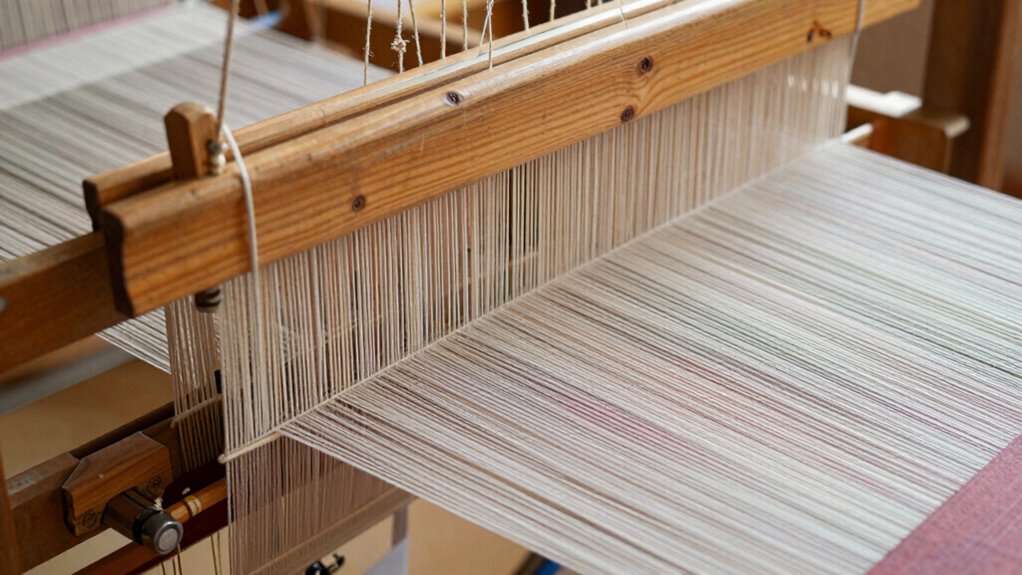
A weaving loom is built around its frame structure, which holds everything in place. You’ll also find moving parts and mechanisms that control the weaving process, making it efficient and precise. Understanding these basic parts helps you see how the loom works to create fabric. Additionally, mastering the comparative advantage principle in the design process can optimize the efficiency of material use and production speed. For example, using electric-powered components like electric dirt bikes in manufacturing equipment can improve performance and reduce manual effort.
Loom Frame Structure
The loom frame structure forms the foundation of any weaving loom, providing the necessary support for the entire weaving process. This sturdy frame holds all the other parts in place, guaranteeing stability as you weave. Its design varies depending on the type of loom, but generally includes side beams, a front and back apron, and a warp beam. The structure’s strength affects the tension of your warp threads, influencing the quality of your fabric. Historically, loom frames also played a role in displaying decorative motifs, reflecting cultural artistry and craftsmanship. Their design and craftsmanship hold historical significance, often showcasing regional techniques and traditions. A well-constructed loom frame ensures durability, precision, and the ability to produce both functional textiles and intricate decorative motifs. Additionally, understanding the Deaf Vibes techniques can help in designing accessible and inclusive weaving experiences for individuals with auditory processing challenges.
Moving Parts and Mechanisms
What are the basic parts that enable a weaving loom to function smoothly? The key components include the heddles, harnesses, and treadles, which control the shed and the movement of the warp threads. These moving parts work together to lift and lower specific warp fibers, creating space for the weft to pass through. The mechanisms are designed to accommodate different fiber properties, guaranteeing that delicate or bulky fibers are handled appropriately. Understanding these parts helps you appreciate how the loom’s mechanisms influence dyeing methods, as the tension and arrangement of fibers affect how dye adheres. Precise control of these moving parts ensures consistent weaving, whether you’re working with natural fibers or synthetic materials. Ultimately, these mechanisms form the backbone of a functional, efficient weaving process.
How Do Warp and Weft Interact in Weaving?
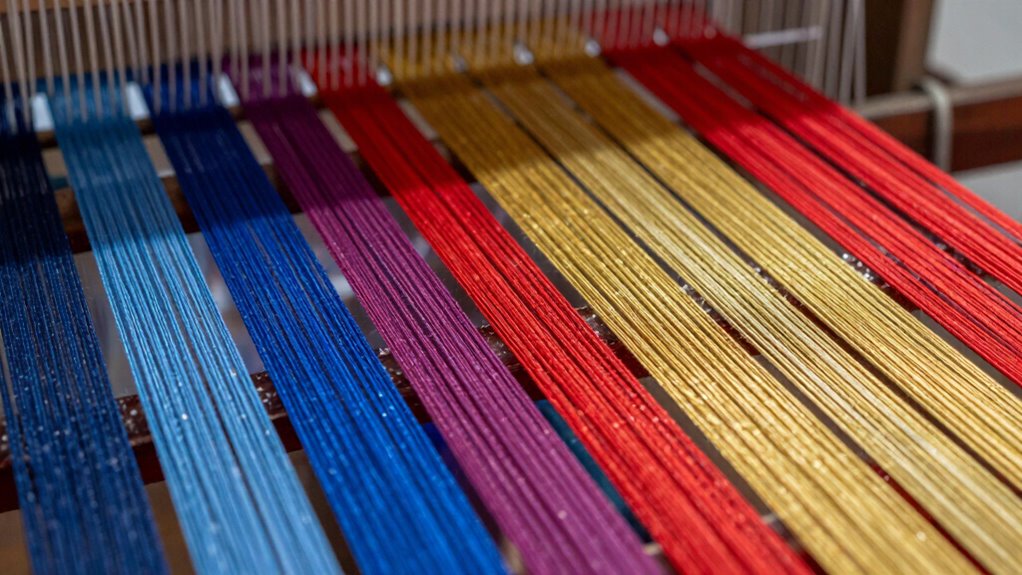
In weaving, warp and weft threads interact closely to create fabric. The warp threads, stretched lengthwise, provide structure, while the weft threads, woven crosswise, fill in the fabric. The type of fiber affects how these threads interact; for example, cotton and silk behave differently, influencing the fabric’s texture and strength. You can achieve stunning color effects by choosing specific fiber types or by using dyed threads for the weft or warp. When woven together, the fibers interlock, giving the fabric its stability and appearance. The tension of warp threads and the weaving technique determine how tightly the weft is packed. This interaction defines the fabric’s look, feel, and durability, making understanding their relationship essential for creating desired textile effects.
What Is a Shed, and How Does It Help in Weaving?
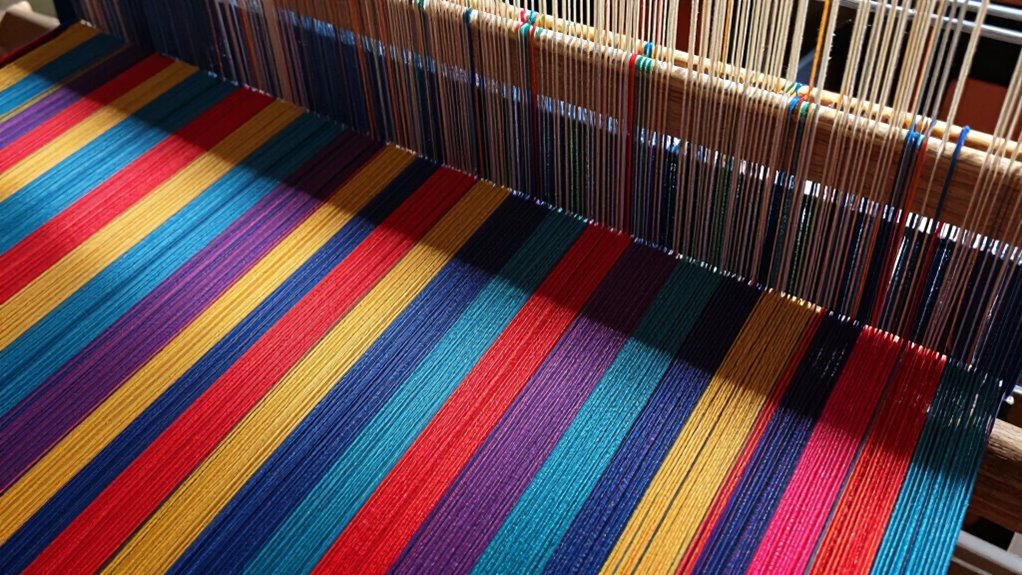
A shed is the space created when the warp threads are separated to allow the weft to pass through. It opens and closes in response to your loom’s mechanism, making the weaving smoother and more efficient. This movement directly impacts how quickly and evenly your fabric is woven.
Function of the Shed
Ever wondered how weavers change the position of the warp threads so smoothly? It’s all thanks to the function of the shed. The shed creates a temporary space for the weft to pass through, making weaving efficient. The shed operation involves moving specific groups of warp threads apart, which is controlled by various shed mechanisms. Here’s how it works:
- Aligns warp threads: The shed opens up a clear path for the weft to pass through.
- Facilitates smooth weaving: Proper shed operation reduces tension and prevents snags.
- Enables complex patterns: Different shed mechanisms, like levers or harnesses, allow intricate designs by changing warp positions quickly.
Without the shed’s function, weaving would be much slower and less precise.
How the Shed Opens
Have you ever wondered how the warp threads are moved apart so the weft can pass through easily? That’s where shed operation comes in. During warp shedding, the loom’s mechanisms lift and lower specific warp threads, creating a temporary gap called the shed. This process is controlled by harnesses or heddles, which shift the warp threads to either side. As the shed opens, it forms a clear passage for the weft to be inserted smoothly. The way the shed opens depends on the weaving pattern and the loom’s design. Efficient warp shedding guarantees the weft passes through with minimal resistance, making weaving faster and more consistent. Proper loom maintenance ensures the shedding mechanism functions optimally, preventing issues during weaving. Additionally, the timing of the shed opening is crucial for maintaining even tension and accurate pattern execution. When the shed opens correctly, it facilitates smoother weaving rhythm, reducing the risk of skipped or uneven weaves. So, the shed’s opening is vital for a seamless, controlled weaving process. Maintaining a consistent shed size helps improve overall weaving quality and reduces errors.
Impact on Weaving Process
The way the warp threads are moved to create a shed directly impacts the efficiency and quality of the weaving process. A well-formed shed allows for smoother passage of the weft, reducing fabric imperfections. Different fiber types, like cotton or silk, respond uniquely to shaping the shed, affecting tension and flexibility. Additionally, the shed’s design influences dyeing methods; for example, complex sheds may require specialized dyeing techniques for even color distribution. Consider these factors:
- Fiber flexibility and strength determine how easily the shed opens and closes.
- The type of shed affects how quickly you can weave, impacting production speed.
- Proper shed formation ensures consistent dye absorption, important for vibrant, uniform colors.
How Does the Weaving Process Work? From Setup to Finishing
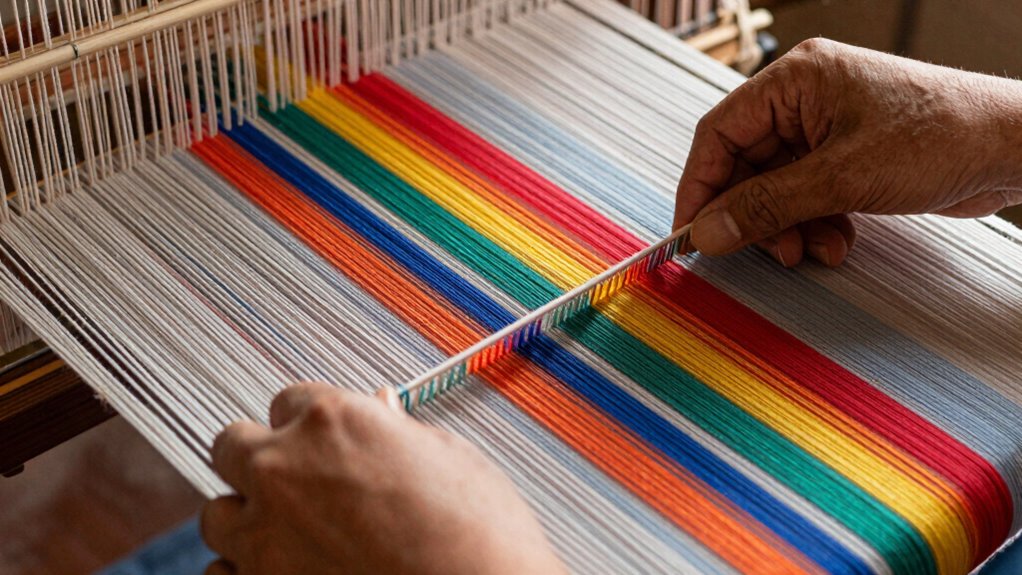
Understanding how the weaving process works begins with setting up your loom correctly. You start by adjusting the warp tension, ensuring the threads are taut but not too tight, which helps create even fabric. Next, you load the warp threads onto the loom, arranging them to form the shed. As you begin weaving, control your weaving speed to maintain consistency; too fast can cause uneven tension, while too slow may be inefficient. When you pass the weft thread through the shed, it interlaces with the warp, building your fabric row by row. Proper tension and steady speed are crucial for smooth weaving and a high-quality finish. Adjusting loom settings is also important to optimize your weaving process. Once your piece is complete, you carefully remove it from the loom, finish the edges, and trim any loose threads.
What Are the Main Types of Weaves and How Are They Used?

Understanding the main weave patterns helps you see how different fabrics look and feel. Each pattern serves specific fabric applications and style preferences, shaping the final product. By exploring these weaves, you can better choose the right technique for your project. Additionally, knowing about medical alert wearables can be beneficial for those seeking safety solutions that blend technology with everyday clothing.
Main Weave Patterns
Have you ever wondered how different fabrics get their unique textures and durability? The main weave patterns play a pivotal role in shaping fabric characteristics. Here are the key types:
- Plain Weave: The simplest pattern, where warp and weft threads cross alternately, creating a durable and balanced fabric. It’s common in textile history for its versatility.
- Twill Weave: Recognized by diagonal lines, this weave offers strength and drape, making it ideal for denim and workwear. Its development influenced fiber dyeing techniques to enhance durability.
- Satin Weave: Features smooth, shiny surfaces with long floats, often used in luxurious textiles. It’s a favorite for creating glossy finishes through fiber dyeing methods.
These patterns shape textile history and influence textile design and function today.
Fabric Applications and Styles
Ever wonder how different weave patterns influence the look and function of fabrics? The main types of weaves impact fabric applications and styles considerably. For example, plain weaves create sturdy, durable textiles ideal for fabric dyeing because they hold dye evenly, resulting in vibrant, consistent colors. Twill weaves produce fabrics with diagonal ridges, offering enhanced textile durability, perfect for jeans and workwear. Satin weaves offer a smooth, lustrous surface, making them popular in luxury garments and bedding. Each weave style determines not just appearance but also how the fabric responds to wear and washing. By understanding these main weave types, you can choose the best fabric for your project—whether you need durability, a specific aesthetic, or easy fabric dyeing.
What Tools and Accessories Do Weavers Use?
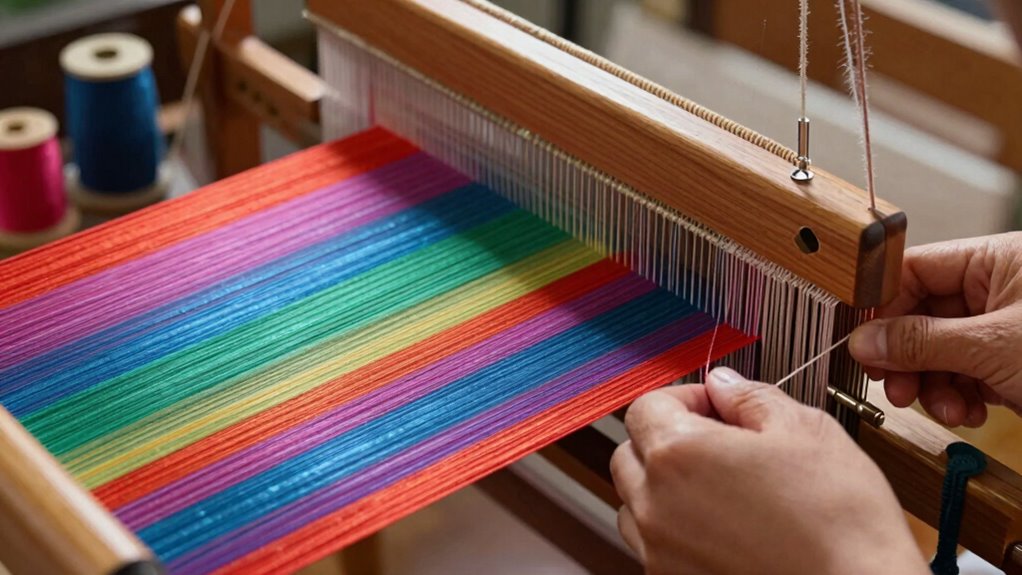
To create beautiful woven fabrics, you’ll need a variety of tools and accessories that help you control and manipulate the yarns. These tools are essential for achieving desired dyeing techniques and understanding fiber properties. Proper stain removal techniques can preserve the integrity of your fibers and maintain the quality of your woven pieces. Additional accessories like bobbins, heddle hooks, and tensioning devices support the process. Mastering these tools helps you manipulate yarns effectively, bringing your weaving vision to life while respecting fiber characteristics and dyeing techniques. Understanding fiber properties can help you select the right tools and techniques to enhance your weaving projects. For example, knowing the types of fibers used in your yarn can influence your choice of tools and finishing methods. Incorporating a variety of crochet styles for locs can also inspire creative ways to incorporate woven elements into your projects.
How Do Tension and Density Affect Fabric Quality?
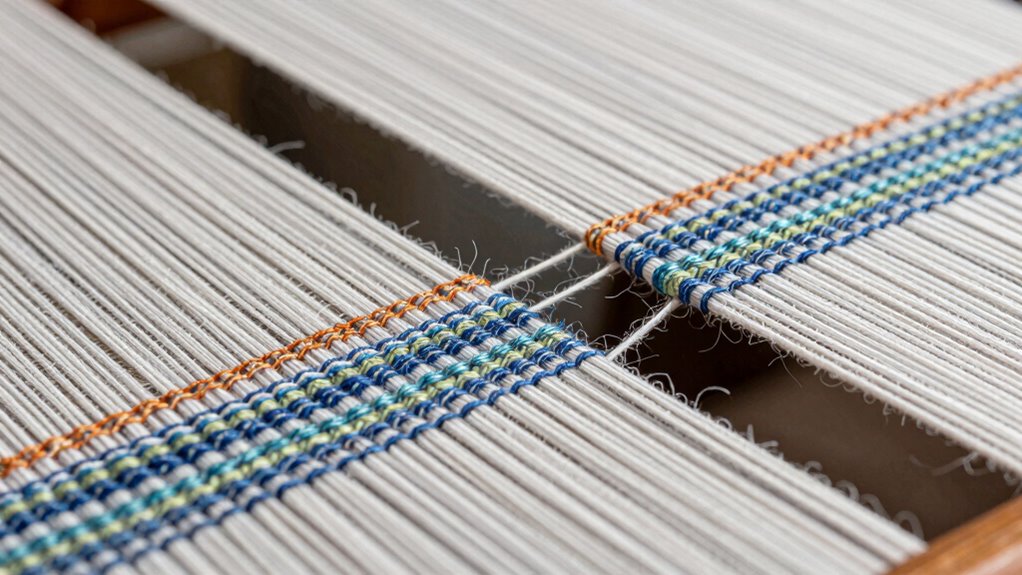
The way you manage tension and density during weaving directly impacts the fabric’s appearance and durability. Proper tension control ensures the warp and weft threads are evenly woven, preventing loose or overly tight areas. Tension management is crucial for achieving consistent results throughout the fabric. Fabric density, determined by how closely threads are packed, influences strength, texture, and transparency. High tension creates a tight, firm fabric, while low tension produces a softer, looser weave. Similarly, increased fabric density results in a more durable and opaque material, whereas lower density yields a lighter, more breathable fabric. To optimize quality, balance tension and density carefully. Understanding weaving principles is essential for achieving the desired fabric characteristics. Additionally, maintaining consistent tension can help prevent uneven fabric distortion, which can compromise the final product’s integrity. Proper tension and density also contribute to fabric stability, ensuring the finished product remains uniform over time.
What Are Some Easy Weaving Techniques for Beginners?
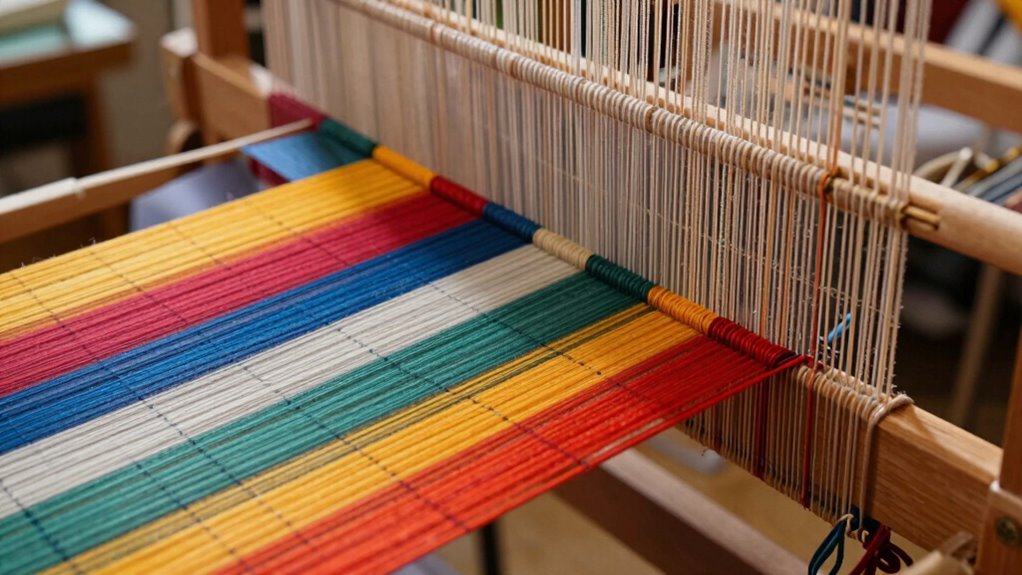
Are you new to weaving and looking for simple techniques to get started? Don’t worry—easy methods can help you create beautiful, textured pieces. Here are three beginner-friendly techniques:
New to weaving? Try simple techniques like plain weave, color dyes, and yarn variations for beautiful textured results.
- Plain Weave: The simplest method, where you alternate over and under the warp threads, creating a flat, even fabric. It’s perfect for exploring handwoven textures.
- Color Play with Textile Dyes: Use textile dyes to add vibrant or subtle shades to your warp or weft, giving your piece personality without complex patterns.
- Incorporating Variations: Experiment with different yarns or thicknesses to develop unique textures and tactile interest.
These techniques make weaving accessible and fun, helping you build skills while enjoying the process of creating textiles that showcase your personal style.
How Can You Troubleshoot Common Weaving Problems?
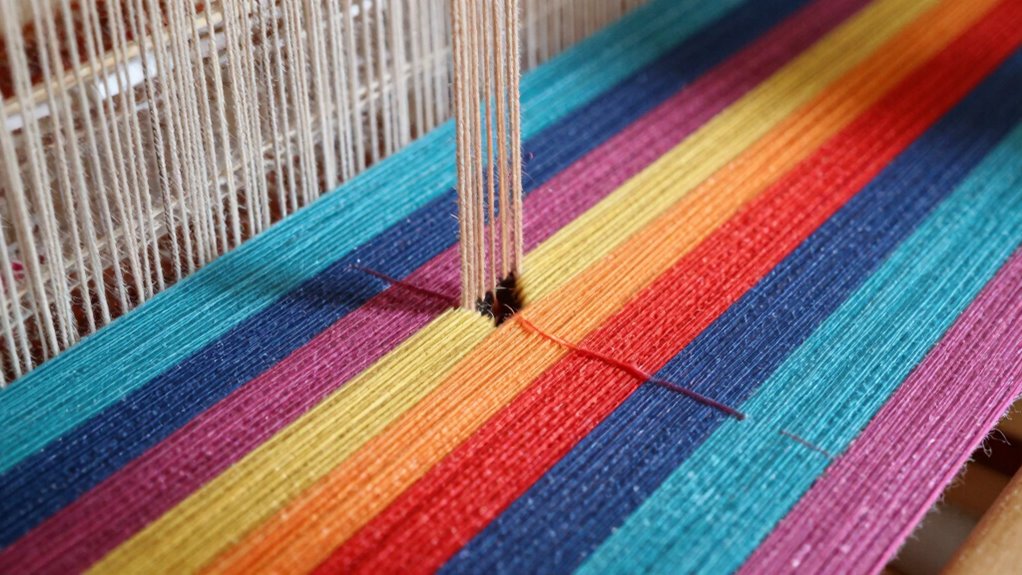
Even experienced weavers encounter common problems that can disrupt their projects, but identifying and fixing these issues quickly keeps your work on track. One frequent issue is uneven color blending, which might result from inconsistent fiber selection or improper dyeing. To troubleshoot, make sure your fibers are uniform in type and dye lots. Also, check your tension—loose or tight warp threads can cause uneven weaving and color inconsistencies. If you notice snagging or skipped wefts, examine your shed and reed for obstructions. Adjust tension or re-thread as needed. Proper fiber selection plays a vital role, so choose fibers compatible with your project and make certain they’re clean and well-prepared. By paying attention to these factors, you can resolve common weaving issues and achieve a smooth, professional finish.
Frequently Asked Questions
How Does Fiber Type Influence Weaving Outcomes?
You’ll notice fiber type greatly influences your weaving outcomes. For instance, durable fibers like nylon or polyester offer high fiber durability, ensuring your woven pieces last longer. Meanwhile, fibers such as cotton or silk often provide excellent fiber colorfastness, maintaining vibrant colors over time. Choosing the right fiber type affects the texture, strength, and longevity of your woven project, so consider these factors carefully to achieve your desired result.
What Are Common Weaving Pattern Abbreviations?
You’ll often see weaving pattern abbreviations like plain weave (1/1), twill (T), and satin (S) in pattern charts. These common pattern abbreviations use symbols and shorthand to quickly show you the weave structure. Weaving pattern symbols help you visualize how the warp and weft interlace, guiding you through complex designs. Learning these abbreviations makes following patterns easier, especially when working with intricate or repetitive weaving projects.
How Do Color and Dye Affect Woven Fabric Appearance?
Color and dye substantially influence your woven fabric’s appearance. When dye absorbs evenly, the fabric displays vibrant, consistent colors, enhancing its visual appeal. You’ll notice that high-quality dyes improve colorfastness, meaning the color resists fading after washing or exposure to sunlight. Different dyes can create subtle or bold hues, giving your fabric unique character. Proper dyeing techniques ensure the colors stay vivid, making your woven piece more attractive and durable over time.
Can Hand Weaving Be Scaled for Production?
They say “slow and steady wins the race,” and that’s true for hand weaving in production. While traditional hand weaving offers sustainability and unique craftsmanship, scaling it for mass production is challenging. You can increase output with automation, but it often sacrifices the authenticity and sustainability that make hand weaving special. Balancing traditional techniques with industrial methods allows you to meet demand while honoring craftsmanship.
What Safety Precautions Are Necessary During Weaving?
You should always wear safety gear essentials like protective glasses and gloves to prevent injuries. Follow workspace safety protocols by keeping your area clean, ensuring proper lighting, and avoiding loose clothing that could get caught in the loom. Regularly check your equipment for damage, and stay alert to avoid accidents. These precautions help keep you safe while you enjoy your weaving projects and maintain a secure, productive environment.
Conclusion
Understanding weaving terms like warp, weft, and shed helps you appreciate the craft’s complexity. Did you know that weaving techniques date back over 30,000 years? Mastering these basics allows you to create durable, beautiful fabrics. Whether you’re a beginner or refining your skills, knowing how tension and density influence quality guarantees your projects turn out great. Keep practicing—every weave brings you closer to mastering this timeless art.