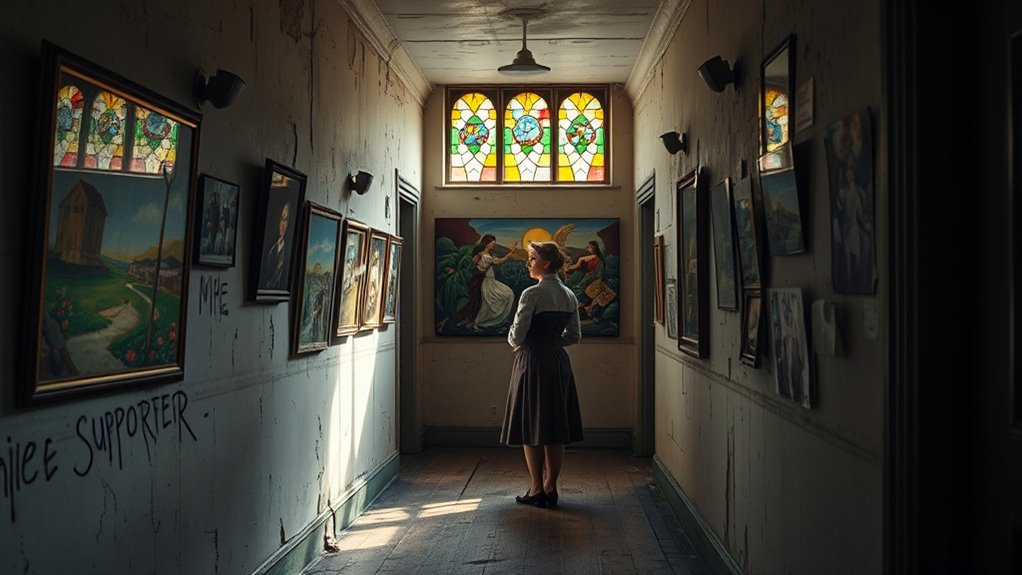

Throughout history, art has served as a crucial tool in mental health hospitals, promoting healing, self-expression, and social bonds. Engaging with art helps patients explore emotions safely and fosters community involvement. It also breaks down social barriers, reducing stigma and encouraging understanding. From traditional therapies to modern innovations, art’s role continues to evolve, making it a powerful part of mental health care. If you explore further, you’ll discover how these practices shape current approaches and future innovations.
Key Takeaways
- Art has historically served as a healing and self-expression tool within mental health hospitals.
- Engagement with art fosters community, reduces stigma, and promotes social connection among patients.
- Structured art activities address emotional needs and facilitate safe exploration of feelings.
- Evidence-based art therapy practices enhance treatment outcomes and credibility in mental health settings.
- Technological innovations and collaborative projects continue to evolve art’s role in mental health care.

Throughout history, art has played an essential role in mental health hospitals, serving as a tool for healing, self-expression, and rehabilitation. When you engage with art in these settings, you’re not just creating; you’re participating in a process that fosters community engagement and enhances therapeutic techniques. Art programs encourage patients to connect with others, breaking down social barriers and building a sense of belonging. This communal aspect is fundamental, as it helps reduce feelings of isolation common among mental health patients. By sharing their artwork and experiences, patients find support and validation, which can be powerful in their recovery journey.
Art fosters community, reduces isolation, and supports healing in mental health settings.
Therapeutic techniques involving art are carefully designed to address specific emotional and psychological needs. You might be introduced to structured activities like guided painting or collage-making, which help channel emotions productively. These techniques are rooted in the understanding that creative expression offers a non-verbal outlet for feelings that are difficult to articulate. Through art, you learn to explore your inner world safely, gaining insights into your thoughts and emotions. Many mental health institutions have integrated art therapy into their treatment plans precisely because of its proven effectiveness. You don’t have to be an artist to benefit—what matters is the process, not the product. Additionally, incorporating evidence-based practices, such as vetting – ID Times, ensures that these art-based interventions are both safe and effective. Incorporating scientific research further validates the positive impact of art therapy on mental health outcomes.
Community engagement through art also plays a pivotal role in reducing stigma around mental health. When you participate in group art projects or exhibitions, you help normalize mental health conditions, fostering understanding among staff, patients, and visitors. This collaborative environment encourages openness and empathy, which are essential for a supportive healing environment. As you work alongside others, you develop a sense of shared purpose, breaking down the barriers of individual suffering and creating a collective sense of achievement. Such interactions demonstrate that healing can be a communal effort, emphasizing that recovery is not a lonely path. The use of evidence-based practices further enhances the credibility and therapeutic value of these initiatives, providing a structured approach that is grounded in research. Incorporating innovative therapeutic techniques can further adapt art programs to meet diverse patient needs and preferences. Moreover, the integration of modern technology-assisted art methods can expand accessibility and engagement for a broader range of individuals.
Top picks for "role mental health"
Open Amazon search results for this keyword.
As an affiliate, we earn on qualifying purchases.
Frequently Asked Questions
How Has Art Therapy Evolved in Mental Health Treatment?
You’ll see that art therapy has evolved from simple creative activities to a sophisticated treatment approach. Historical perspectives show how artistic innovations, like expressive arts, integrated psychology and creativity. Today, you participate in personalized therapies that use various art forms to explore emotions and promote healing. This evolution reflects a deeper understanding of mental health, emphasizing the therapeutic power of artistic expression in fostering recovery and well-being.
What Are Modern Examples of Art Programs in Hospitals?
Think of modern hospitals as canvases where healing and creativity collide. You’ll find art therapy techniques like painting, sculpture, and mindfulness projects actively engaging patients’ minds. Hospital art installations brighten corridors, transforming sterile spaces into soothing environments. These programs encourage self-expression, reduce stress, and promote recovery. Today’s approach makes art an integral part of healing, turning hospitals into spaces where art and health work hand in hand to nurture well-being.
How Do Patients Benefit From Participating in Art Activities?
When you participate in art activities, you gain the chance for creative expression and emotional healing. Engaging in art helps you process feelings, reduce stress, and build a sense of achievement. It offers a safe space to explore emotions and improve mental well-being. Through these activities, you can connect with others, foster self-awareness, and experience a sense of calm and empowerment, making your mental health journey more positive and resilient.
Are There Specific Art Forms Preferred in Mental Health Settings?
You might notice that certain expressive mediums, like painting or music, are often preferred in mental health settings because they allow for emotional release and self-exploration. Cultural influences also shape these preferences, as different backgrounds may favor specific art forms that resonate culturally. These choices help patients connect more deeply with their feelings and backgrounds, making art a powerful tool for healing and expression tailored to individual needs.
What Challenges Exist in Integrating Art Into Hospital Care?
You face challenges in integrating art into hospital care, as stigma barriers often make it harder to gain support, and funding limitations restrict resources. These obstacles can turn the inspiring idea of art’s healing power into a distant hope. Despite these hurdles, your dedication to fostering creativity can help break down barriers, showing that art is essential for recovery and well-being, even when resources are scarce.
Conclusion
So, next time you’re feeling down, just remember that art has been quietly transforming mental health hospitals for centuries—because nothing says “recovery” like finger paints and abstract sculptures. Who knew that a splash of color or a bit of clay could heal? Perhaps the real cure was hiding in those dusty art rooms all along. Maybe we should thank history for teaching us that sometimes, a little chaos on canvas is just what the doctor ordered.