The journey of color from pigment to pixel reflects your ongoing human desire to express and communicate visually. Early humans used natural substances like ochre and charcoal, while ancient civilizations refined pigments to symbolize status and spirituality. Today, digital technology transforms colors into light, enabling billions of shades through screens and devices. This evolution highlights your creative progress, blending tradition with innovation. Explore further to see how this colorful story continues to shape your visual world.
Key Takeaways
- Early humans used natural pigments like ochre and charcoal, laying the foundation for color in art and communication.
- Civilizations refined pigment use through trade and technology, creating vibrant, lasting colors for cultural expression.
- The shift from physical pigments to digital technology enabled billions of colors via electronic displays and color models like RGB and CMYK.
- Digital color revolutionized media, enhancing visual experiences in photography, design, and virtual reality with consistent, lifelike hues.
- The evolution of color reflects human innovation, blending ancient artistry with modern technology to expand visual expression and cultural significance.
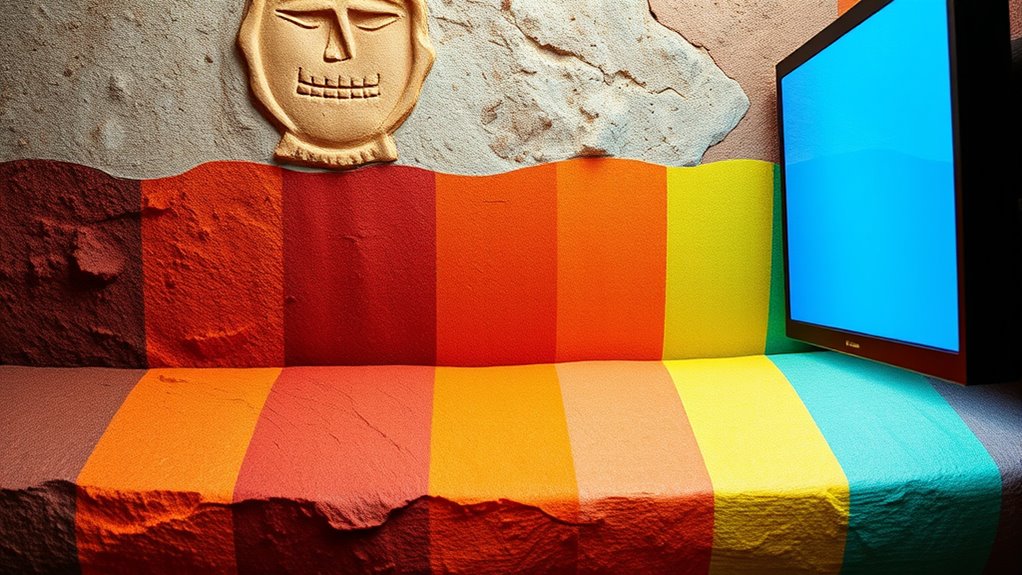
Color has always played a pivotal role in human history, shaping our perceptions, cultures, and artistic expressions. From ancient cave paintings to modern digital displays, our understanding of color has evolved dramatically over time. The history of pigments reveals a fascinating journey, starting with natural substances like ochre, charcoal, and clay that early humans used to create their first visual marks. These primitive pigments laid the foundation for more sophisticated dyes and paints, which civilizations like the Egyptians, Greeks, and Chinese refined over centuries. Their quest for vibrant, lasting colors led to discoveries like lapis lazuli for blue and cinnabar for red, highlighting a desire to communicate status, spirituality, and identity through color. As societies advanced, so did their ability to produce and manipulate pigments, often driven by trade and innovation. This progression resulted in a rich palette that became fundamental to art, decoration, and symbolism across cultures.
Fast forward to the present, where the evolution of digital color has revolutionized how we perceive and use color. Unlike traditional pigments, digital color relies on light and electronic signals to produce hues on screens, blending science and technology. This shift from physical substances to pixels has made color more versatile and accessible than ever before. You can now generate billions of colors with a few clicks, thanks to advances in display technology like LCDs, OLEDs, and LED screens. The development of color models such as RGB and CMYK reflects our growing understanding of how light and ink interact, allowing for precise control over digital images. This evolution has transformed everything from photography and graphic design to user interfaces and virtual reality, making color an integral part of your daily digital experiences. It’s remarkable how the journey from natural pigments to digital pixels illustrates humanity’s ongoing pursuit of expressing and enhancing visual communication. The advancement of display technology continues to expand the horizons of color possibilities, making it more immersive and impactful than ever before. Additionally, ongoing research into color perception enhances our ability to create more lifelike and emotionally resonant visuals. Moreover, the development of modern electronic devices ensures that color reproduction remains accurate and consistent across various platforms and media.
As you navigate through the digital age, you’re witnessing the culmination of centuries of experimentation and innovation. The shift from earthy pigments to luminous pixels underscores a broader story of technological progress and cultural adaptation. You might not always think about it, but every vibrant image or colorful screen you encounter is part of this long, rich lineage. It’s a testament to human creativity and curiosity—how we’ve continuously pushed the boundaries of what’s possible with color. Whether in ancient caves or modern screens, the essence remains the same: color is an essential language that connects us to our past and propels us into the future.

Vehicle On-Dash Backup Monitor, 7" Digital HD Car TFT LCD Color Screen Display with 2 Video Input for Rear View Camera
High Resolution: Lychee The 7-inch rotating LCD display has a TFT color LCD display and a resolution of…
As an affiliate, we earn on qualifying purchases.
As an affiliate, we earn on qualifying purchases.
Frequently Asked Questions
How Did Ancient Civilizations Create Synthetic Dyes?
You learn that ancient civilizations created synthetic dyes by experimenting with natural dye sources like plants, minerals, and insects. They used historic dye techniques such as boiling and fermentation to extract vibrant colors, often enhancing or modifying natural dyes to improve durability and hue. These innovations marked a significant shift from purely natural dyes, paving the way for synthetic dyes that revolutionized textile and art industries.
What Are Modern Innovations in Digital Color Reproduction?
Modern innovations in digital color reproduction include advanced display technologies like OLED and quantum dot screens, which offer richer, more accurate colors. You benefit from improved color calibration tools that guarantee consistency across devices. These advancements help you see true-to-life images, whether you’re editing photos or enjoying media. By combining cutting-edge display tech with precise calibration, digital color reproduction becomes more vibrant, realistic, and tailored to your viewing experience.
How Does Color Perception Vary Across Cultures?
You notice that color perception varies across cultures due to perceptual differences and cultural symbolism. In some societies, white symbolizes purity, while in others, it indicates mourning. These differences influence how you interpret colors, shaping your emotional and social responses. Understanding these cultural nuances helps you appreciate diverse perspectives on color, recognizing that meanings aren’t universal but deeply rooted in cultural context and symbolism.
What Future Advancements Might Enhance Color Technology?
Imagine you’re in a sci-fi movie, and nanotechnology breakthroughs revolutionize color tech. You’ll see brighter, more accurate hues thanks to advanced nanomaterials. Augmented reality integration will let you experience immersive color environments seamlessly blending digital and real worlds. Future innovations may also enable personalized color displays, adapting to your mood or surroundings, making your visual experience more vibrant and intuitive than ever before.
How Do Pigments Influence Emotional Responses in Art?
You can see how pigments influence emotional responses in art through color psychology, which studies how different hues evoke specific feelings. Bright colors like red can create excitement or passion, while calming blues promote tranquility. The emotional impact of pigments helps you connect with artwork on a deeper level, guiding your mood and perceptions. By understanding this, artists intentionally choose pigments to convey specific emotions and enhance your overall experience.
datacolor Spyder – Monitor Calibrator for Graphic Designers, Photographers, and Content Creators, Shows You True Colors, Works on OLED Monitors & LED Screens, Easy-to-Use Color Calibration Tool
Color “Surprises” Are a Thing of the Past: Datacolor’s exclusive DevicePreview TM Beta feature simulates what your photos…
As an affiliate, we earn on qualifying purchases.
As an affiliate, we earn on qualifying purchases.
Conclusion
As you consider this vibrant journey, you realize how color has gently woven itself into your world, softly shaping memories and moments. From humble pigments to digital pixels, it’s a quiet demonstration of human ingenuity and creativity. Though the path has shifted with time, the essence remains—color’s subtle magic continues to inspire and delight, whispering stories from the past while inviting your imagination to paint new horizons. Embrace this enduring dance of hue, forever delicate yet ever present.

Hosyond 5 Pcs 0.91 Inch I2C OLED Display Module IIC OLED Screen DC 3.3V~5V Compatible with Arduino Raspberry PI (White Display Color)
Resolution: 128 x 32 0.91 Inch OLED display, no need backlight, self-illumination, Display Color: White.
As an affiliate, we earn on qualifying purchases.
As an affiliate, we earn on qualifying purchases.

Meta Quest 3 512GB | VR Headset — Thirty Percent Sharper Resolution — 2X Graphical Processing Power — Virtual Reality Without Wires — Access to 40+ Games with a 3-Month Trial of Meta Horizon+ Included
NEARLY 30% LEAP IN RESOLUTION — Experience every thrill in breathtaking detail with sharp graphics and stunning 4K…
As an affiliate, we earn on qualifying purchases.
As an affiliate, we earn on qualifying purchases.