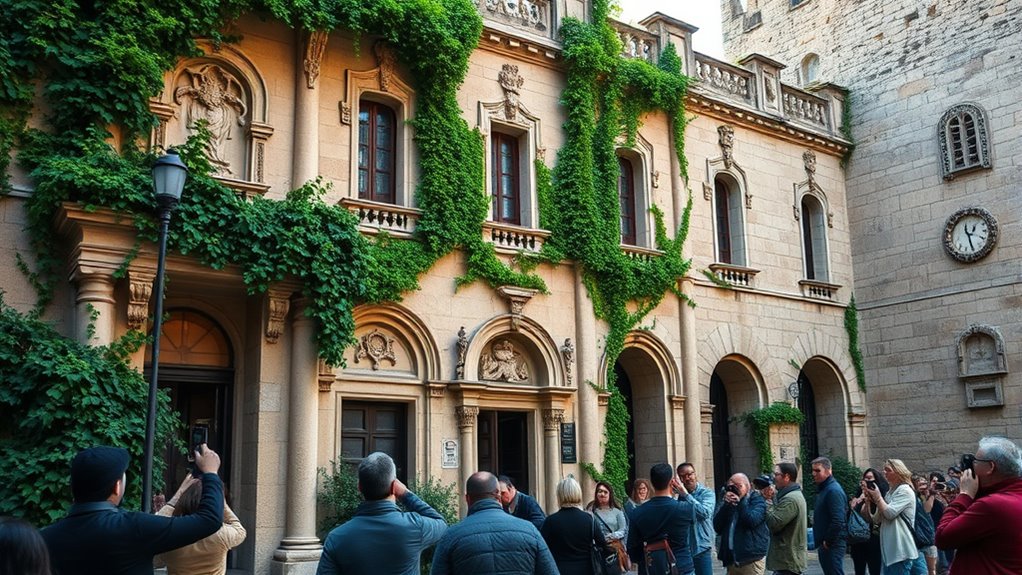

Ancient museums like the Museum of Alexandria began as private collections connected to rulers and scholars, evolving into public institutions over centuries. Early structures were simple, often temples or palaces, emphasizing display and power. During the Renaissance, architecture became more elaborate, with galleries and ornate facades. Today, modern designs focus on preservation, engagement, and sustainability. If you keep exploring, you’ll discover how these changes reflect society’s shifting priorities and advancements in architecture and technology.
Key Takeaways
- The earliest museums, like Alexandria’s Museum in the 3rd century BCE, were private collections of rulers and scholars.
- These collections evolved into public institutions, emphasizing education and cultural preservation over time.
- Architectural designs shifted from simple structures to grand, ornate galleries during the Renaissance to inspire awe.
- Technological advances, including climate control and lighting, improved artifact preservation and display methods.
- Modern museums focus on interactive, sustainable spaces that prioritize public engagement and adaptive reuse.
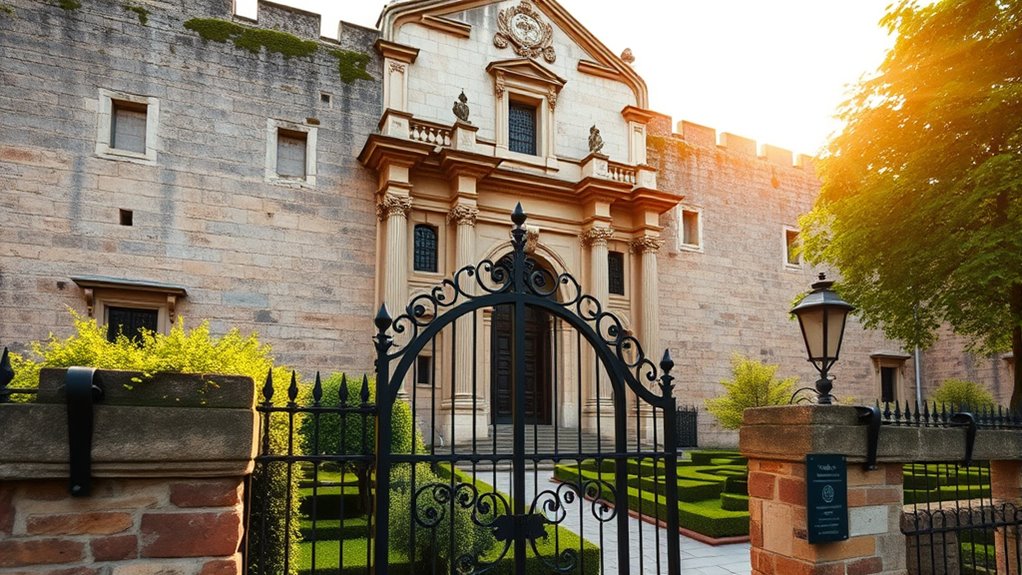
Museums have long served as repositories of human history, culture, and knowledge, with some dating back thousands of years. Early collections were often private, gathered by rulers or scholars who valued ancient artifact collections for their historical significance and aesthetic appeal. These collections eventually *shifted* into more formal institutions, laying the groundwork for the first public museums. As you explore the history of these institutions, you’ll notice how their architecture evolved to reflect their growing importance and changing roles. Initially, many ancient museums were housed in simple structures, such as temples or palaces, designed more for display than for preservation. Over time, architects began to develop dedicated spaces with specific functions, leading to the more elaborate and purpose-built museum architecture evolution we see today.
Ancient artifact collections were often amassed through conquest, trade, or exploration. These collections became symbols of power and knowledge for their owners, serving as tangible links to distant lands and past civilizations. The earliest known example is the Museum of Alexandria, founded in the 3rd century BCE, which aimed to gather all human knowledge under one roof. Its architecture was monumental, emphasizing the importance of learning and discovery. In contrast, Roman and medieval collections were typically housed in castles or churches, reflecting their dual roles as centers of power and spiritual centers. As you move into the Renaissance period, the architecture of museums started to *change* towards more sophisticated designs, often featuring grand galleries, ornate facades, and specialized exhibition spaces that aimed to inspire awe and curiosity. Additionally, the development of climate control systems in the 19th century marked a significant advancement in preservation technology, allowing museums to better protect delicate artifacts.
The evolution of museum architecture also mirrors technological advances and changing ideas about preservation. For example, the development of climate control systems, display cases, and lighting in the 19th and 20th centuries allowed for better preservation of artifacts and more engaging exhibits. Modern museums now incorporate flexible gallery spaces, interactive displays, and sustainable building materials, all reflecting an ongoing evolution in how these institutions serve the public. As you consider the history of these structures, it’s clear that their architecture has always been a reflection not only of technological progress but also of societal priorities—shifting from mere collection and display to education, engagement, and preservation. Additionally, the integration of innovative building materials has enabled museums to adapt to environmental challenges and create more sustainable spaces. From ancient collections to contemporary museums, their architectural evolution reveals a continuous journey toward creating spaces that honor humanity’s collective history while adapting to the needs of each era.
Environmental Management: Guidelines for Museums and Galleries (Heritage: Care-Preservation-Management)
As an affiliate, we earn on qualifying purchases.
As an affiliate, we earn on qualifying purchases.
Frequently Asked Questions
How Did Ancient Civilizations Protect and Display Their Collections?
You notice that ancient civilizations protected and displayed their collections through specialized ancient storage methods, like storage pits or sealed containers, to safeguard artifacts. They used techniques such as artifact preservation, employing natural materials and controlled environments to prevent decay. Display methods varied from simple arrangements to elaborate displays in temples or palaces, ensuring their treasures were both protected and showcased, reflecting their cultural importance and reverence for their collections.
What Materials Were Used to Construct the Earliest Museum Buildings?
Have you ever wondered what built those ancient halls of knowledge? Early museum buildings used ancient construction materials like mud bricks, stone, and timber, which provided durability and availability. These structures often incorporated early preservation techniques, such as sealing with natural resins or plaster, to protect their collections. By using accessible materials and simple methods, ancient builders created lasting spaces that showcased their treasures and inspired future generations.
How Have Museum Collections Expanded Beyond Ancient Artifacts?
You see that museum collections now go far beyond ancient artifacts, reflecting cultural exchange and collection diversification. Museums actively acquire contemporary art, natural history specimens, and even digital media, broadening their scope. This evolution allows you to experience diverse cultures, ideas, and innovations in one place, fostering understanding and appreciation. As collections expand, they create richer, more inclusive narratives that connect you with a wide array of human experiences across time and space.
What Role Did Religion Play in the Development of Early Museums?
You see, religion played a crucial role in early museums by shaping their collections with religious symbolism and sacred relics. These items represented spiritual beliefs, inspiring awe and reverence among visitors. Religious institutions often sponsored or founded these collections, emphasizing their spiritual importance. As a result, early museums served not just as displays of artifacts but as spaces to connect with faith, fostering cultural and religious identity through preserved sacred relics.
How Have Technological Advancements Changed Museum Curation Over Centuries?
Imagine walking through a museum from your living room, where digital archives and virtual tours transform your experience. Technological advancements have revolutionized curation, making vast collections accessible instantly and immersing you in detailed 3D displays. You can explore artifacts up close, learn their stories, and share discoveries worldwide. These innovations break down barriers, allowing you to connect with history and culture in ways that were once impossible, enriching your understanding and appreciation.

10X5ft Fabric Graffiti Backdrop Dynamic Interactive Museum Display Background 80s 90s Hip Hop Abstract Urban Street Art Photo Studio Props
【PREMIUM QUALITY MATERIALS】: This Street Art Graffiti Photo Backdrop Photography is Made of High Quality Polyester Fabric, Which…
As an affiliate, we earn on qualifying purchases.
As an affiliate, we earn on qualifying purchases.
Conclusion
You might think these ancient museums are just dusty relics stuck in time, but they’ve actually evolved into vibrant hubs of culture and knowledge. Ironically, centuries ago, they were the exclusive treasures of the elite, and now, they endeavor to be accessible to all. So, while they’ve preserved history, they’ve also transformed, proving that even the oldest institutions can adapt—and maybe, just maybe, surprise you with how much they’ve changed.

Mauerwerksbauten S, M, L /Brickwork Buildings S, M, L: 30 x Architektur und Konstruktion / 30 x Architecture and Construction (DETAIL Special)
As an affiliate, we earn on qualifying purchases.
As an affiliate, we earn on qualifying purchases.

Lamtor 69-Inch Glass Display Cabinet – Curio Cabinet with RGB Lighting, Adjustable Shelves Display Case, for Game Room, Living Room, Bedroom, Black
Immersive Lighting Experience: The Lamtor display cabinet features multi-color LED lighting with adjustable brightness, creating display ambiance for…
As an affiliate, we earn on qualifying purchases.
As an affiliate, we earn on qualifying purchases.