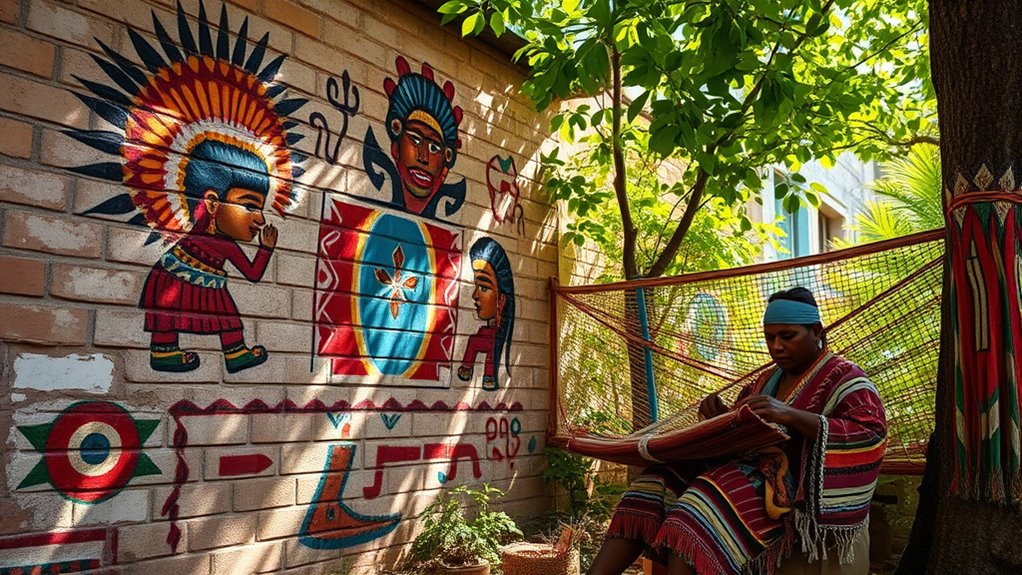

Indigenous art revival is a powerful way to reclaim cultural identities and challenge colonial narratives. By using traditional techniques like beadwork, carving, and weaving, Indigenous communities preserve their heritage and tell authentic stories. This movement resists cultural erasure and offers a form of decolonization that centers Indigenous voices. As you explore further, you’ll discover how these artistic efforts continue to sustain traditions and reshape societal understanding of Indigenous histories and resilience.
Key Takeaways
- Indigenous art revival reclaims cultural identities and resists colonial suppression through traditional techniques and storytelling.
- Authentic Indigenous art embeds ancestral stories, symbols, and techniques, challenging commodification and cultural erasure.
- Art serves as a form of decolonization, centering Indigenous voices and challenging stereotypes about their cultures.
- Preservation of traditional practices through art sustains cultural heritage and promotes understanding of Indigenous histories.
- Indigenous artworks act as powerful acts of resistance, asserting cultural sovereignty and countering colonial narratives.
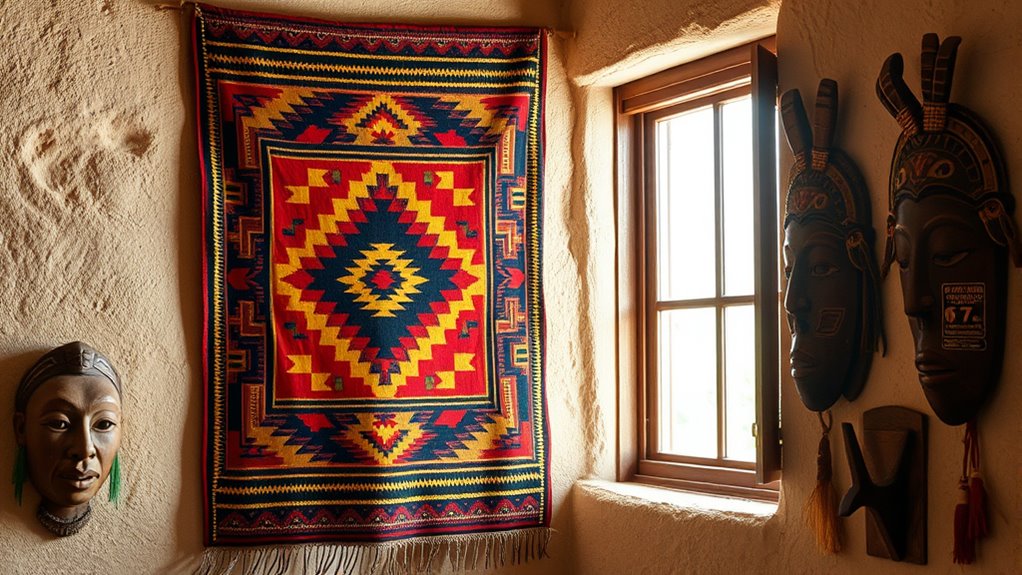
In recent years, Indigenous artists have been reclaiming their cultural identities through a vibrant revival of traditional art forms. This movement isn’t just about creating beautiful works; it’s a deliberate effort to preserve cultural heritage and assert artistic authenticity. As you explore these artworks, you’ll notice that each piece reflects a deep connection to ancestral stories, symbols, and techniques that have withstood the test of time. The artists intentionally incorporate traditional methods—whether it’s beadwork, carving, painting, or weaving—ensuring that their creations stay true to their cultural roots. This focus on cultural preservation isn’t just about nostalgia; it’s an essential act of resistance against centuries of cultural erasure and colonial suppression.
You’ll find that these artists approach their work with a profound respect for the authenticity embedded in their traditions. Every brushstroke, bead, or sculpture carries a story that’s been passed down through generations. By emphasizing artistic authenticity, they challenge the commodification of Indigenous art that often strips away its cultural significance. Instead, they infuse each piece with meaning, making their art a living expression of identity and history. This commitment helps to educate wider audiences about Indigenous ways of knowing and doing, fostering a greater appreciation for the richness of their cultural practices.
Moreover, this revival acts as a form of decolonization, reclaiming narratives that colonial histories have long sought to silence or distort. When you see Indigenous art that champions cultural preservation and authenticity, you’re witnessing a powerful act of storytelling—one that centers Indigenous voices rather than marginalizes them. Artists are not only creating for aesthetic appeal but also for cultural survival, ensuring that their traditions remain vibrant and relevant in contemporary society. Their work often confronts stereotypes and challenges misconceptions, offering an authentic perspective that counters colonial narratives. Additionally, understanding the importance of cultural preservation can enhance appreciation for how traditional art techniques continue to thrive in modern Indigenous communities.

Indigenous Beadwork Coloring Book: Native American Beading & Weaving Patterns Art Coloring pages for Kids & Adults, Mindfulness Relaxation Stress & … Activity (Indigenous Coloring Books Series)
As an affiliate, we earn on qualifying purchases.
As an affiliate, we earn on qualifying purchases.
Frequently Asked Questions
How Do Contemporary Indigenous Artists Balance Tradition and Innovation?
You balance tradition and innovation by blending cultural authenticity with artistic innovation. You honor traditional techniques, symbols, and stories, ensuring your work reflects authentic Indigenous roots. At the same time, you experiment with new materials, methods, and concepts to keep your art fresh and relevant. This approach allows you to celebrate your heritage while pushing creative boundaries, creating a dynamic dialogue between the past and present in your artwork.
What Role Do Indigenous Communities Play in Art Revival Initiatives?
You play a crucial role in art revival initiatives by fostering cultural sovereignty and encouraging community storytelling. Indigenous communities actively lead these efforts, sharing their histories, traditions, and artistic expressions. Your involvement helps preserve cultural identity, ensuring that traditional stories and practices are passed down authentically. By participating in these initiatives, you support a vibrant, resilient cultural landscape that honors heritage while embracing contemporary creativity.
How Is Digital Technology Influencing Indigenous Art Preservation?
Digital technology transforms how you preserve indigenous art by enabling digital storytelling and virtual exhibitions. You can share cultural stories and traditional art forms globally, ensuring their longevity. Virtual exhibitions make indigenous art accessible to a broader audience, fostering understanding and appreciation. This tech-driven approach supports cultural preservation, allowing communities to control how their art is presented and interpreted, strengthening their voice in the digital age.
What Challenges Do Indigenous Artists Face in Mainstream Art Markets?
You face significant challenges in mainstream art markets, such as cultural appropriation, where outsiders imitate your work without understanding its meaning. Funding barriers also limit your opportunities, making it harder to showcase your art and sustain your practice. These obstacles can lead to misrepresentation and undervaluation of your cultural expressions. Overcoming them requires increased awareness and support to guarantee your voice remains authentic and valued in the broader art world.
How Can Non-Indigenous Audiences Respectfully Engage With Indigenous Art?
You can respectfully engage with indigenous art by practicing cultural sensitivity and prioritizing ethical representation. Approach artworks with openness and a willingness to learn, avoiding stereotypes or assumptions. Support indigenous artists directly, attend exhibitions thoughtfully, and listen to their stories. Recognize the cultural significance behind each piece, respect their traditions, and amplify their voices. By doing so, you foster genuine understanding and honor the rich heritage embedded in indigenous art.

Carve Your Own Totem Pole
New
As an affiliate, we earn on qualifying purchases.
As an affiliate, we earn on qualifying purchases.
Conclusion
As you explore indigenous art’s revival, you see tradition thriving amid modernity’s rush. Decolonial narratives challenge old stereotypes, reclaiming identity and voice. While global trends often erase local stories, these artworks stand firm, vibrant and resilient. You realize that in reclaiming art, you’re not just preserving culture—you’re igniting a powerful movement. The contrast reminds you: in the face of erasure, creativity becomes a radical act of resistance and hope.

Indian Basket Weaving
As an affiliate, we earn on qualifying purchases.
As an affiliate, we earn on qualifying purchases.

✓ Authentic Tribal Wall Art – Pacific Northwest Haida Raven Totem Canvas Print Wood Framed Authentic Tribal Art Decor
✓ Celebrate Indigenous Heritage – Authentic Haida Raven Totem symbol representing intelligence, transformation, and spiritual power
As an affiliate, we earn on qualifying purchases.
As an affiliate, we earn on qualifying purchases.