
Many legal cases show that AI-generated art often can’t get copyright because courts focus on human input and originality. If you rely heavily on AI tools without adding your own creative touch, your work may not be protected legally. Understanding these rulings helps you avoid losing rights in the future. Keep these lessons in mind to better navigate AI art and copyright rules, and discover what steps you can take to stay protected.
Key Takeaways
- Courts often deny copyright to AI-generated works lacking significant human creative input.
- Demonstrating clear human authorship is crucial to secure copyright protections for AI-assisted art.
- Legal precedents tend to favor human creators over AI or developer rights in copyright claims.
- Relying solely on AI tools without proper attribution or documentation risks losing copyright status.
- Understanding evolving legal standards helps creators protect their rights amid AI technology developments.
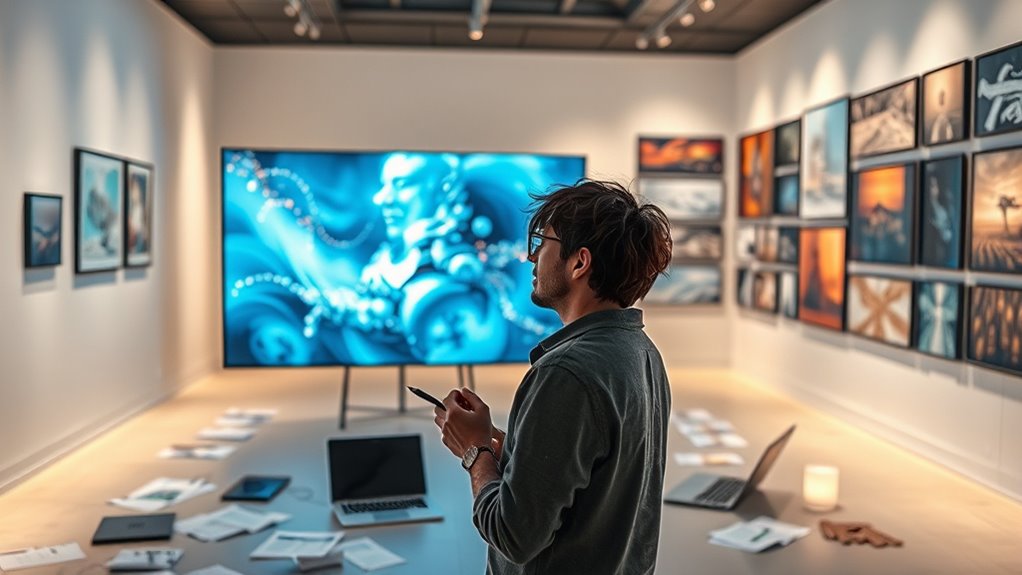
As artificial intelligence continues to advance, AI-generated art is challenging traditional notions of creativity and copyright. You might think that if a machine creates a piece, it should be protected just like human work. However, legal systems worldwide are grappling with how to treat AI art, and recent cases reveal that the law often sides against AI creators. These legal precedents serve as important lessons for anyone involved in digital or AI-assisted art, emphasizing the significance of understanding copyright rules and the potential risks of relying solely on AI tools. Courts have historically based copyright protections on human authorship, and when AI-generated content enters the picture, that foundation becomes shaky. For example, in cases where AI tools are used without clear human oversight, courts have often denied copyright claims, arguing there’s no sufficient human creative input to qualify for protection. These legal precedents reflect a cautious approach, prioritizing human originality as a core requirement for copyright eligibility. Additionally, the rapid development of cybersecurity vulnerabilities during incidents like the Microsoft outage underscores the importance of understanding the legal and technical landscape surrounding digital creations.
At the same time, these rulings ignite heated ethical debates. Some argue that denying copyright to AI-generated works stifles innovation, especially as AI becomes more sophisticated. You might feel that if a machine produces something remarkable, it deserves recognition or at least some form of legal protection. Conversely, critics contend that granting rights to AI or its developers could undermine the value of human creativity, leading to a blurred line between human and machine efforts. These debates influence how courts interpret existing laws and whether new legislation is needed. As a creator, you need to be aware of this landscape because it impacts your rights and how you can safeguard your work. If you use AI tools, it’s vital to understand whether the output is considered your original work or if it’s deemed to lack sufficient human input for copyright.
Ultimately, the lessons learned from these cases warn you to be cautious. Relying on AI-generated art without clear attribution or understanding of legal boundaries can jeopardize your rights. To protect your work, document your creative process, clarify your role in producing the art, and stay informed about evolving legal standards and ethical debates. As AI technology evolves, so will the legal landscape, making it essential for you to adapt and guarantee your creative efforts remain protected. These cases serve as reminders that, regardless of how impressive your AI tools are, the law still heavily favors human originality and input when it comes to copyright protection.
AI art copyright protection guide
As an affiliate, we earn on qualifying purchases.
As an affiliate, we earn on qualifying purchases.
Frequently Asked Questions
Can Ai-Generated Art Ever Be Fully Copyrighted?
AI-generated art can’t be fully copyrighted if there’s an authorship dispute or originality challenge. Since copyright laws typically require human authorship, courts often see AI creations as lacking the necessary human element. You need to demonstrate your creative input to claim ownership. Without clear authorship, your rights get challenged, making it tough to secure full copyright. So, unless you add substantial human originality, your AI art might not qualify.
How Do Copyright Laws Vary Internationally for AI Art?
You’ll find that copyright laws for AI art vary internationally due to legal ambiguities and cultural differences. Some countries, like the US, emphasize human authorship, making AI-generated works tricky to protect. Others may have more flexible laws or specific regulations for digital and AI content. To navigate these differences, stay informed about local laws, as what’s valid in one country might not be in another, affecting your rights and protections.
What Rights Do Human Collaborators Have in Ai-Created Works?
Imagine yourself as the captain of a ship steering through turbulent waters, where your role as a human collaborator grants you certain compass points. You hold authorship rights and moral rights, guiding the work’s integrity and credit. In cases of authorship disputes, your contributions can be recognized and protected. Your moral rights ensure your creative voice remains intact, even if the AI’s output sparks controversy or legal questions, reinforcing your ownership in the work.
Are There Specific Industries More Affected by AI Copyright Issues?
You’ll find that industries like stock imagery and fashion design face significant AI copyright issues. In stock imagery, AI-generated images often blur legal lines around ownership, making licensing tricky. Similarly, in fashion, AI designs can lead to copyright disputes over originality and rights. As a creative, you need to stay informed about these challenges to protect your work and navigate legal complexities effectively.
How Can Artists Protect Their Ai-Assisted Creations Legally?
Coincidentally, safeguarding your AI-assisted creations starts with registering your copyright, giving you a legal claim. You should also craft clear licensing agreements, outlining how others can use your work. Stay updated on evolving laws and document your creative process to strengthen your case. By combining registration, licensing, and proper documentation, you actively protect your rights and reduce the risk of losing copyright, ensuring your creative efforts remain yours.
human input digital art tools
As an affiliate, we earn on qualifying purchases.
As an affiliate, we earn on qualifying purchases.
Conclusion
So, next time you create with AI, remember that copyright isn’t guaranteed. For example, if you generate artwork using an AI tool that’s trained on copyrighted images, you might lose rights to that work. Stay informed about legal boundaries and consider adding your own input or modifications. By doing so, you protect your creative efforts and avoid losing control—like the artist who found their AI-generated piece claimed by someone else. Stay savvy and craft wisely.
AI-assisted art documentation software
As an affiliate, we earn on qualifying purchases.
As an affiliate, we earn on qualifying purchases.
digital art attribution tools
As an affiliate, we earn on qualifying purchases.
As an affiliate, we earn on qualifying purchases.