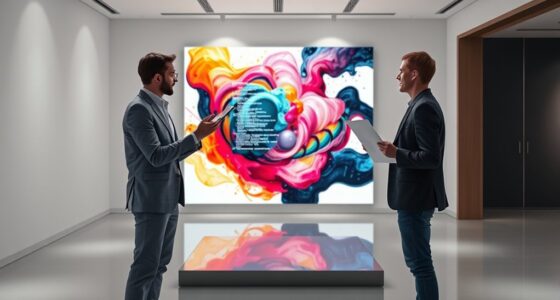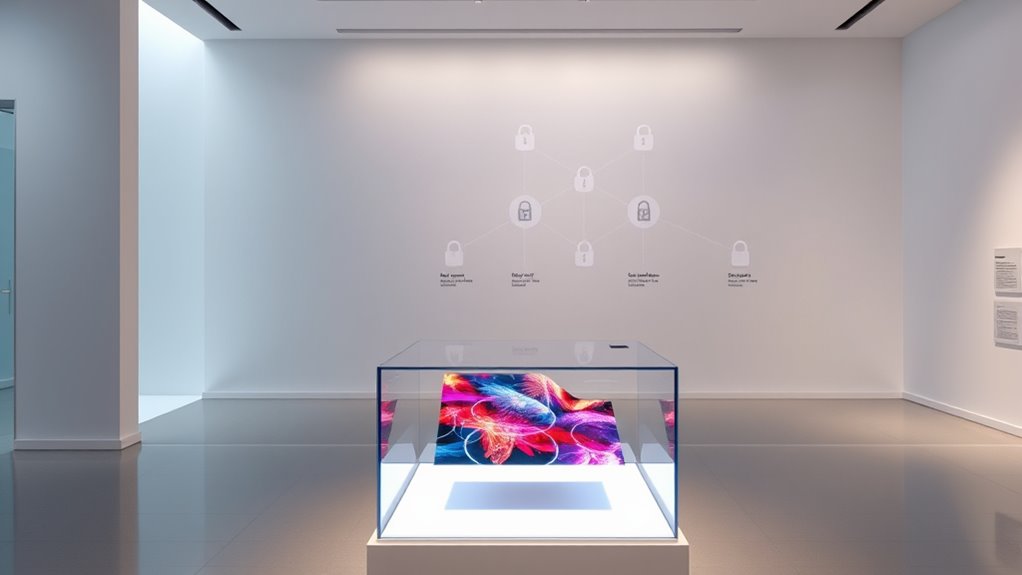

To safeguard artists’ rights, focus on promoting transparency in AI tools by understanding their training data and disclosing how they operate. Licensing plays a key role in setting clear rules for usage, attribution, and control over original work. By supporting policies that enforce fair licensing and legal protections, you help ensure artists are fairly compensated and their creations respected. Keep exploring how transparent practices and licensing can foster a fair environment in AI art—there’s more to learn.
Key Takeaways
- Implement clear licensing agreements that specify permissible data sources and usage rights for AI-generated art.
- Promote transparency by disclosing AI training datasets and algorithms to ensure ethical practices.
- Establish legal frameworks that protect artists’ rights and prevent unauthorized use of their original work.
- Require open attribution and credit for AI-generated art to maintain accountability and trust.
- Encourage industry standards and policies that balance innovation with artists’ rights and fair compensation.

As AI-generated art becomes more prevalent, protecting artists’ rights and ensuring transparency has never been more critical. When you’re steering this evolving landscape, ethical considerations come into sharp focus. You need to ask: who owns the work? Did the AI learn from copyrighted material without permission? These questions highlight the importance of establishing clear boundaries. Legal frameworks are essential here, but they’re still catching up to rapid technological advancements. Without solid laws, artists can find their original work used without credit or compensation, which hampers creativity and undermines their livelihood. It’s vital that regulations evolve to address these issues, creating a fair environment where human artists and AI can coexist with respect and integrity.
Protecting artists’ rights and ensuring transparency are essential in the evolving world of AI-generated art.
Transparency is a key piece of this puzzle. When AI tools generate art, you should know how they operate, what data they’re trained on, and whether the output is influenced by copyrighted material. Lack of transparency allows unethical practices to flourish—like passing off AI-generated work as entirely human-made or hiding the sources of training data. By advocating for transparency, you help ensure that creators and consumers understand the origins of each piece. This knowledge enables you to make informed decisions, whether you’re purchasing art or using AI tools yourself. Open disclosures about training datasets and algorithms build trust and support ethical standards in the industry. Understanding the training data sources behind AI tools is crucial for assessing their fairness and legality.
Licensing becomes a vital mechanism to protect artists within this framework. When you license AI-generated art properly, you establish clear rules for usage, distribution, and attribution. Licensing agreements should specify whether AI models can use certain datasets and under what conditions. This way, artists retain control over their work and can benefit financially if their original creations are incorporated into AI training. It also discourages misuse or unauthorized replication, fostering a more equitable environment. As you engage with AI art, insisting on transparent licensing terms empowers artists and holds developers accountable. It ensures that the rights of creators are respected and that the benefits of AI are shared fairly.
Ultimately, balancing technological innovation with ethical practices and legal protections is your best strategy. You need frameworks that guarantee transparency, enforce licensing, and uphold artists’ rights. By supporting policies that address these issues, you help shape a future where AI-generated art complements human creativity without exploiting it. Your role as a consumer, creator, or advocate is crucial in pushing for a fair, transparent, and ethical ecosystem. Protecting artists isn’t just about safeguarding individual work; it’s about preserving the integrity of the entire creative community in an AI-driven world.

Burning Studio 26 – Burn, copy, save – the multimedia all-rounder – burning software – create covers, inlays, disk labels for Win 11, 10
Your powerful burning software for burning and copying CDs, DVDs and Blu-ray Discs
As an affiliate, we earn on qualifying purchases.
As an affiliate, we earn on qualifying purchases.
Frequently Asked Questions
How Does Licensing Affect Artists’ Royalties From Ai-Generated Art?
Licensing agreements directly impact your royalty payments from AI-generated art. When artists set clear licensing terms, they ensure they receive fair royalties whenever their work is used or reproduced by AI platforms. Without proper licensing, you risk losing control over your art and missing out on income. By establishing solid licensing agreements, you safeguard your rights and guarantee that you earn the appropriate royalties from the use of your creative works.
Are There International Standards for AI Transparency in Art Creation?
You wonder if there are global standards for AI transparency in art creation. Currently, no universal rules exist, leaving artists uncertain and vulnerable. But hope remains: international organizations are working on ethical guidelines to promote transparency and fairness. This effort could shape a future where artists’ rights are protected worldwide, fostering trust and integrity in AI-generated art. Stay informed—change is coming, and your voice matters.
How Can Artists Verify if Their Work Was Used in Training Datasets?
You can verify if your work was used in training datasets through dataset tracking tools and attribution verification processes. Start by checking if the platform provides transparency reports or allows you to search for your artwork within their datasets. Use digital watermarks or metadata embedded in your work, and stay informed about licensing agreements. These steps help guarantee you’re aware of how your art is being used and protected.
What Legal Protections Exist Against Unauthorized AI Use of Artworks?
In 2023, you’re protected by copyright enforcement laws that safeguard your original artworks from unauthorized AI use. Though AI companies often bypass traditional licensing, ethical guidelines aim to hold them accountable. You can pursue legal action if your work is used without permission, ensuring your rights are respected. Staying informed about these protections helps you defend your art, much like artists in the Renaissance fought for recognition.
Will AI Transparency Laws Impact Consumer Access to Digital Art?
AI transparency laws will likely enhance your access to digital art by promoting ethical AI practices and protecting consumer rights. These laws require creators to disclose AI involvement, ensuring you know when art is generated or influenced by AI. This transparency fosters trust, helps you make informed choices, and supports ethical AI development. Ultimately, you’ll benefit from clearer, more trustworthy digital art, aligning AI ethics with your rights as a consumer.

AI Value Creators: Beyond the Generative AI User Mindset
As an affiliate, we earn on qualifying purchases.
As an affiliate, we earn on qualifying purchases.
Conclusion
By embracing transparency and clear licensing, you become a guardian of artistic integrity in a digital age where creativity flows like an uncharted river. You hold the power to steer this current, ensuring artists’ voices remain distinct amid the noise. With every step toward open practices, you plant seeds of trust and respect, shaping a landscape where innovation blooms alongside protection. In this symphony of progress, your commitment keeps the harmony alive and thriving.

NFTs, Creativity and the Law (Routledge Research in the Creative and Cultural Industries)
As an affiliate, we earn on qualifying purchases.
As an affiliate, we earn on qualifying purchases.
AI art attribution platforms
As an affiliate, we earn on qualifying purchases.
As an affiliate, we earn on qualifying purchases.