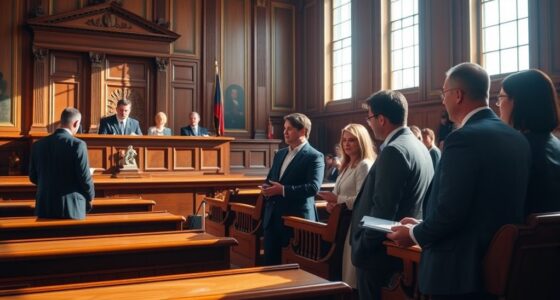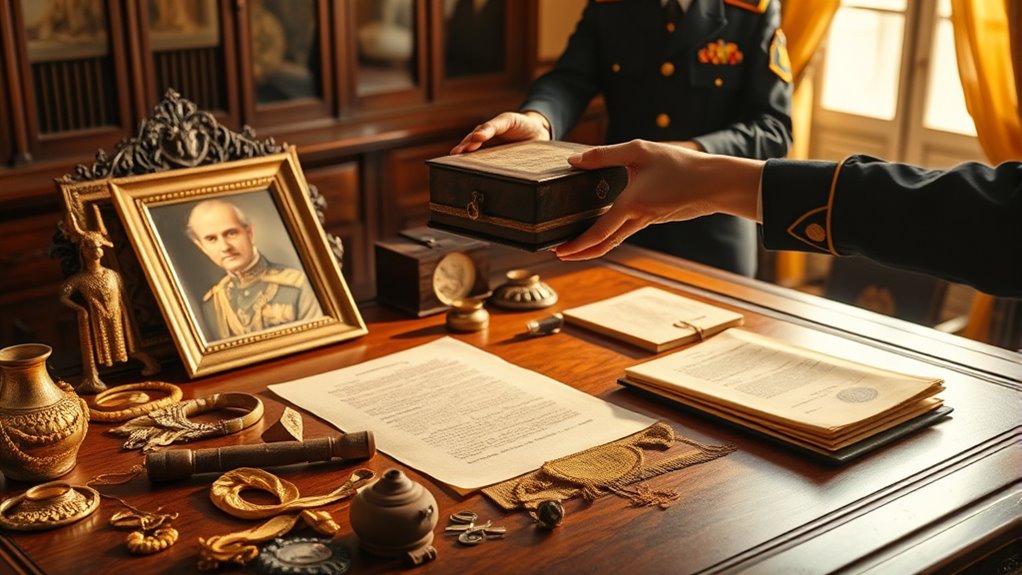

Restitution cases focus on returning art stolen during the Nazi era to their rightful owners through detailed provenance research and legal procedures. You need to trace an artwork’s history carefully, using archives, records, and digital tools. Many possessions were unlawfully confiscated or illicitly sold, making the process complex. Governments and institutions collaborate to guarantee justice, transparency, and dignity for owners and families. If you keep exploring, you’ll discover how technology and law are shaping these important efforts.
Key Takeaways
- Provenance research is essential for verifying whether artworks were stolen during Nazi looting.
- Digital tools and databases improve the accuracy and efficiency of tracing stolen art and supporting restitution claims.
- Restitution processes involve complex legal, ethical, and historical considerations to restore rightful ownership.
- International frameworks and committees oversee restitution efforts, promoting transparency and cooperation among institutions.
- Restoring looted art helps address historical injustices and restores dignity to affected owners and communities.

Restitution cases often involve complex legal and historical questions, especially when it comes to looted art and property. One of the most notorious sources of stolen art is Nazi looting during World War II. During that dark period, countless artworks, cultural treasures, and valuables were confiscated from Jewish families, museums, and individuals across Europe. When victims or their descendants attempt to reclaim these possessions decades later, the process can be intricate and emotionally charged. Central to this effort is provenance research, which involves meticulously tracing the history of an artwork to establish its origins and ownership history. Provenance research helps identify whether a piece was indeed stolen or confiscated unlawfully, which is essential for just restitution.
If you’re involved in a restitution case, especially one linked to Nazi looting, you’ll quickly discover that provenance research is your most powerful tool. It involves combing through archives, auction records, museum catalogs, and personal documents to piece together the history of the artwork. This painstaking process aims to uncover if the item was ever part of confiscations, illicit sales, or forced transfers during the Nazi era. Provenance research not only helps verify claims but also uncovers potential legal and ethical issues. It can reveal, for example, if a piece was sold under duress or if it was wrongfully acquired by a previous owner. By establishing a clear ownership trail, provenance research provides a solid foundation for legal restitution claims.
As you navigate through the process, you’ll also encounter the importance of transparency and cooperation among institutions, governments, and families. Many countries have established specific frameworks and guidelines to facilitate the restitution of Nazi-looted art. These efforts often involve specialized committees that review provenance documentation and assess claims objectively. Restitution isn’t always straightforward; sometimes, the original owners or their heirs are difficult to locate, or the provenance records are incomplete or ambiguous. Still, the goal remains the same: to right historical wrongs and restore stolen cultural property to its rightful owners. Additionally, the use of digital technology has enhanced the ability to verify provenance records more efficiently and accurately. Embracing digital tools can significantly streamline the investigation and validation processes, making restitution efforts more effective.
Furthermore, advancements in digital technology and repatriation efforts have significantly improved the ability to trace and recover looted art, making the process more efficient and transparent. Incorporating art databases and digital archives is transforming how provenance research is conducted and verified. Ultimately, recovery through restitution isn’t just about legal rights; it’s about acknowledging and rectifying past injustices. Provenance research plays an indispensable role in this process, shedding light on hidden histories and helping to restore dignity to those affected. Whether you’re a descendant seeking justice or a museum working to verify the origins of a piece in your collection, understanding the importance of provenance research and recognizing the impact of Nazi looting can make all the difference in achieving true restitution.
Frequently Asked Questions
How Long Does a Restitution Case Typically Take to Resolve?
Restitution cases can take anywhere from months to several years to resolve. It depends on the complexity of the legal procedures involved and the need for expert testimonies to establish ownership or provenance. Your case’s duration hinges on how quickly evidence is gathered and how smoothly the legal process moves through courts. Staying patient and working closely with legal professionals can help you understand timelines and manage expectations throughout the process.
What Evidence Is Needed to Prove Rightful Ownership?
To prove rightful ownership, you need solid evidence like provenance research, which traces the artwork’s history, and forgery detection to confirm authenticity. You should gather documentation such as purchase receipts, exhibition records, and provenance chains. If there’s suspicion of forgery, expert analysis helps verify authenticity. Providing thorough, verifiable proof ensures your claim is credible, making it easier to establish your legal right to the artwork.
Are There International Laws Governing Art Restitution?
Did you know over 50 countries have signed international agreements on art restitution? These laws are rooted in historical context and prioritize cultural significance, ensuring looted art is returned to its rightful owners. While treaties like the 1970 UNESCO Convention guide nations, enforcement varies. International laws provide a framework, but often require cooperation between countries, emphasizing the importance of diplomacy in preserving cultural heritage and addressing past injustices.
Can Restitution Be Claimed if the Artwork Was Sold Publicly?
You might wonder if you can claim restitution after artwork has been publicly sold. While it’s possible, you’ll face legal complexities because a public sale often complicates ownership claims. Courts consider factors like the timing of the sale and whether the buyer knew or should have known about the looting. Ultimately, each case depends on specific details, but a public sale doesn’t automatically bar restitution.
What Are the Common Challenges Faced in Restitution Cases?
You face challenges as steep as mountains in restitution cases. Ownership disputes often bog down the process, making it hard to prove rightful claimants. Cultural significance complicates matters further, as authorities weigh historical value against legal ownership. Public sales blur ownership lines, adding to the confusion. These hurdles delay justice, risking the loss of priceless cultural heritage. Clear evidence, legal clarity, and cooperation are essential to overcoming these obstacles.
Conclusion
So, next time you hear about a priceless masterpiece being returned, remember: it’s not just about art, but about righting centuries of wrongs—or at least trying to. Restitution cases remind us that even in the world of high-stakes theft and legal battles, justice sometimes manages to crack a smile. Maybe one day, all looted art will find its way home, and we can finally stop pretending history’s biggest art heist was just a “misplaced” masterpiece.