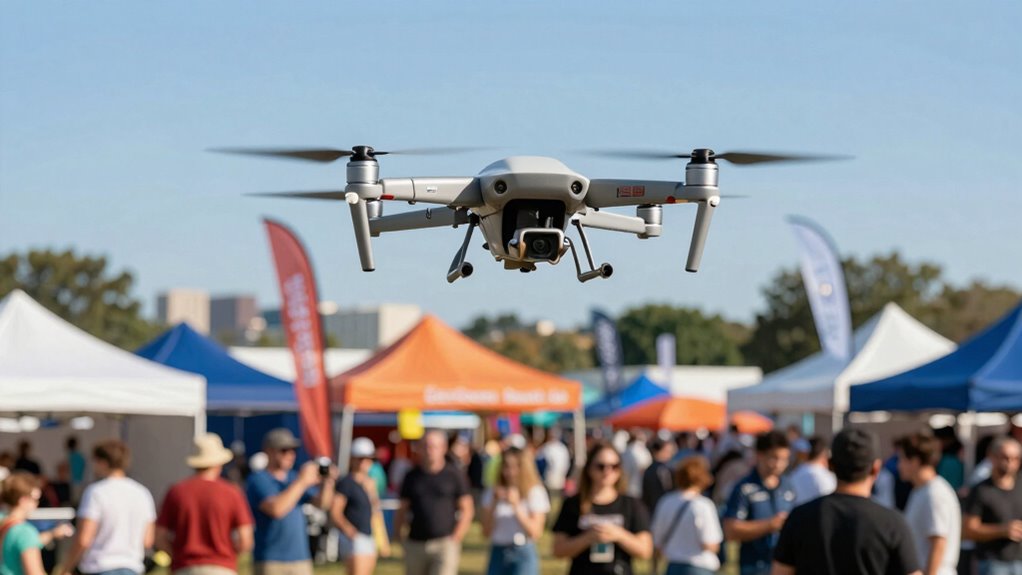

Before you fly your drone at events, you need to understand key rules about airspace, privacy, and safety. Register your drone, obtain necessary permits, and stay updated on local laws. Always keep your drone within sight, avoid no-fly zones, and respect people’s privacy. Check weather conditions and perform pre-flight checks before takeoff. Knowing these essentials helps guarantee safe, legal operations; explore further details to confidently manage your drone during events.
Key Takeaways
- Always register your drone, obtain necessary permits, and ensure compliance with local and national regulations.
- Maintain visual line of sight, keep within altitude limits, and avoid no-fly zones like airports and military areas.
- Respect privacy by obtaining permission before filming private property or individuals, and avoid capturing sensitive content.
- Conduct pre-flight safety checks, including battery, propellers, GPS, and emergency procedures, before every flight.
- Obtain permissions from event organizers, follow safety protocols, and avoid flying over crowds or restricted public spaces.

FAA Drone Labels (2 Sets of 3) + FAA UAS Registration ID Card for Hobbyist Pilots – Optional Battery Labels
You get 2 sets of 3 Labels, 1 FAA ID Card – All customized with your FAA information
As an affiliate, we earn on qualifying purchases.
As an affiliate, we earn on qualifying purchases.
What Drone Regulations Do Creators Need to Know Before Flying?

Before taking to the skies with your drone, understanding the key regulations that apply to creators like you is vital. First, confirm your drone is properly insured, as drone insurance is often required for legal flying and protects against potential damages or accidents. You also need to keep up with drone maintenance; regular checks help prevent malfunctions that could lead to violations or safety issues. Be aware of altitude limits, usually around 400 feet, and stay within line of sight at all times. Respect privacy laws by avoiding intrusive filming, and always adhere to local regulations that may restrict flying near airports, crowds, or private property. Knowing these rules keeps you compliant and safe while you create stunning aerial content. Additionally, familiarizing yourself with digital content formats can help you optimize your footage for various platforms and audiences. Staying informed about drone regulation updates is crucial, as rules can change frequently and impact your ability to fly legally. Being aware of airspace classifications can also help you better understand where flying is permitted or restricted, ensuring safer operations.
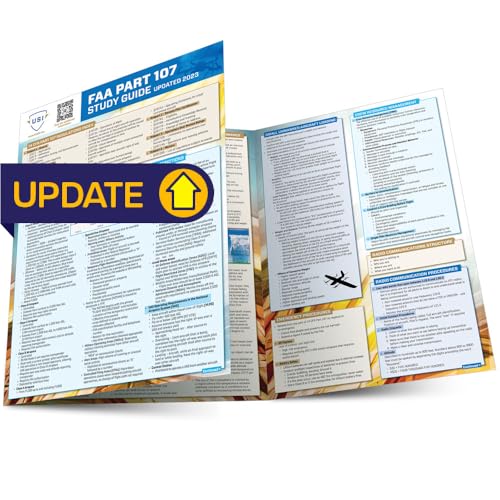
FAA Part 107 Drone Study Guide: a QuickStudy laminated reference guide
As an affiliate, we earn on qualifying purchases.
As an affiliate, we earn on qualifying purchases.
Where Can You Legally Fly Your Drone at Events?
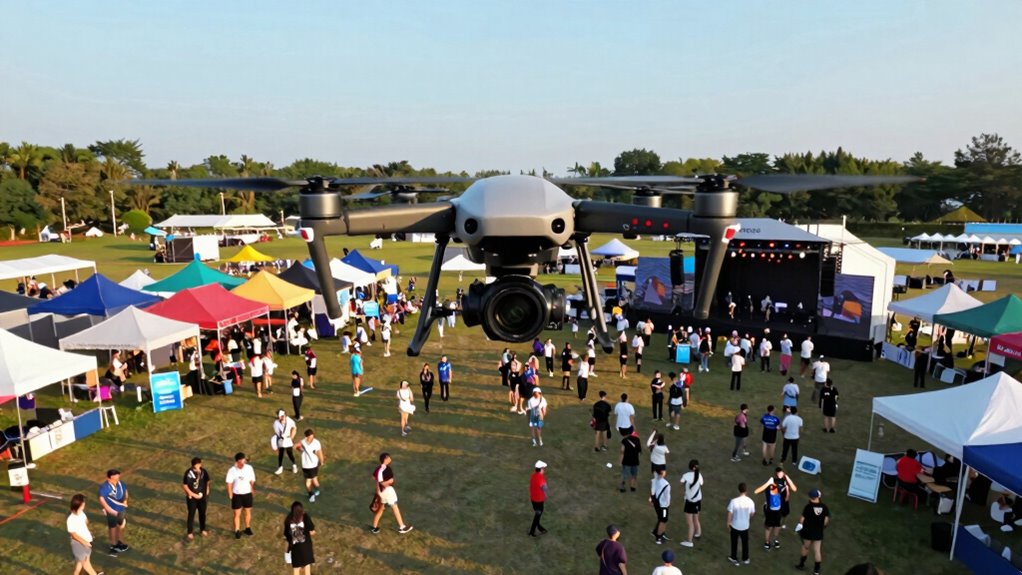
You need to know where you can legally fly your drone during events, whether on public property or at private gatherings. Permissions vary depending on whether you’re attending a private event or filming a public space, so understanding these rules is essential. Also, remember that commercial flights often have different requirements than hobbyist flying, which can impact where you’re allowed to fly. Additionally, being aware of regulatory and environmental considerations is crucial for safe and compliant drone operation at events. It’s important to recognize that privacy laws can influence what footage you are permitted to capture, especially in areas with heightened privacy concerns. Moreover, projector technology can influence your planning if you’re capturing footage or images during these flights, ensuring optimal quality and safety.
Public Property Regulations
Flying your drone at events on public property requires understanding specific regulations to stay legal. Many parks, government-owned spaces, and city squares have restrictions on drone photography and aerial cinematography. Always check local laws and obtain necessary permits before flying. Additionally, some regions have regulations specific to Gold IRA Markets, which may influence the availability of certain investments or the legal framework surrounding financial assets. Understanding the power output of your drone can also help you operate responsibly and within legal limits. Being aware of public property regulations helps prevent unintended legal issues and ensures respectful use of shared spaces. Here’s a quick guide to public property regulations:
| Property Type | Restrictions | Tips |
|---|---|---|
| Parks | No flying over crowds or sensitive areas | Fly at designated times |
| City Squares | May require permits for commercial use | Contact local authorities |
| Government Grounds | Often restricted or closed to public use | Review signage and rules |
| Public Beaches | Some areas allow drone use, others don’t | Respect privacy and safety rules |
Knowing these rules, including local regulations, helps ensure your drone photography and aerial cinematography stay legal and safe at public events.
Private Event Permissions
When it comes to capturing footage at private events, obtaining the proper permissions is vital to avoid legal issues. Before flying your drone, confirm you have the event organizer’s consent and verify any restrictions. You should also carry drone insurance, which can protect you if an accident occurs. Proper battery maintenance is fundamental to keep your drone functioning safely and reliably during the event. Always check that your batteries are fully charged and in good condition to prevent crashes or loss of control. Flying without permission can lead to fines or legal trouble, so double-check local regulations and obtain any necessary approvals. Respecting the private property and privacy of attendees helps you capture great footage without risking legal complications. Additionally, understanding balancing support and boundaries is important for maintaining good relationships with those around you while operating your drone responsibly. Being aware of regulatory compliance ensures your drone activities stay within legal limits and avoid penalties. Keeping updated on local drone laws is essential to ensure your flying practices remain compliant with current regulations. Moreover, staying informed about lifevest regulations can help you avoid potential fines related to unauthorized drone use in certain areas.
Commercial vs. Hobby Rules
Understanding where you can legally operate your drone at events depends on whether you’re flying for recreational or commercial purposes. If you’re hobby flying, you typically follow FAA rules like keeping your drone within visual line of sight and avoiding flying over crowds. Commercial flying requires FAA Part 107 certification, drone insurance, and adherence to stricter guidelines.
Here’s a quick comparison:
| Aspect | Hobby Flying | Commercial Flying |
|---|---|---|
| Certification | Not required | FAA Part 107 certification |
| Drone Insurance | Not mandatory | Strongly recommended |
| Battery Regulations | Standard limits on flight time | Must follow specific battery rules |
| Airspace Rules | Generally more relaxed | Must obtain airspace authorization |
| Over Crowds | Avoid over crowds | Allowed with proper permissions |
Always check local rules for event-specific restrictions.
drone insurance for creators
As an affiliate, we earn on qualifying purchases.
As an affiliate, we earn on qualifying purchases.
How Do You Register Your Drone and Get Permits?
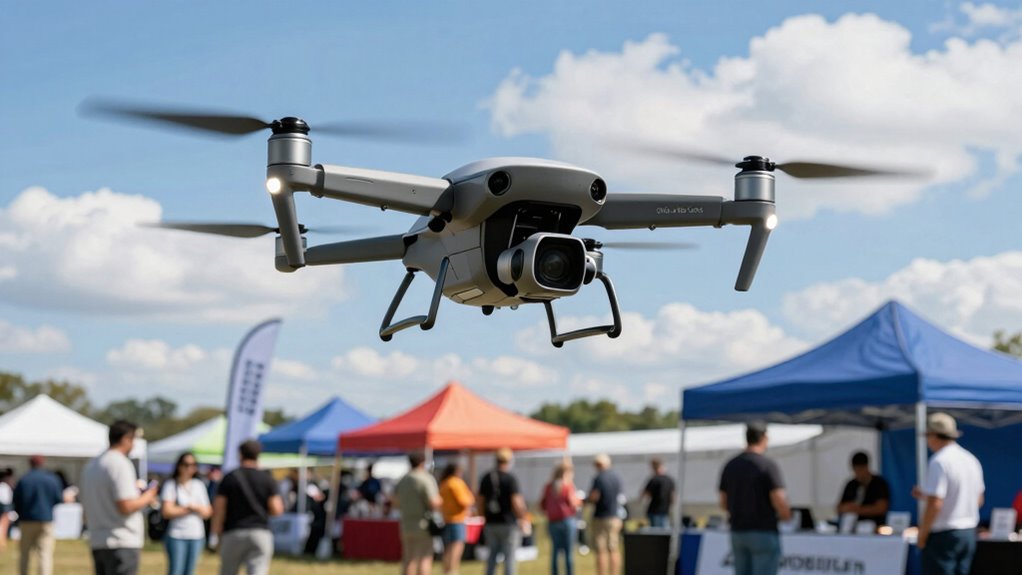
Are you wondering how to register your drone and obtain the necessary permits? First, you’ll need to complete drone registration through the FAA’s online system. This process is quick: you provide your details, drone specifications, and pay a small fee. Once registered, you’ll receive a registration number, which must be marked on your drone. For flying at events or specific locations, you might need a permit; this involves a permit application where you explain your planned activity and location. Be sure to submit your application well in advance, as approval can take some time. Registering your drone and securing permits ensures you’re compliant with regulations, helping you avoid fines or penalties while flying safely and responsibly. Maintaining awareness of vetted drone rules and regulations can also help prevent accidental violations. Additionally, understanding cultural decor principles can be beneficial if your drone activities involve capturing or showcasing traditional Indonesian art and masks in your footage. Staying informed about regulatory updates related to drone regulations can help you adapt quickly to any changes and ensure ongoing compliance. It’s also advisable to stay updated on any website performance metrics related to drone regulations to ensure ongoing compliance.
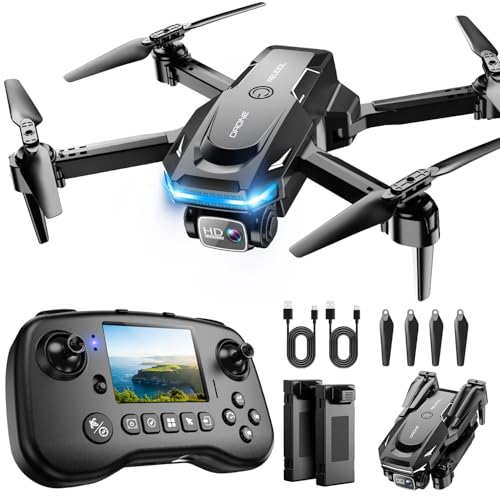
Drone with Camera – Drone with Screen on Controller for Beginners, Foldable Remote Control Quadcopter with Gesture Control, 3D Flip, One Key Start, Emergency Stop, 2 Batteries, Easier to use
The PK01 drone's remote comes with a super handy built-in screen—no phone needed—so you can watch live HD…
As an affiliate, we earn on qualifying purchases.
As an affiliate, we earn on qualifying purchases.
What Are the Essential Safety Rules for Flying at Events?
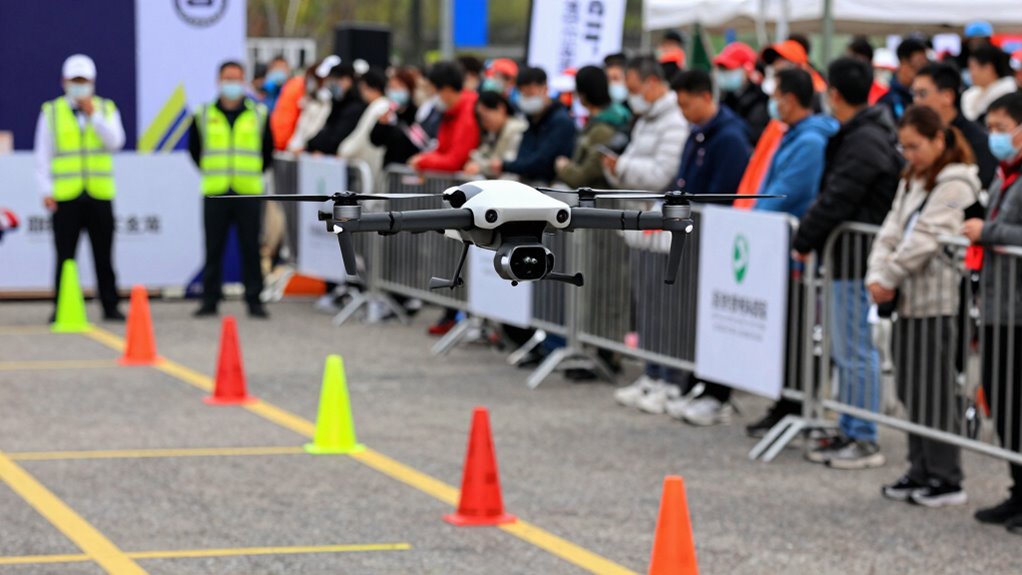
Flying your drone at events requires following essential safety rules to protect both people and property. First, always check weather considerations before flying—avoid strong winds, rain, or fog, which can impair control and cause accidents. Maintain your drone properly; regular drone maintenance ensures the device operates safely and reliably. Keep your drone within visual line of sight and stay at a safe altitude to prevent collisions. Respect no-fly zones and stay clear of crowds to avoid injuries. Never fly over people or private property without permission. Also, be mindful of wind conditions and battery levels, landing immediately if weather worsens or if your drone shows signs of malfunction. Incorporating environmental impact practices can also help minimize environmental impact during your operations. Additionally, understanding heat buildup in your drone’s components can prevent overheating and potential failures. Properly managing battery safety is crucial to avoid fires or damage during flight. Following these safety rules helps you fly responsibly and minimizes risks during events.
How Can You Respect Privacy While Flying Your Drone?
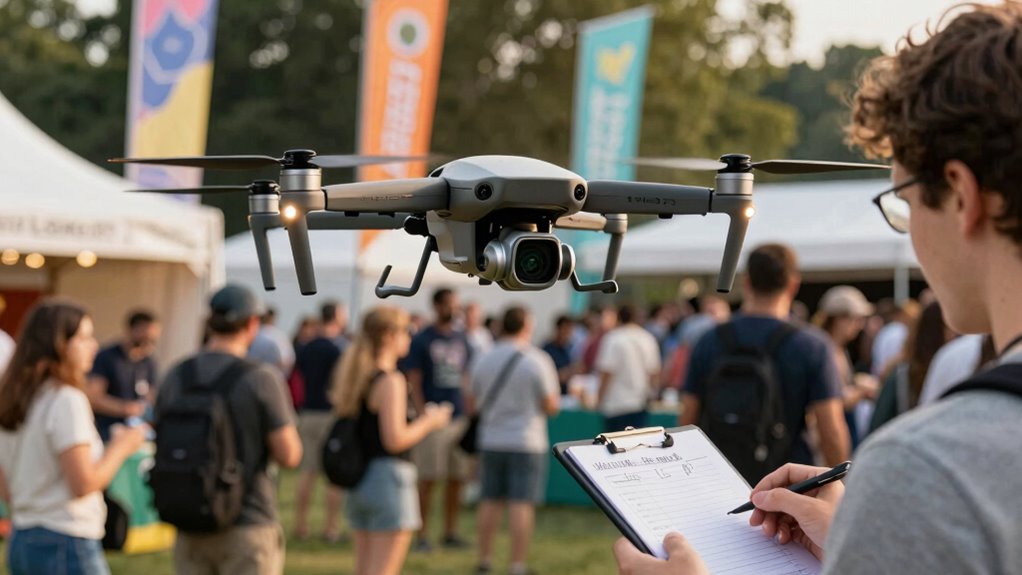
To respect privacy while flying your drone, make sure you have any necessary permissions before capturing images or videos. Keep a safe distance from people’s personal spaces and avoid filming sensitive areas or content. By following these practices, you can enjoy your drone flights responsibly and ethically.
Obtain Necessary Permissions
Even though drones offer exciting creative possibilities, respecting others’ privacy is essential when obtaining permissions. Before flying at an event, make sure you have the necessary approvals from property owners or event organizers. Proper drone maintenance is key to safe operations and demonstrating professionalism, which can help when requesting permissions. Your flight planning should include identifying restricted areas and understanding local regulations to avoid privacy breaches. Communicate clearly with those involved, explaining your intentions and how you’ll minimize intrusion. Securing permissions not only keeps you compliant but also shows respect for privacy. Remember, gaining the right approvals helps prevent conflicts and ensures your drone activities are welcomed and lawful. Always prioritize transparency and responsible planning before taking to the skies.
Respect Personal Boundaries
Respecting personal boundaries while flying your drone demonstrates your commitment to privacy and good etiquette. You should always be mindful of personal privacy and respect consent boundaries. Avoid capturing images or videos of individuals without permission, especially in private settings. To help you navigate this, consider the following table:
| Situation | Appropriate Action | Potential Risks |
|---|---|---|
| Flying over private property | Obtain consent or avoid flying there | Privacy invasion, legal issues |
| Capturing crowds | Ask for permission before recording | Privacy complaints |
| Filming individuals | Respect their right to decline | Violating consent boundaries |
| Using drone in public spaces | Be transparent about your intentions | Breaching privacy expectations |
| Sharing footage | Get explicit consent before posting | Damaging trust or facing complaints |
Avoid Sensitive Content
When flying your drone, it is essential to avoid capturing sensitive content that could invade people’s privacy or cause discomfort. Privacy concerns arise when you unintentionally record private moments or personal activities without permission. To respect others’ privacy, steer clear of areas where people expect privacy, like homes, private events, or secluded spots. Being mindful of creative restrictions helps you stay within legal and ethical boundaries. Avoid focusing on individuals or sensitive locations unless you have explicit consent. Always think about how your footage might impact others before filming. Respecting privacy isn’t just a legal issue—it’s about maintaining trust and good relationships. By being cautious, you ensure your drone use remains responsible, respectful, and free from potential conflicts.
How Do You Maintain Line of Sight and Stay Under Altitude Limits?

To maintain line of sight and stay within altitude limits, you need to keep your drone visually in view at all times and be aware of local regulations. This guarantees you meet visual line of sight requirements and adhere to altitude compliance rules. Use your eyes to track your drone continuously, avoiding obstructions and distractions. Set alarms or alarms on your controller to alert you when nearing altitude limits. Here’s a quick reference:
| Tip | Explanation |
|---|---|
| Use Visual Spotters | Have someone assist you with visual line of sight. |
| Maintain Constant Monitoring | Keep eyes on your drone during flight. |
| Follow Altitude Limits | Always stay within permitted altitude zones. |
Staying attentive helps you fly responsibly and avoid violations.
Which Areas Are No-Fly Zones and Restricted?

Are you aware of the areas where flying your drone is prohibited or restricted? These are typically designated as drone no fly zones based on airspace classification. Understanding these zones is essential to avoid violations. Common restricted areas include:
- Airports and heliports, especially within controlled airspace
- Military bases and government facilities
- National parks and conservation areas
- Large public events or crowded venues
These restrictions help guarantee safety and security. Always check local regulations before flying, as some areas may have temporary no-fly zones during special events. Ignoring these restrictions can lead to fines or legal issues. Staying informed about airspace classifications ensures you fly responsibly and respect no-fly zones.
What Are the Rules for Flying Near People and Crowds?

Flying your drone near people and crowds requires careful attention to safety rules. For aerial cinematography and creative filming at events, you must keep a safe distance from spectators to prevent accidents. Many regulations restrict flying over or near crowds, often requiring special permissions or maintaining a minimum distance. Always check local laws before filming in populated areas. If permitted, fly at a height and distance that minimizes risk, avoiding sudden movements that could cause injury. Remember, safety comes first—never compromise it for a shot. Using a spotter can help monitor surroundings and ensure everyone stays safe. Following these rules not only protects people but also helps you capture stunning footage without legal issues.
What Pre-Flight Checks and Emergency Procedures Should You Follow?

Before taking off, you should perform thorough pre-flight checks to guarantee your drone is in prime condition and ready for flight. This involves a detailed pre flight checklist to identify potential issues before you start. Make sure to:
- Check battery levels and ensure they’re fully charged.
- Inspect propellers for damage or wear.
- Verify GPS signal strength and compass calibration.
- Confirm that all firmware and controls are up to date.
Additionally, review emergency procedures so you’re prepared for unexpected situations. Know how to safely land or cut power if needed. Having a clear plan reduces risks and keeps you in control during the flight. Following these steps helps ensure a safe, smooth experience at your event.
How Can You Stay Updated on Changing Drone Laws?

To stay on top of changing drone laws, you should regularly check updates from official agencies like the FAA. Subscribing to industry news keeps you informed about the latest regulations and trends. Joining drone community groups also offers firsthand insights and helps you stay connected with others maneuvering the same rules.
Follow Official Agency Updates
Staying updated on changing drone laws is essential for compliance and safe flying. To do this effectively, regularly check official agency sources for updates. Here are four ways to stay informed:
- Visit the FAA or local aviation authority websites frequently.
- Sign up for newsletters on drone regulations and policies.
- Follow official social media channels for real-time updates.
- Review updates on drone insurance requirements and aerial photography permits.
Subscribe to Industry News
Subscribing to industry news is one of the best ways to stay informed about the latest drone regulations. By regularly checking reputable sources, you’ll learn about updates to drone laws, including changes to pilot certification requirements and drone insurance policies. Staying current helps you avoid legal issues and ensures your flying activities remain compliant. Many industry news outlets also provide insights on new safety standards and emerging technology, which can impact your operations. Setting up alerts or newsletters from official agencies or trusted drone communities keeps you in the loop without having to hunt for information actively. This proactive approach helps you adapt quickly to regulatory shifts, making sure you’re always prepared before taking your drone to any event.
Join Drone Community Groups
Wondering how to keep up with evolving drone laws? Joining drone community groups is your best bet. These groups often share updates on legal changes, drone maintenance tips, and weather considerations that impact flying at events. Staying connected helps you adapt quickly and avoid violations.
Here are four ways to stay informed:
- Join online forums or social media groups dedicated to drone enthusiasts.
- Attend local drone meetups and workshops.
- Subscribe to newsletters from drone advocacy organizations.
- Engage with local aviation authorities for official updates.
Being part of these communities keeps you current on legal shifts, weather considerations, and best practices, ensuring safer, legal, and more enjoyable drone flying.
Frequently Asked Questions
Are There Specific Drone Insurance Requirements for Event Filming?
Yes, you need drone insurance coverage for event filming, especially for drone liability. Many event venues or organizers require proof of insurance to cover potential damages or accidents caused by your drone. make certain your policy includes extensive liability coverage to protect against injuries or property damage. Having the right insurance ensures you’re financially protected and compliant with regulations, giving you peace of mind while capturing stunning footage at events.
How Do Weather Conditions Affect Drone Safety at Events?
Like the unpredictable weather in Shakespeare’s plays, wind speed and precipitation effects can jeopardize your drone’s safety. High wind speeds can cause loss of control, while rain or snow can damage your equipment or impair visibility. Always check the weather forecast before flying at events, and avoid flying in stormy conditions. Being vigilant about weather guarantees your drone stays safe and your footage remains pristine.
Can Drones Be Used for Commercial Purposes at Public Events?
Yes, you can use drones for commercial purposes at public events, but you must follow specific regulations. You need to obtain the proper permits and make certain your drone operations comply with local laws. It’s crucial to plan ahead, get the necessary approvals, and prioritize safety. By adhering to these rules, you can successfully use your drone for commercial purposes during public events without legal issues.
What Are the Penalties for Violating Drone Regulations at Events?
If you violate drone regulations at events, you risk facing hefty regulatory penalties and legal consequences. Imagine your drone crashing mid-air, drawing attention from authorities who swiftly issue fines or even seize your equipment. You could face fines, license suspension, or criminal charges depending on the severity of the violation. Staying compliant helps you avoid these costly repercussions and guarantees your creative pursuits stay airborne without legal turbulence.
How Do I Handle Drone Malfunctions During a Live Event?
If your drone malfunctions during a live event, stay calm and follow your emergency procedures. Quickly assess the problem using troubleshooting tips you’ve prepared, such as checking the battery or signal connection. If needed, safely land the drone immediately to prevent accidents. Communicate with event staff if necessary, and prioritize safety over capturing footage. Practicing these steps helps you handle malfunctions smoothly and minimizes risks during your flight.
Conclusion
By following these drone rules, you’re the captain of your own aerial journey, steering clear of legal storms and privacy pitfalls. Think of each regulation as a guiding star, lighting your path through the skies. When you fly responsibly, you’re not just capturing stunning moments—you’re building trust and ensuring everyone’s safety. So, take command, stay informed, and let your drone adventures soar smoothly, painting a clear picture of respect and responsibility in every flight.