When exploring 3D printing for sculpture and design, choosing the right materials and optimizing your digital models are key. Consider factors like strength, flexibility, and finish quality to match your artistic vision. Techniques like lattice structures and hollow sections help reduce weight and save materials. Proper print orientation and support structures improve surface quality. Keep experimenting with these aspects, and you’ll discover how to create stunning, intricate, and durable sculptures. If you keep exploring, you’ll reveal even more creative potential.
Key Takeaways
- Material selection influences sculpture aesthetics, durability, and flexibility, with options ranging from resins and photopolymers to metals.
- Design optimization reduces material waste, enhances structural integrity, and enables complex, detailed sculptures through techniques like hollowing and lattice structures.
- Proper print orientation and support strategies improve surface finish quality and reduce post-processing needs for professional results.
- Combining optimized design and suitable materials accelerates production, lowers costs, and fosters creative experimentation in sculpture and design projects.
- 3D printing expands artistic possibilities by allowing intricate, customizable, and durable sculptures beyond traditional fabrication methods.
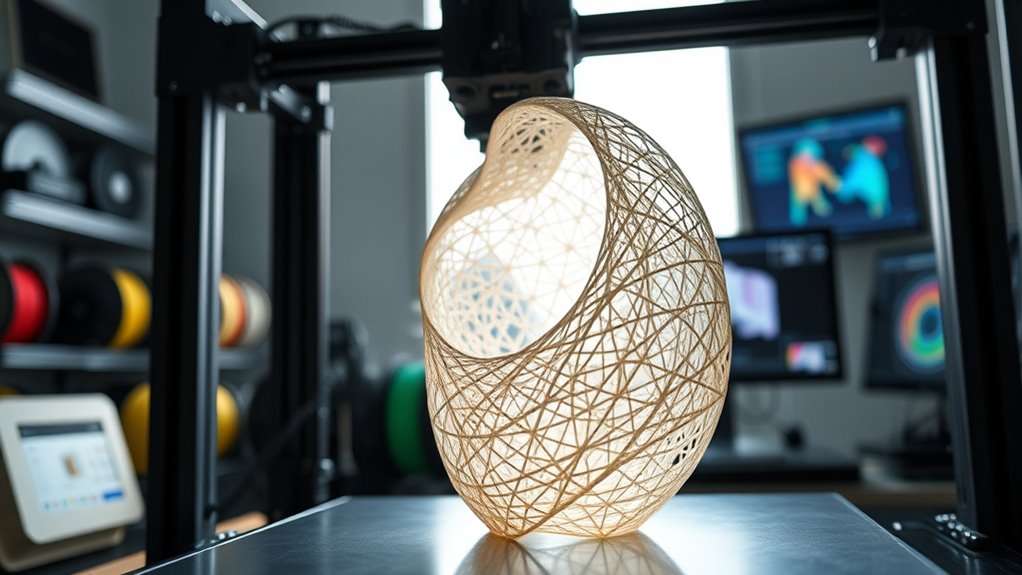
Have you ever wondered how 3D printing is transforming sculpture and design? This innovative technology opens up new possibilities, allowing artists and designers to push boundaries previously thought impossible. One of the most critical aspects of successful 3D printed sculptures is material selection. When choosing materials, you need to take into account factors like strength, flexibility, weight, and finish quality. For instance, if you want a delicate, transparent piece, resin or clear photopolymers might be your best options. If durability is essential, thermoplastics like ABS or PETG could be more suitable. Metal powders are also increasingly popular for creating robust, high-end sculptures. Your decision on materials directly influences the aesthetic and functional qualities of your work, making it essential to match the material to your creative intent.
Choosing the right 3D printing material is crucial for achieving your artistic vision and sculpture durability.
In addition to choosing the right material, you should focus on design optimization to take full advantage of 3D printing’s capabilities. Design optimization involves refining your digital models to reduce material waste, improve structural integrity, and enhance the overall quality of the finished piece. It’s about making your design more efficient for printing without sacrificing artistic detail. You can incorporate techniques like lattice structures to minimize weight while maintaining strength or hollowing out sections that don’t require solid fill. This process allows you to push the limits of complexity, creating intricate, detailed sculptures that would be impossible with traditional methods. By optimizing your design, you also speed up the printing process and lower production costs, giving you more freedom to experiment and iterate.
Furthermore, design optimization encourages you to think critically about the orientation and support structures during printing. Proper orientation can reduce the need for excessive supports, which can mar the surface finish or require additional post-processing. You’ll learn to adjust your digital models to maximize print quality and efficiency, ensuring that each sculpture looks polished and professional. The integration of material selection and design optimization results in a more sustainable process, minimizing waste and lowering costs. It empowers you to create complex, innovative sculptures that are both artistically stunning and technically feasible.
In essence, understanding how to select the right materials and optimize your designs is essential to harnessing the full potential of 3D printing in sculpture and design. It’s not just about printing a shape but about thoughtfully shaping your ideas into tangible, striking works of art. This approach allows you to explore new creative dimensions, making your sculptures more expressive, detailed, and durable than ever before.

Heat Transfer Vinyl Bundle - 43 Pack 12" x 10" PU Iron on Vinyl for T-Shirt, 32 Assorted Colors HTV Vinyl for Heat Press Machine - Easy to Cut, Weed & Transfer
2023 UPDATED HTV VINYL -Our heat transfer vinyl sheets is thin with an excellent dimensional stability and very...
As an affiliate, we earn on qualifying purchases.
Frequently Asked Questions
What Materials Are Most Suitable for 3D Printed Sculptures?
You’ll find materials like PLA, ABS, and resin most suitable for 3D printed sculptures because of their versatility and ability to achieve high print resolution. PLA is easy to work with and environmentally friendly, while ABS offers durability. Resin provides fine detail and smooth surfaces. Your choice depends on your project’s needs, but these materials give you a great balance of versatility and quality for stunning sculptures.
How Durable Are 3D Printed Art Pieces Over Time?
Your 3D printed art pieces can be quite durable if you choose the right materials, but they still face challenges in art preservation. Over time, material degradation may occur due to environmental factors like UV exposure or humidity. To guarantee longevity, it’s crucial to protect your work with proper sealing and display conditions. While some materials last for decades, regular maintenance helps prevent deterioration and preserves your art’s integrity.
Can 3D Printing Replicate Traditional Sculpting Techniques?
Yes, 3D printing can replicate traditional sculpting techniques through digital craftsmanship. You can achieve intricate details and complex textures that mimic hand-sculpted surfaces, thanks to advanced printing resolution. By carefully selecting materials and settings, you replicate textures and depth, giving your digital models a tactile feel similar to traditional sculptures. This approach allows you to blend modern technology with classic artistry, expanding your creative possibilities and ensuring authentic-looking results.
What Is the Cost Comparison Between 3D Printing and Hand Sculpting?
Think of 3D printing as a cost-efficient shortcut, often saving you money compared to hand sculpting. You’ll find lower labor expenses and quicker production times with 3D printing, especially for complex designs. While initial setup costs might be higher, the overall expenses decrease as you mass-produce. Hand sculpting, on the other hand, can be more costly and time-consuming, making 3D printing the smarter choice for budget-conscious projects.
How Environmentally Friendly Is 3D Printing for Art Creation?
3D printing can be quite environmentally friendly if you choose sustainable materials like biodegradable filaments and optimize your designs to reduce waste. While energy consumption varies depending on the printer and project size, many modern 3D printers are energy-efficient. You can minimize your environmental impact by using recycled materials and printing only what you need, making 3D printing a greener option for art creation.

IRON-ON HTV Heat Transfer Vinyl Bundle 42 Pack 12" x 10" Sheets Iron on Vinyl 32 Assorted Colors for Shirts DIY Design for All Cutter and Heat Press Machine
【Various colors & multipurpose】: 32 Various colors are available, It is convenient to do your personalized design. Customize...
As an affiliate, we earn on qualifying purchases.
Conclusion
As you plunge into 3D printing for sculpture and design, you’ll find it’s like holding a magic wand that turns your ideas into reality. This technology opens doors to endless creativity, allowing you to craft intricate details and complex forms with ease. Embrace the possibilities, and let your imagination soar beyond the limits of traditional methods. With 3D printing, your artistic vision becomes a vibrant garden blooming with innovation and innovation’s sweet fruit.

【Premium Bundle】 HTVRONT Automatic Heat Press 2 + HTVRONT Heat Press Accessories Kit + 2 Pack Cutting Mats 12x12 + 8 Pcs 3D Puff Vinyl + 10" x 8ft Gold Glitter HTV Heat Transfer Vinyl
【Bundle Contains】HTVRONT Automatic heat press 2, HTVRONT Automatic Heat Press Accessories Kit (Include: T-shirt rulers*1, weeding hooks*1, 15X15...
As an affiliate, we earn on qualifying purchases.

HTVRONT HTV Heat Transfer Vinyl Bundle - 20 Pack 12'' x 3FT Iron on Vinyl for All Cutting Machine, Easy to Use Heat Transfer Vinyl for T Shirts, HTV Vinyl Bundle with 20 Assorted Colors
【GREAT FOR CUTTING & WEEDING & TRANSFER】This htv heat transfer vinyl bundle is made of SGS certified high-quality...
As an affiliate, we earn on qualifying purchases.