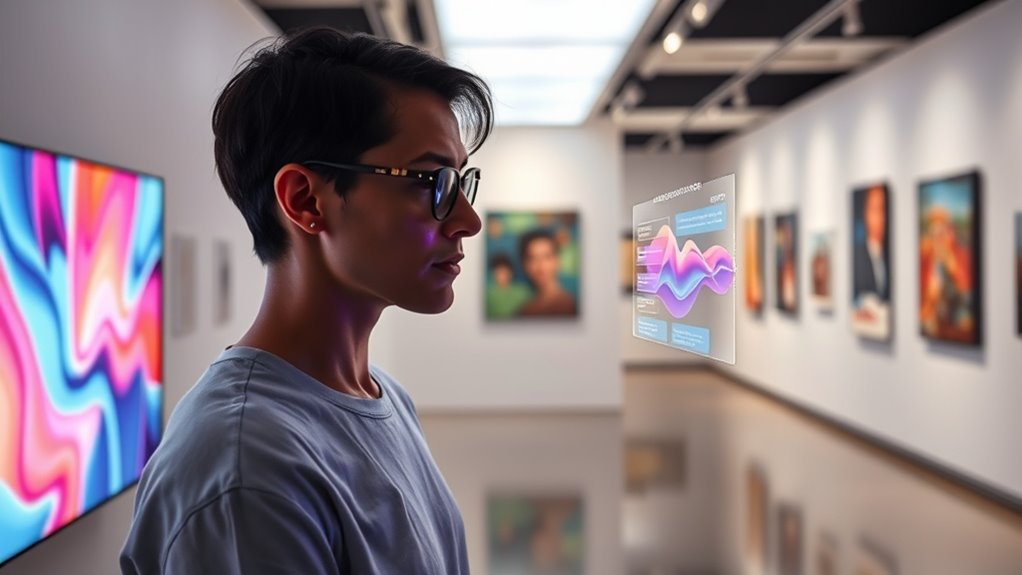

AI-driven algorithms are revolutionizing how you design museum and gallery exhibits by providing data-informed recommendations. These tools analyze visitor preferences, provenance, and global collections to uncover patterns and emerging trends. They help you select diverse, engaging works that appeal to audiences and reflect cultural shifts. By blending human expertise with AI insights, you can craft more innovative, inclusive exhibits. If you’re curious about how this technology shapes the future of curation, there’s more to explore ahead.
Key Takeaways
- AI algorithms analyze vast data sources to identify artworks that align with curatorial themes and audience interests.
- Machine learning models recommend emerging artists and underrepresented works to diversify collections.
- Data-driven insights help curators craft more engaging, relevant, and innovative exhibitions.
- Human curators collaborate with AI tools to refine choices, ensuring expert judgment guides final selections.
- Continuous AI learning adapts recommendations to evolving cultural trends and visitor preferences.

Have you ever wondered how technology is transforming the way museums and galleries select and showcase their collections? One of the most exciting developments is the use of AI-driven algorithms that assist curators in making more informed decisions. These systems leverage machine learning and data analysis to sift through vast amounts of information, uncover patterns, and generate recommendations that might not be immediately obvious. Instead of relying solely on traditional methods, curators now have access to tools that can analyze everything from historical significance to public interest, helping them craft more engaging exhibits.
Machine learning plays a critical role here. It allows systems to learn from existing data—such as visitor preferences, acquisition histories, and art provenance—and then apply that knowledge to suggest pieces that align with current trends or thematic narratives. For example, if a gallery has a collection focusing on modern sculpture, the AI can analyze similar collections worldwide, identify emerging artists, or highlight underappreciated works that fit within the established theme. This process isn’t static; it continually refines its recommendations based on new data, ensuring that curatorial choices stay relevant and innovative.
Data analysis is at the heart of these AI tools. By aggregating information from multiple sources—digital catalogs, scholarly articles, social media trends, and visitor feedback—they create all-encompassing profiles of artworks and audiences. This enables curators to understand which pieces resonate most with visitors or have the potential to attract new audiences. Furthermore, data analysis helps in predicting future trends, so curators can proactively include works that might gain popularity or cultural significance down the line. It allows for a more strategic approach to collection development, balancing historical importance with contemporary relevance.
Using AI for curatorial recommendations doesn’t replace human intuition; it enhances it. Curators still make the final call, but now they have a powerful tool to inform their decisions. Instead of manually sifting through endless archives or relying solely on personal expertise, they can harness machine learning and data analysis to streamline the process, discover overlooked works, and craft exhibitions that are both meaningful and appealing. This technology empowers curators to be more creative and strategic, opening up new possibilities for storytelling and audience engagement.
In essence, AI-driven recommendations are revolutionizing the way collections are curated. They provide a data-informed lens through which to view art and history, making the process more dynamic, inclusive, and forward-looking. As these tools evolve, you’ll find museums and galleries becoming more responsive to cultural shifts and audience interests, leading to exhibitions that are not just visually stunning but also deeply resonant and thoughtfully curated. Incorporating machine learning techniques enables these systems to continuously improve their suggestions and adapt to changing trends, further enhancing curatorial practices.
museum exhibit curation software
As an affiliate, we earn on qualifying purchases.
As an affiliate, we earn on qualifying purchases.
Frequently Asked Questions
How Do AI Recommendations Adapt to Individual User Preferences?
AI recommendations adapt to your preferences through personalization algorithms that analyze your past interactions, likes, and browsing behavior. As you engage more, these algorithms learn your taste, refining suggestions to match your evolving interests. This tailored approach boosts your engagement by offering content you’re more likely to enjoy. Over time, the system becomes better at predicting what you’ll find appealing, creating a more personalized and engaging experience every time you browse.
What Ethical Considerations Are Involved in AI Curatorial Suggestions?
You need to consider ethical issues like algorithmic bias, which can skew recommendations and reinforce stereotypes, and cultural sensitivity, ensuring suggestions respect diverse backgrounds. By being aware of these concerns, you can promote fairness and inclusivity in AI-driven curation. It’s vital to actively monitor and adjust algorithms to prevent bias and to prioritize cultural understanding, creating a more equitable experience for all users.
How Is Data Privacy Maintained in Ai-Driven Curation?
Did you know that 85% of users prioritize data privacy? You uphold privacy in AI curation by implementing data encryption, which protects your information from unauthorized access. Additionally, you guarantee user consent is obtained before collecting or using your data, respecting your rights. These practices help build trust, making sure your personal information stays secure while benefiting from personalized recommendations.
Can AI Replace Human Curators Entirely?
AI can’t fully replace human curators because it lacks artistic intuition and understanding of cultural context. While AI can analyze data and suggest options efficiently, you rely on your expertise to interpret subtle nuances and emotional resonance. Your ability to sense the significance behind artworks ensures exhibitions remain meaningful and authentic. So, AI serves as a helpful tool, but human insight remains essential for truly impactful curation.
What Are the Limitations of Current AI Recommendation Systems?
Think of AI recommendation systems as a compass that sometimes points in the wrong direction. They have limitations like algorithm bias and cultural bias, which can skew suggestions and overlook diverse perspectives. These systems struggle to understand nuanced human emotions, context, and cultural significance. As a result, they can reinforce stereotypes or miss the richness of varied cultural expressions, highlighting that AI still needs human insight for balanced, authentic curation.
artwork provenance analysis tools
As an affiliate, we earn on qualifying purchases.
As an affiliate, we earn on qualifying purchases.
Conclusion
As you explore the gallery guided by AI-driven recommendations, imagine the vibrant tapestry unfolding before you—colors blending seamlessly, stories whispering through curated pieces. This technology becomes your silent curator, weaving connections you might never have discovered alone. With each step, the digital whispers transform your experience into an intimate dance between human curiosity and machine intelligence, creating a luminous mosaic that enriches your journey through art’s endless horizon.

Video Authority: The Art and Science of Converting Viewers Into Clients
As an affiliate, we earn on qualifying purchases.
As an affiliate, we earn on qualifying purchases.

Museum Collections Management System
As an affiliate, we earn on qualifying purchases.
As an affiliate, we earn on qualifying purchases.