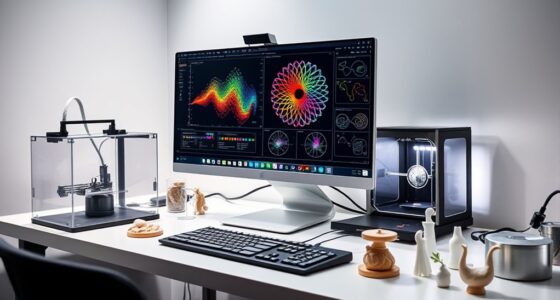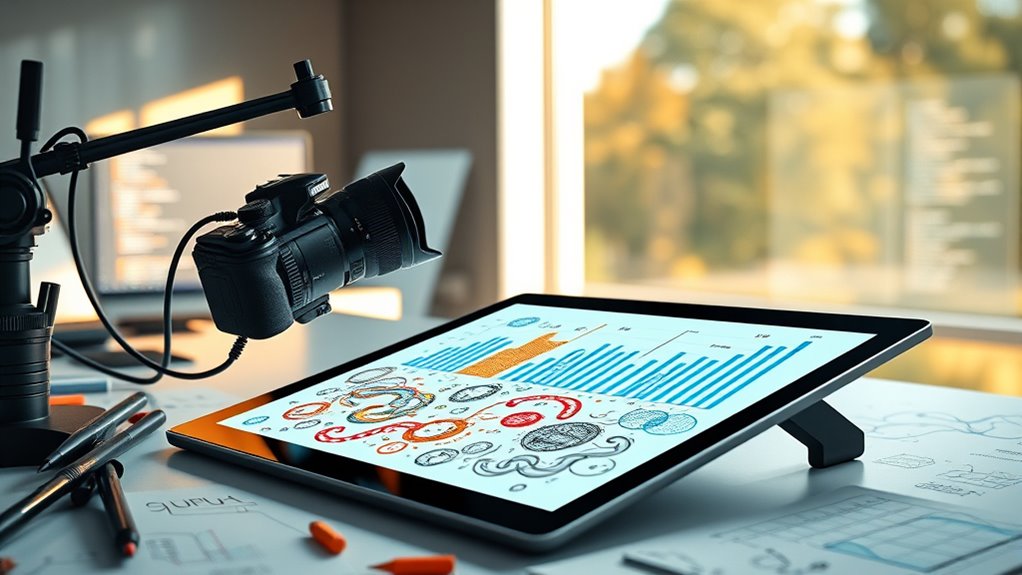

AI is increasingly shaping your creative experiences by generating music, art, and writing with minimal input. It enables you to experiment freely and push artistic boundaries that were once out of reach. As AI tools become more accessible, they democratize creation and expand possibilities across various mediums. However, this growth raises questions about originality, ownership, and ethics. To understand how AI’s role continues to evolve and what it means for your creative future, explore further details ahead.
Key Takeaways
- AI enhances creativity by generating art, music, and data-driven visuals, expanding artistic possibilities beyond human limitations.
- AI tools democratize creative expression, enabling non-experts to contribute to art, design, and data visualization.
- Ethical considerations around ownership, originality, and fair use are central to integrating AI into the creative process.
- Transparency and regulation are essential to ensure responsible AI use and protect creators’ rights.
- AI’s role in creativity fosters innovation while raising debates on authenticity, emotional depth, and the future of human artistry.
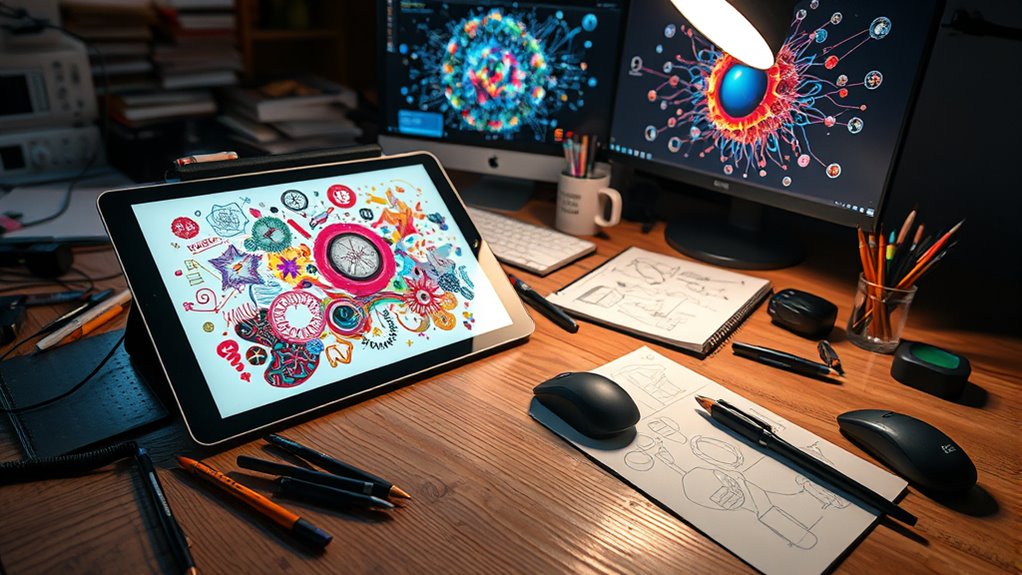
Have you ever wondered how artificial intelligence is transforming creativity? It’s a fascinating shift, especially when you consider AI generated music. You might have heard about algorithms that compose symphonies or generate catchy melodies with little human input. These innovations open new doors for artists, allowing them to experiment and push boundaries they previously couldn’t reach. But with these advancements come important questions about ethical implications. As AI takes on more creative roles, you need to think about who owns the work—does it belong to the programmer, the user, or the AI itself? And what about originality? When an AI creates a piece, is it truly art or just a clever remix of existing data? These concerns challenge traditional notions of authorship and value in creative works.
In the domain of music, AI generated music offers incredible possibilities. You can input parameters or preferences, and the AI produces compositions that match your style or mood. This can democratize music creation, giving more people access to making music without classical training. However, it also raises ethical implications. For example, if a musician uses AI to craft a hit song, who gets credit? Is it fair to call it their original work? Or does it diminish the artistry involved? Some argue that reliance on AI might lead to homogenization, where unique human voices get drowned out by algorithmic patterns. Others see it as a tool that enhances human creativity rather than replacing it. Still, the concern remains that AI might eventually overshadow human input, leading to questions about authenticity and the value of human-made art.
Beyond music, AI’s influence spreads into visual arts, writing, and even film. As you engage with AI tools, you may notice the ethical implications growing more complex. For instance, AI can generate realistic images or deepfake videos, which pose risks of misinformation or privacy violations. These developments force you to consider how to regulate and ethically implement AI in creative industries. Should AI be transparent about its role? Who should be responsible when AI-generated content causes harm? The lines between human and machine creativity blur, prompting society to think carefully about fairness, consent, and intellectual property. Additionally, understanding the potential for misuse underscores the importance of proper regulation and oversight, and many experts emphasize the need for developing ethical frameworks to guide AI’s creative applications. These frameworks can help ensure responsible innovation and protect the rights of creators and consumers. As AI capabilities expand, it’s essential to recognize that ethical considerations are integral to shaping a sustainable future for AI-assisted creativity. Moreover, advances in AI transparency can help build trust and clarify the origins of AI-generated works. The lines between human and machine creativity blur, prompting society to think carefully about fairness, consent, and intellectual property. In the end, AI’s role in creativity is not just about expanding possibilities; it’s about steering a new ethical landscape that requires thoughtful debate and responsible use. Recognizing the importance of home improvement principles, such as organization and sustainability, can also inspire a more mindful approach to integrating AI into daily life and creative pursuits.
Artifi.AI Art Generator – Anime Free AI Image Generator – Photo Editor – Picture Background Remover
Artifi.AI Art Generator Key Features
As an affiliate, we earn on qualifying purchases.
As an affiliate, we earn on qualifying purchases.
Frequently Asked Questions
How Does AI Influence the Originality of Creative Works?
You might wonder how AI influences the originality of creative works. AI can enhance your creativity, but it also sparks the authenticity debate, making you question whether a piece is truly original or just generated. While AI tools can inspire new ideas, some worry about originality concerns, fearing that reliance on algorithms could diminish human uniqueness. Ultimately, AI shapes your work, challenging you to balance innovation with genuine originality.
Can AI Truly Replicate Human Emotional Expression in Art?
Imagine AI as a skilled actor on stage, attempting to mimic genuine emotion. While it can craft impressive scenes, it struggles to capture true emotional authenticity and expressive nuance like a human soul. You see, AI processes data, not feelings, so it may imitate but rarely truly replicate the depth of human emotional expression in art. Its performances lack the heartfelt authenticity that makes art resonate deeply with you.
What Ethical Concerns Arise From Ai-Generated Creative Content?
You should consider that AI-generated content raises ethical concerns like data bias, which can skew results and reinforce stereotypes. You also need to think about intellectual property rights, as AI often uses existing works without proper attribution or permission. This challenges originality and ownership, making it essential to develop fair guidelines. By addressing these issues, you help guarantee AI’s creative use respects both society and creators’ rights.
How Accessible Are AI Tools for Independent Artists and Creators?
You might think AI tools are out of reach for independent creators, but many are surprisingly accessible. Thanks to open-source platforms and affordable software, AI accessibility has increased, empowering independent artists to experiment and innovate without huge budgets. While some advanced features may still require technical skills, numerous user-friendly options exist, making AI a valuable resource for creators seeking to enhance their work and stay competitive in today’s evolving creative landscape.
Will AI Eventually Replace Human Artists in the Creative Industry?
You might wonder if AI will replace human artists someday. While AI advances, it’s unlikely to fully replace your creativity. Instead, it can enhance your work through creative collaboration, offering new tools and ideas. However, AI ethics remain crucial, ensuring these tools support human expression rather than diminish it. You’ll continue to bring unique perspectives, with AI serving as a partner rather than a substitute in the evolving creative industry.

Unlock Suno: Studio Edition: The Professional Guide to Generative Audio Production (Updated for 2026) (AI Music Producer Series)
As an affiliate, we earn on qualifying purchases.
As an affiliate, we earn on qualifying purchases.
Conclusion
As you embrace AI’s gentle guidance, you enter a world where ideas bloom like delicate petals opening to the sun. It’s not about replacing your spark but nurturing it, allowing your creativity to flourish in new, vibrant ways. With AI as your quiet partner, each stroke and concept flows more freely, like a river weaving through a lush landscape. Together, you’re shaping a future where imagination and technology dance in harmony, softly illuminating the path ahead.

AI VoiceWriter – Smart Dictation & AI Writing Assistant for Windows & Mac | USB Dongle & Mobile App for Voice Input, Proofreading, Rewriting & Multilingual Support
🎙️ Hands-Free Voice Typing for Windows & Mac – Powered by iOS & Android dictation technology, AI VoiceWriter…
As an affiliate, we earn on qualifying purchases.
As an affiliate, we earn on qualifying purchases.

Learning AI Tools in Tableau: Level Up Your Data Analytics and Visualization Capabilities with Tableau Pulse and Tableau Agent
As an affiliate, we earn on qualifying purchases.
As an affiliate, we earn on qualifying purchases.