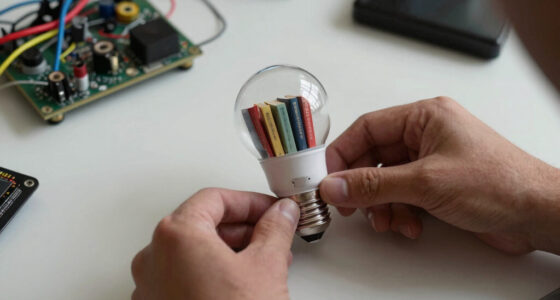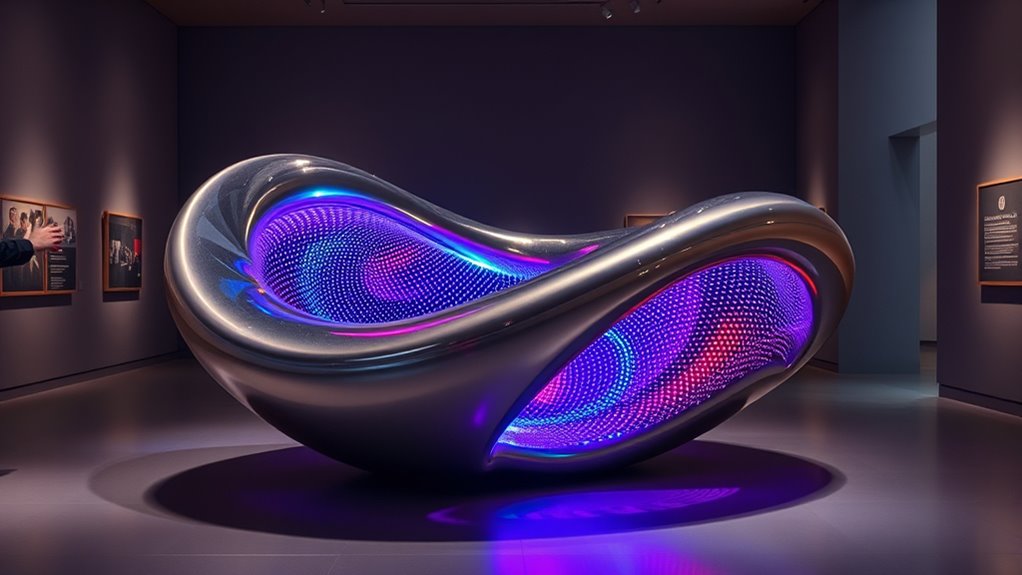

Interactive sculptures that respond to human touch use sensors like infrared, ultrasonic, or capacitive devices embedded in the artwork. When you touch or approach them, these sensors trigger lights, sounds, or movements, creating a lively and engaging experience. Your actions influence how the sculpture reacts, making each encounter unique. This blend of technology and art invites you to be part of the creative process. Keep exploring, and you’ll discover how these dynamic artworks transform the way you connect with art.

Get art and craft supplies delivered free with Prime
- Fast, free delivery on millions of items
- Prime Video, Amazon Music and more included
- Member-only deals all year
Key Takeaways
- They utilize sensors like capacitive or infrared to detect human touch and trigger visual, auditory, or movement responses.
- Interactive sculptures respond dynamically, creating personalized experiences based on the viewer’s gestures, proximity, or pressure.
- Embedded sensor technology enables artworks to react instantly, enhancing engagement and fostering a sense of connection.
- These sculptures often combine artistic expression with technological innovation, pushing traditional boundaries of static art.
- They invite active participation, transforming viewers into co-creators and making encounters immersive and memorable.

Interactive Sculptures
Have you ever encountered a sculpture that responds to your presence or actions? If not, you’re missing out on a fascinating blend of technology and art. Interactive sculptures harness sensor technology to create dynamic experiences, transforming static objects into lively expressions of artistic vision. These artworks are designed to engage viewers in a way that traditional sculptures simply can’t, making each encounter unique and personal. As you approach or touch these sculptures, sensors detect your movements, proximity, or even gestures, triggering a variety of responses—lights, sounds, movements, or visual changes. This seamless integration of sensor technology heightens your sense of participation, blurring the line between observer and creator, and turning a passive experience into an active one.
Discover how sensor-activated sculptures transform passive observation into engaging, personalized artistic experiences.
The core of interactive sculptures lies in their use of sensor technology to communicate with viewers. These sensors can include infrared, ultrasonic, capacitive, or pressure-sensitive devices, all meticulously embedded within the artwork. When you reach out and make contact, the sensors pick up your touch and activate corresponding responses. For example, a sculpture might glow brighter, emit musical tones, or shift positions in reaction to your touch. This immediate feedback fosters a sense of connection, making you feel like your actions are part of the artistic process. Artists who create these sculptures often see sensor technology as a tool for artistic expression, enabling them to push the boundaries of conventional art forms and explore new ways of storytelling. They design these interactive experiences to evoke emotions, provoke thought, or simply entertain, transforming passive observation into active participation.
What makes these sculptures particularly compelling is that they often incorporate multiple sensors to respond in complex ways. You might notice that a gentle touch prompts a subtle movement, while a more forceful gesture triggers a dramatic change. Some sculptures are programmed to respond differently depending on your approach speed, distance, or touch pattern, making each interaction feel personalized. This responsiveness enhances the sculpture’s aesthetic appeal and deepens your engagement, inviting you to explore different ways of interacting. Additionally, these pieces challenge traditional notions of art as a static medium, emphasizing the importance of viewer interaction and technological innovation. They showcase how sensor technology can serve as a powerful medium for artistic expression, creating immersive environments where your presence becomes a crucial part of the artwork. Incorporating sensor technology also opens up new possibilities for interactive storytelling, allowing artists to craft evolving narratives driven by viewer input.
In essence, interactive sculptures that respond to human touch invite you to become a participant in the creative process. They demonstrate how technology can elevate artistic expression, making art more accessible, engaging, and emotionally resonant. As you encounter these works, you realize that the boundary between creator and audience dissolves, leaving you with a memorable experience where your actions shape the art itself. Exploring these sculptures can also inspire new ideas about interactive art forms and how they can further evolve with emerging technologies.
interactive sensor art sculptures
As an affiliate, we earn on qualifying purchases.
As an affiliate, we earn on qualifying purchases.
Frequently Asked Questions
How Do Interactive Sculptures Detect Human Touch?
You might wonder how these sculptures detect human touch. They typically use sensors like capacitive or pressure sensors, which require sensor calibration to guarantee accurate readings. When you touch the sculpture, these sensors pick up changes in electrical signals or pressure, prompting the artwork to respond. This interaction boosts user engagement, making the experience more immersive and dynamic. Proper calibration ensures the sculpture reacts precisely to your touch.
What Technologies Power Responsive Sculpture Interactions?
Imagine a sculpture that comes alive as you touch it, blending material innovation with artistic expression. You’ll find sensors like capacitive touch, pressure, or infrared that detect your presence, while microcontrollers process these signals. Advanced technologies like RFID, motion detectors, and AI enhance responsiveness. Together, these tools transform static art into interactive experiences, allowing artists to push boundaries and viewers to become part of the creative process.
Are These Sculptures Safe for All Ages to Touch?
You might wonder if these sculptures are safe for everyone to touch. Generally, designers consider hygiene and accessibility concerns, using materials that are easy to clean and secure for all ages. They often incorporate antibacterial coatings and touchless options to minimize health risks. However, always check for specific safety guidelines or restrictions to ensure the sculpture is suitable for children, seniors, or individuals with disabilities.
How Durable Are Interactive Sculptures in Outdoor Environments?
You might wonder about the longevity of outdoor sculptures, and with good reason. Their material resilience and weather resistance play vital roles in enduring the elements, from sun to rain. Well-crafted sculptures often incorporate durable materials like treated metals or resilient composites, ensuring they withstand outdoor conditions. While no sculpture is entirely invulnerable, choosing pieces designed for outdoor display means they can gracefully handle the environment over time.
Can Interactive Sculptures Be Customized for Different Events?
Yes, you can customize interactive sculptures for different events. With various customization options, you can tailor designs to match event themes or specific messages. This allows you to create event-specific designs that enhance the atmosphere and engage attendees. Whether it’s a corporate event, festival, or wedding, personalized features make your sculpture more memorable and relevant, ensuring it resonates with your audience and adds a unique touch to your occasion.
touch responsive digital sculptures
As an affiliate, we earn on qualifying purchases.
As an affiliate, we earn on qualifying purchases.
Conclusion
As you engage with these sculptures, you gently invite a dance of connection and discovery. Their subtle responses softly remind us of the delicate balance between art and interaction, encouraging a deeper appreciation for shared moments. In embracing this gentle dialogue, you find yourself subtly drawn into a world where touch becomes a tender whisper, fostering a quiet harmony that elevates your experience beyond mere observation. Ultimately, these pieces softly beckon you to explore, feel, and cherish the understated beauty of human interaction.
sensor-activated interactive art
As an affiliate, we earn on qualifying purchases.
As an affiliate, we earn on qualifying purchases.
electronic interactive sculptures for home
As an affiliate, we earn on qualifying purchases.
As an affiliate, we earn on qualifying purchases.
Halloween Picks
halloween
As an affiliate, we earn on qualifying purchases.