
TL;DR

Get art and craft supplies delivered free with Prime
- Fast, free delivery on millions of items
- Prime Video, Amazon Music and more included
- Member-only deals all year
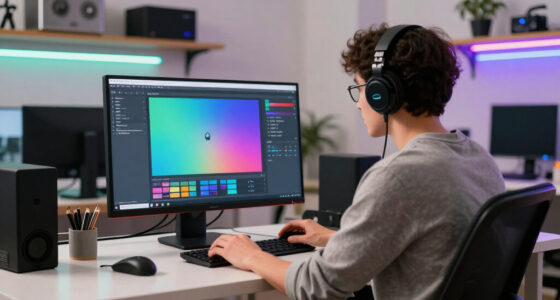
AI is shaping new design patterns and aesthetics, such as shimmering text and tiny icons, which are increasingly influencing software interfaces. These trends reflect the evolving visual language of AI-powered applications.
The concept of the AI aesthetic is gaining traction as designers and developers incorporate new visual patterns inspired by artificial intelligence into software interfaces. These include shimmer effects indicating asynchronous processing and tiny icons that contrast with traditional UI elements. This trend reflects evolving design idioms that are likely to influence future software aesthetics, making it a notable development in interface design.
Recent discussions on Hacker News reveal a growing recognition of AI-driven visual patterns, such as shimmering text used to indicate ‘thinking’ or ‘processing’ states, and the adoption of smaller, thinner icons in desktop applications. These choices appear to be influenced by the visual language of AI, characterized by sparkles, rainbows, and a preference for certain color schemes like beige, orange accents, and serif fonts.
Designers are also noting the emergence of UI controls that behave in non-deterministic ways, such as toggles that cause the entire interface to repaint, reflecting AI’s influence on UI grain and interaction fluidity. While these patterns are still emerging, they are being observed across various applications, from desktop AI tools to consumer apps, suggesting a broader shift in aesthetic conventions.
It is not yet clear whether these design choices are temporary fads or will become embedded in standard UI paradigms. Some experts suggest that these visual cues serve to reassure users of AI’s ‘thinking’ process, but the long-term impact on usability and aesthetics remains to be seen.
Implications of AI-Inspired Design Patterns
The adoption of AI-inspired aesthetics signals a shift in how software communicates with users, emphasizing visual cues that reflect AI processes like computation and data fetching. These patterns could influence user expectations and interaction styles, shaping the future of interface design for years to come. Understanding this trend helps developers and designers prepare for a more AI-infused visual language that may become standard across platforms.
As an affiliate, we earn on qualifying purchases.
Evolution of AI-Influenced Visual Language
The rise of AI has introduced new design idioms, such as shimmer effects for asynchronous tasks and tiny icons, which are now being adopted beyond AI-specific applications. Historically, interface design has been shaped by technological constraints, like the hamburger menu during mobile’s rise, but AI’s influence appears more semantic—using visuals to communicate AI states and processes. Discussions on Hacker News highlight that these patterns are still emerging, with no consensus yet on whether they will persist or fade.
Prior to these developments, interface aesthetics largely focused on simplicity and minimalism, but AI’s visual language introduces more expressive cues, often characterized by sparkles, rainbow colors, and non-deterministic UI behaviors. This evolution reflects both functional and aesthetic adaptations to an AI-centric software environment.
“Designers are adopting shimmering text and tiny icons as visual cues inspired by AI, which may become lasting elements of software aesthetics.”
— an anonymous researcher
As an affiliate, we earn on qualifying purchases.
Long-Term Adoption and Impact of AI Aesthetic Trends
It remains unclear whether these AI-inspired design patterns will become standard or are temporary trends. The durability of these aesthetics depends on whether they prove effective for user experience and how widely they are adopted across platforms. No definitive consensus has emerged, and designers are still experimenting with these cues.
tiny icons for desktop applications
As an affiliate, we earn on qualifying purchases.
As an affiliate, we earn on qualifying purchases.
Monitoring AI-Inspired Design Trends in Software
Future developments will likely include broader adoption of these visual cues and potential standardization within UI design guidelines. Observers will watch for how user interaction and acceptance evolve, and whether these aesthetics influence mainstream software design in upcoming years. Further research and design experimentation are expected as the AI aesthetic continues to develop.
As an affiliate, we earn on qualifying purchases.
Key Questions
Are AI-inspired design patterns here to stay?
It is not yet certain if these patterns will become permanent. They are currently emerging and gaining attention, but their long-term adoption depends on their usability and acceptance by users and designers.
What do shimmering text and tiny icons signify in AI interfaces?
Shimmering text typically indicates a process like ‘thinking’ or ‘fetching,’ while tiny icons are a visual contrast to traditional UI elements, often reflecting AI’s influence on interface aesthetics and grain.
Will these aesthetics affect user experience?
Potentially. These visual cues aim to communicate AI processes clearly, but their impact on usability and user comfort is still being evaluated as the patterns evolve.
Are these design trends limited to AI applications?
While initially associated with AI interfaces, some patterns, like shimmer effects and icon styles, are starting to appear in broader applications, suggesting a wider influence on software design.
Source: Hacker News
Halloween Picks
halloween
As an affiliate, we earn on qualifying purchases.