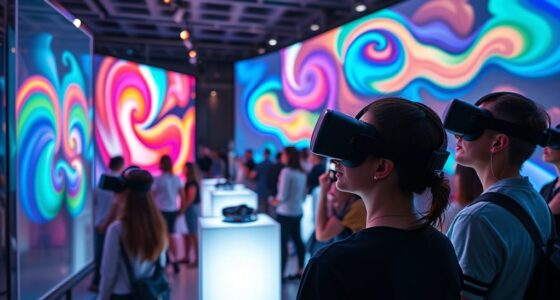
Wearable technology is transforming how you experience art and fashion by turning your clothing into interactive, digital canvases. Sensors detect your movements, temperature, and pressure, allowing garments to respond through visual effects, soundscapes, or environmental changes. This creates immersive personal expressions and dynamic experiences that blend physical and digital worlds. As technology advances, you’ll discover even more innovative ways to connect with wearable art and redefine your style and interactions. Keep exploring to see what’s possible.
Key Takeaways
- Wearable technology integrates sensors into garments to create interactive art that responds to movement, environment, and emotions.
- Sensors like motion, temperature, and pressure enable garments to adapt and provide real-time visual or auditory feedback.
- Interactive fashion transforms clothing into dynamic canvases for personal expression and immersive artistic experiences.
- Design challenges include making sensors lightweight, flexible, durable, and seamlessly integrated without compromising comfort.
- Future trends expand wearable art into daily life, enhancing engagement, storytelling, and innovative artistic collaborations through technology.

Have you ever wondered how technology is transforming the way we create and experience art? Today, wearable technology plays a pivotal role in bridging the gap between the physical and digital worlds, offering immersive experiences that were once unimaginable. One exciting area where this fusion is evident is in augmented fashion, where sensor design takes center stage. By integrating sensors into clothing and accessories, designers are crafting pieces that respond to your movements, environment, or even your emotions. These sensors can detect motion, temperature, or pressure, allowing garments to adapt dynamically to your actions or surroundings. Imagine wearing a jacket that changes its pattern or color based on your mood or the weather—this is the power of sensor design in augmented fashion. It creates a new dialogue between the wearer and their attire, transforming everyday clothing into interactive art pieces.
Wearable sensors transform fashion into interactive, responsive art that adapts to your mood, environment, and movements.
As you move through space, these sensors gather data that can be translated into visual or auditory feedback, making your clothing a canvas for interactive expression. You can become part of an evolving artwork, where your gestures trigger visual effects projected onto your outfit or generate soundscapes that reflect your activity. This interactivity is not just limited to aesthetics; it enhances functionality and personal connection. For example, sensors embedded in fitness wearables can give real-time feedback, motivating you during workouts or alerting you to health issues. In fashion, this technology pushes boundaries, allowing designers to craft pieces that are not static but alive with digital responsiveness. It’s like wearing a piece of art that responds to your presence, making the experience deeply personal.
Sensor design is also vital for ensuring these wearable art pieces are comfortable, durable, and seamlessly integrated. Good sensor design means that sensors are lightweight, flexible, and unobtrusive, so they don’t interfere with your movement or comfort. It’s about creating a harmonious blend of technology and fashion that feels natural and intuitive. The challenge lies in making sensors that can withstand regular wear and tear while maintaining precise responsiveness. As this technology advances, expect to see more innovative applications, from costumes for live performances to everyday clothing that transforms how you express yourself. Additionally, understanding the principles of float mounting textile art can help designers develop more refined and secure methods for integrating sensors into garments without damaging the fabric or compromising aesthetics.
In essence, augmented fashion powered by sensor design is redefining how art is experienced and created. It invites you to participate actively, turning your body into a medium for artistic expression. This convergence of technology and creativity isn’t just about looking futuristic; it’s about genuine interaction and personal storytelling. As wearable technology evolves, it promises to open up even more possibilities, making art more accessible, engaging, and deeply intertwined with your daily life.
Top picks for "wearable technology interactive"
Open Amazon search results for this keyword.
As an affiliate, we earn on qualifying purchases.
Frequently Asked Questions
How Do Wearable Devices Impact User Privacy and Data Security?
You might worry about your privacy with wearable devices, but if they use data encryption and ask for your user consent, your data stays more secure. These devices collect personal information, so it’s vital that manufacturers protect it properly and be transparent about how they use it. By staying informed and giving consent, you help guarantee your privacy is respected while enjoying the benefits of wearable tech.
What Are the Ethical Considerations in Interactive Art Using Wearable Tech?
You might think interactive art using wearable tech is just fun, but it’s full of ethical twists. You’ll face consent complexities, as users often unwittingly share personal data or emotions. Plus, maintaining artistic authenticity becomes tricky when tech influences the message. So, while it’s innovative and engaging, you should be mindful of privacy, consent, and the true meaning behind the art—because even in creativity, ethics matter.
How Accessible Is Wearable Technology for Differently-Abled Artists?
You’ll find that wearable technology for differently-abled artists is becoming more accessible thanks to adaptive interfaces designed to meet diverse needs. However, affordability challenges still exist, making it difficult for some artists to access these tools. While innovations are ongoing, you might need to explore grants, community programs, or open-source options to overcome cost barriers and fully participate in interactive art projects.
What Is the Future Potential of Wearable Tech in Immersive Art Experiences?
You know what they say, “the future is now.” Wearable tech will revolutionize immersive art by integrating haptic feedback and biometric sensing, allowing you to experience art in deeply personal ways. As technology advances, you’ll see more interactive elements that respond to your body and emotions, creating dynamic, engaging environments. This evolution will make art more accessible, inclusive, and immersive, transforming the way you connect with creative expressions.
How Do Costs of Wearable Tech Influence Its Adoption in Art Projects?
Costs of wearable tech substantially influence your adoption in art projects. Cost barriers and affordability challenges can limit access, making it harder for artists to experiment and innovate. When devices are expensive, you might hesitate to incorporate them into your work, potentially restricting creative possibilities. However, as technology becomes more affordable, you’ll find it easier to embrace wearable tech, opening new avenues for immersive and interactive art experiences.
Conclusion
As you wear these devices, blending art with technology, you become both creator and observer. The lines between personal expression and shared experience blur, revealing a world where your body is both canvas and controller. In this dance of innovation and intimacy, wearable tech transforms from mere gadgetry into a living, breathing piece of art. It’s a reminder that in merging the digital with the physical, you find new ways to connect—and also stand apart.