TL;DR

Get art and craft supplies delivered free — and shop member deals
- Fast, free delivery on millions of items
- Access to Prime Big Deal Days deals on October 6–7
- Prime Video, Amazon Music and more included
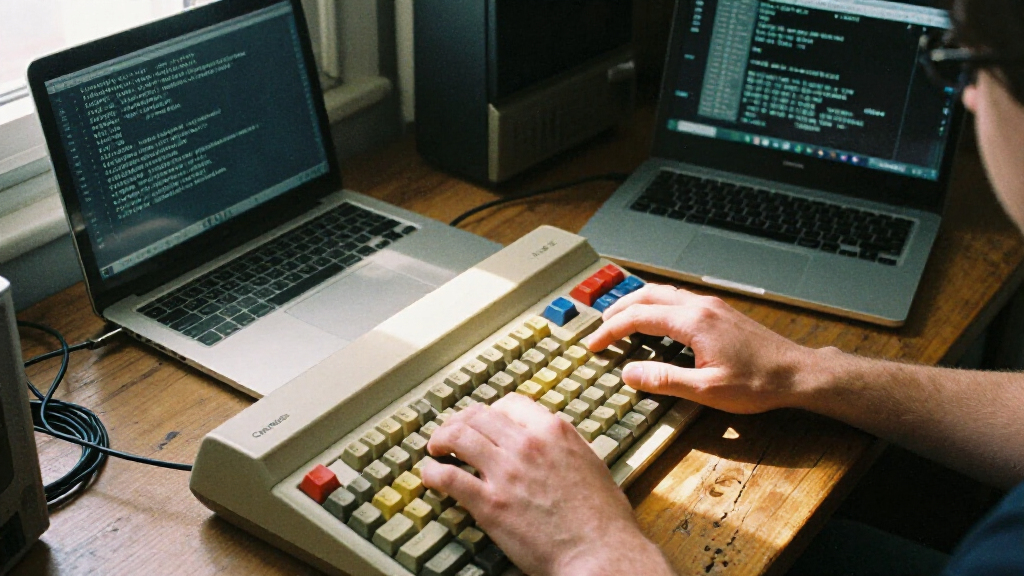
An independent project has released a font recreating the printed legends on classic Commodore 64 keycaps, using keyboard photographs as a visual reference. It includes letters, function-key labels and 63 PETSCII graphics, but its creator says the graphic outlines are reconstructed rather than exact traces of the photographs.
An independent developer has published a font recreating the printed legends on classic Commodore 64 keycaps, offering the letterforms, function-key labels and graphic symbols as digital type. The project, available through GitHub, is designed to reproduce the keyboard’s printed markings—not the Commodore 64’s on-screen bitmap font—and describes its PETSCII graphics as reconstructed outlines rather than exact photographic traces.
The project provides the font in TTF, OTF and webfont formats, as well as a complete package with a browser-based preview. Users can install a font file and select “C64 Keyboard” in an application. In the preview, buttons for special keys and PETSCII symbols insert characters into a type tester, from which users can copy text for use elsewhere. The project says copied symbols need the font installed to display correctly.
The font covers uppercase letters, numbers, punctuation, arrows and the pound sign, along with selected accented letters, including Hungarian characters. It also includes labels for function keys f1–f12 and all 63 PETSCII graphic front legends. Lowercase input displays as uppercase. The preview arranges the graphic legends by key and handles the relevant special character codes for users.
The creator says the font’s shapes have been cleaned up for consistent proportions. Editable outlines are included in a glyphs directory, with build tools in scripts. The photographs used as visual references are not included in the project package. The repository identifies the work as an independent, unofficial reconstruction.
A Keyboard Layout Preserved in Type
The release turns a distinctive physical interface into a reusable digital font, giving designers and hobbyists a way to reproduce the look of Commodore 64 key legends in documents, graphics and web projects. Its inclusion of the PETSCII front legends extends the font beyond ordinary letters and numbers to symbols associated with the computer’s keyboard.
That distinction is useful for anyone trying to represent the keyboard’s printed graphics accurately. The project is not a general-purpose recreation of C64 screen text: the developer specifically distinguishes the smooth, reconstructed keycap outlines from the computer’s bitmap display font. Treating the two as interchangeable would produce a different visual result.
The downloadable outlines and build tools also make the project more than a static specimen. Users can inspect or work with the glyph files, while the preview and encoding guide help them insert symbols that may not be readily available through an ordinary keyboard layout. Its unofficial status, however, means it should be understood as a community reconstruction, not an official Commodore release.
As an affiliate, we earn on qualifying purchases.
From Photographs to Reconstructed Glyphs
The project’s source description says the key legends were recreated from photographs of a classic Commodore 64 keyboard. It also draws on the Ultimate Commodore 64 Reference for the identities and key assignments of PETSCII graphics. The visual form and the symbol mapping therefore come from different inputs: photographs inform how the marks look, while the reference informs which symbols belong to which keys.
The repository is careful about the limits of that process. It says the frame thickness, curves and print proportions of the PETSCII graphics were inferred from the supplied keyboard photograph, and that the outlines are not exact photo traces. Pi is unframed, matching the key as described in the project. The left and right front legends correspond to Commodore-plus-key and Shift-plus-key combinations in uppercase/graphics mode; Pi on the up-arrow key also works with Commodore.
The listed release guidance identifies version 1.107 as the version to install if an earlier version is already present. The project advises restarting applications that continue to show the older font after an update. It also points users to a PETSCII key map and encoding guide for codes and keyboard combinations.
“These are reconstructed outlines: identities and key assignments come from the Ultimate Commodore 64 Reference; frame thickness, curves, and print proportions are inferred from the supplied keyboard photograph.”
— The project description on GitHub
As an affiliate, we earn on qualifying purchases.
How Closely the Outlines Match
The project does not claim that its PETSCII graphics are exact copies of the photographed keycaps. Their curves, borders and print proportions were inferred, and the original photographs are not included in the repository. That makes it difficult for users to compare the files directly with the source images through the project package alone.
The supplied description does not identify the keyboard’s exact model or production period, explain how many photographs informed the work, or provide a detailed account of the reconstruction process. It also makes no claim that every Commodore 64 keyboard used identical legends. The font is presented as an independent recreation; the available material does not establish an official association or endorsement.
As an affiliate, we earn on qualifying purchases.
Install, Preview and Test the Font
Readers who want to use the font can download a TTF or OTF file from the GitHub project and select C64 Keyboard in their chosen application. Alternatively, they can extract the complete package and open preview.html to test ordinary characters and insert PETSCII symbols. The project’s key map and encoding guide provide further instructions for the graphic legends.
Anyone updating from an earlier release should install version 1.107 and restart applications that still display the old version, according to the project’s instructions. No further release date or planned development is stated in the supplied material; changes to the font or its documentation will depend on updates published by its creator.
As an affiliate, we earn on qualifying purchases.
Key Questions
What does the C64 Keyboard font recreate?
It recreates the printed legends on Commodore 64 keycaps, including letters, numbers, punctuation, function-key labels and PETSCII graphics. It is not a recreation of the C64 screen bitmap font.
Does the font include the Commodore 64’s graphic symbols?
Yes. The project lists all 63 PETSCII graphic front legends and provides a preview with buttons to insert them. Its encoding guide explains the relevant codes and keyboard combinations.
Are the PETSCII graphics exact copies of the keycaps?
No. The creator describes them as reconstructed outlines. Symbol identities and assignments draw on the Ultimate Commodore 64 Reference, while proportions and shapes were inferred from a keyboard photograph.
How can I use the font?
Download and install the TTF or OTF file, then select “C64 Keyboard” in an application. The complete package includes preview.html for testing and copying special symbols; those symbols require the font to display correctly.
Is this an official Commodore font?
No official connection is stated. The repository describes the font as an independent, unofficial reconstruction.
Source: hn
Fall Picks
fall essentials
As an affiliate, we earn on qualifying purchases.