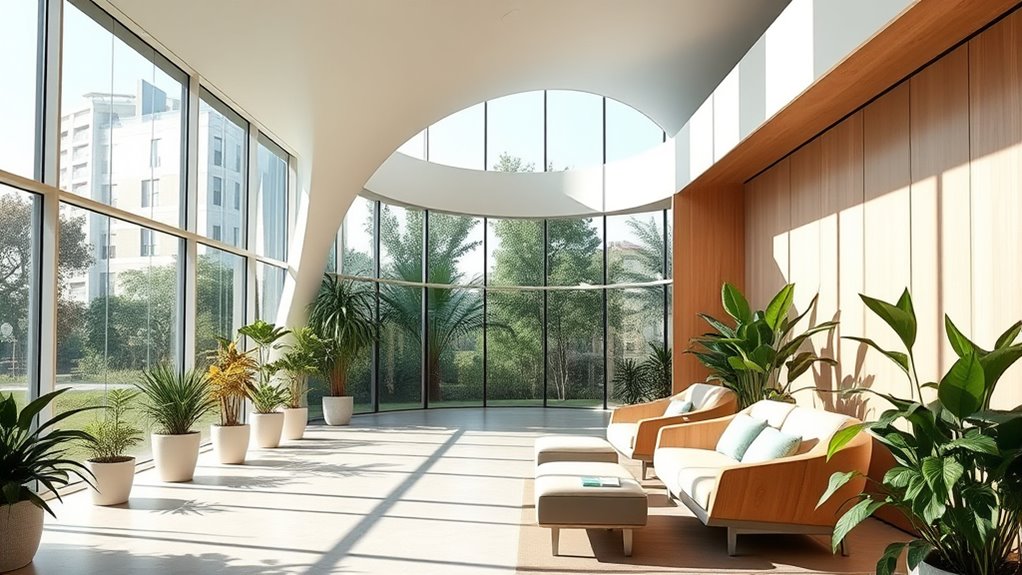

When designing spaces for well-being, you should focus on creating environments that promote comfort, reduce stress, and support mental resilience. Incorporate natural light with large windows or skylights to boost mood and regulate sleep patterns. Use acoustic strategies like sound-absorbing materials to minimize noise and foster calm. Thoughtful architectural choices, such as restorative layouts and calming colors, can substantially enhance mental health. Discover how thoughtful design can transform spaces into supportive environments that nurture your well-being.
Key Takeaways
- Architectural design that prioritizes comfort and calmness reduces stress and promotes psychological resilience.
- Incorporating ample natural light through large windows and skylights enhances mood and regulates sleep patterns.
- Using sound-absorbing materials and strategic layouts minimizes noise pollution, supporting mental relaxation.
- Restorative environments in architecture foster focus, relaxation, and overall mental well-being.
- Thoughtful design choices create spaces that encourage mental health, reducing overwhelm and supporting psychological recovery.

Have you ever wondered how the spaces around us influence our mental well-being? The answer lies in thoughtful architectural design, which can profoundly impact how you feel in a given environment. When spaces are designed with your mental health in mind, they foster comfort, reduce stress, and promote a sense of calm. Two essential elements in this approach are natural light and acoustic design, both of which can transform ordinary spaces into restorative environments.
Natural light is more than just an aesthetic feature; it’s a key component of mental health. Exposure to sunlight helps regulate your circadian rhythm, improving your sleep patterns and boosting your mood. When you’re in a space filled with ample natural light, you often feel more energized and alert. Conversely, spaces that lack sufficient daylight can lead to feelings of lethargy and even contribute to depression. Architects who prioritize natural light often incorporate large windows, skylights, and open layouts that maximize sunlight penetration. These design choices aren’t just about aesthetics—they’re about creating environments that support your overall well-being. They also help reduce reliance on artificial lighting, which, if overused, can cause eye strain and disrupt your natural sleep cycle. So, next time you step into a bright, sunlit room, know that it’s intentionally designed to uplift your mood and keep you feeling balanced. Incorporating appropriate lighting strategies can further enhance these positive effects.
Ample natural light boosts mood, regulates sleep, and creates balanced, energizing environments.
Acoustic design is equally important, yet often overlooked. Poor acoustics can cause noise pollution, which heightens stress levels and impairs concentration. Imagine working or relaxing in a space filled with constant background noise—your stress might skyrocket, and your ability to focus diminishes. Good acoustic design minimizes unwanted sound and enhances sound quality within a space. This can involve sound-absorbing materials like carpets, acoustic panels, or textured wall surfaces that dampen echo and reduce noise distraction. Creating quiet zones or using strategic spatial layouts can help you find moments of peace amid a busy environment. When a space is acoustically optimized, it becomes a sanctuary where you feel less overwhelmed and more centered. This is especially important in healthcare settings, workplaces, or urban apartments where external noise can be intrusive. Well-designed acoustics can make a notable difference in how you experience a space, allowing you to relax, think clearly, and recover mentally.
In essence, architecture that thoughtfully integrates natural light and acoustic design can profoundly influence your mental health. These elements aren’t just about comfort—they’re about intentionally shaping environments to nurture your psychological resilience. When you’re in spaces that harness sunlight and minimize noise, you’re more likely to feel balanced, focused, and at ease. It’s a reminder that good design isn’t just about aesthetics; it’s about creating environments that support your mental well-being every day.

DINAH 120 Inch Electric Projector Screen with Remote, Automatic Air Indoor Drop Down, Motorized 4K 3D HD Projection for Movies
Large 120-inch screen: The DINAH electric projector screen is an ideal choice for movie enthusiasts and professionals alike,...
As an affiliate, we earn on qualifying purchases.
Frequently Asked Questions
How Does Lighting Impact Mental Health in Architectural Design?
Lighting considerably impacts your mental health by influencing your mood and energy levels. Good lighting, especially natural ventilation, helps you feel more alert and relaxed. It also enhances acoustic comfort, reducing stress caused by noise. When designed thoughtfully, lighting creates a calming environment that boosts well-being, helping you feel more focused and at ease. Proper lighting design makes your space healthier, supporting your mental and emotional resilience.
What Materials Promote Mental Well-Being in Building Interiors?
You should incorporate natural textures and biophilic elements to promote mental well-being in building interiors. Use materials like wood, stone, and cork to create a calming, grounded environment. Adding plants and views of nature helps connect occupants with the outdoors, reducing stress. These materials and elements foster a sense of tranquility and comfort, positively impacting mood and mental health while making the space more inviting and restorative.
Can Architectural Design Influence Long-Term Mental Health Outcomes?
Think of architectural design as planting seeds for mental health. By integrating biophilic elements and ensuring spatial connectivity, you can create environments that nurture well-being over time. Thoughtful design influences long-term mental health by reducing stress, encouraging social interaction, and fostering a sense of belonging. Your choices in space and nature integration lay the foundation for resilience, helping individuals thrive both now and in the future.
How Do Outdoor Spaces Affect Occupants’ Psychological Health?
Outdoor spaces substantially boost your psychological health by promoting nature integration, which reduces stress and enhances mood. When designed with privacy enhancement, these areas allow you to unwind without feeling exposed, fostering relaxation and a sense of security. You benefit from natural light and fresh air, improving overall well-being. By creating thoughtfully designed outdoor environments, you can experience better mental clarity, emotional resilience, and a stronger connection to nature.
What Are the Best Design Practices for Creating Calming Environments?
To create calming environments, prioritize acoustic comfort by using sound-absorbing materials that reduce noise. Incorporate soothing colors based on color psychology, like soft blues and greens, to promote relaxation. Use natural light and strategic furniture placement to enhance tranquility. Avoid clutter and harsh lighting, focusing instead on simple, harmonious designs that foster a sense of peace and well-being for occupants.

BIGASUO Digital Picture Frame Frameo 15.6" WiFi Electronic Photo Frames Large with 64GB Memory 1920x1080 IPS FHD Touch Screen Share Moments Instantly Anywhere Photo Gifts for Parents and Grandparents
【Instantly Share Moments & Bridge the Distance】Connect the 15.6" digital photo frame to WiFi and share precious photos...
As an affiliate, we earn on qualifying purchases.
Conclusion
As you consider the spaces around you, remember that thoughtful design gently nurtures your well-being. When architecture softly supports natural light, calming colors, and inviting environments, it subtly guides you toward comfort and balance. By choosing spaces that embrace your mental health, you create a quiet sanctuary for growth and resilience. Ultimately, the right environment becomes a gentle companion on your journey toward greater well-being, reminding you that your surroundings can nurture your inner harmony.

FANGOR 21.5" Large Digital Picture Frame 64GB, WiFi Photo Frame 1920x1080 FHD IPS Display with Remote Control, Auto-Rotate, Wall Mounted, Share Photos/Videos Via Uhale App/USB/SD (No Touch Screen)
【Easy And Quick】You can download the Uhale app and use it for free for life. The remote control...
As an affiliate, we earn on qualifying purchases.

Digital Picture Frame, 10.1 Inch Picture Frame with 1280*800 HD IPS Touch Screen, Smart Digital Photo Frame Built-in 32GB Memory, Auto-Rotate Easy Setup to Share Photos or Videos via AiMOR APP (Black)
Instant Share via AiMOR APP: Instantly share life's special moments through the AiMOR app—surprise loved ones with spontaneous...
As an affiliate, we earn on qualifying purchases.