You’ll see fresco painting making a strong comeback in contemporary architecture as designers combine traditional techniques with modern innovations. Architects and artists now use digital tools, synthetic pigments, and new preservation methods to create vibrant, durable murals that connect past and present. These frescoes often serve as striking focal points or functional elements in modern buildings, fostering cultural richness and uniqueness. If you keep exploring, you’ll discover how this fusion of old and new shapes the future of architectural art.

Get art and craft supplies delivered free with Prime
- Fast, free delivery on millions of items
- Prime Video, Amazon Music and more included
- Member-only deals all year
Key Takeaways
- Contemporary architecture integrates frescoes as both decorative and functional elements, blending tradition with modern design.
- Digital tools and spray technology enable artists to create large-scale, detailed fresco murals efficiently.
- Preservation techniques ensure the longevity of ancient frescoes while inspiring innovative restoration projects.
- Interdisciplinary collaborations between artists, architects, and conservators promote respectful innovation in fresco art.
- The revival emphasizes cultural continuity, connecting historical significance with modern storytelling in built environments.
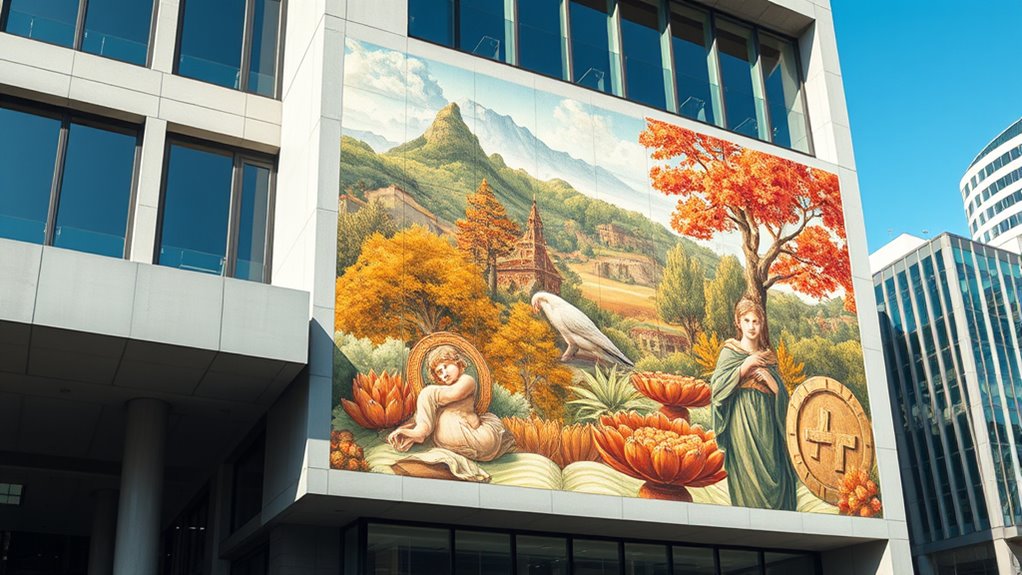
In recent years, fresco painting has experienced a remarkable revival, capturing the attention of artists and art enthusiasts alike. This resurgence isn’t just about nostalgia; it’s a deliberate effort to reconnect with a form of art that holds deep historical significance. Frescoes have been an integral part of cultural expression for centuries, adorning ancient walls from the Roman Empire to the Renaissance. Their historical significance lies in their ability to tell stories, depict religious scenes, and reflect societal values of their time. Today, contemporary artists and architects are rediscovering these qualities, blending them with modern techniques to breathe new life into old traditions.
Fresco painting’s revival reconnects us with a timeless art form blending history and innovation.
Modern techniques are transforming how frescoes are created and preserved, making the process more accessible and durable than ever before. Traditional fresco painting involves applying mineral pigments onto wet plaster, a meticulous process requiring skill and speed. Now, artists incorporate innovative methods such as digital design, spray technology, and synthetic pigments that mimic traditional mineral colors but offer increased longevity and vibrancy. These advancements allow for larger-scale projects and more detailed imagery, expanding the scope of fresco applications within contemporary architecture. You can see this blend of old and new in modern buildings where frescoes serve both aesthetic and structural purposes, creating immersive environments that honor history while embracing innovation.
This revival also influences architectural design, where frescoes are no longer confined to historical reconstructions but are integrated into modern structures as statement pieces or functional elements. For instance, large-scale murals on building facades or interior walls are often created using techniques similar to traditional fresco, but with a contemporary twist that emphasizes sustainability and durability. This approach respects the historical significance of fresco art, connecting past and present in a way that feels fresh yet rooted in tradition. By incorporating frescoes into architectural projects, you can evoke a sense of timelessness and cultural continuity that resonates with viewers and occupants alike.
Furthermore, the renewed interest in fresco painting encourages a dialogue between disciplines—artists, architects, conservators, and historians all contribute to the evolution of this art form. This collaborative effort ensures that modern techniques are not only innovative but also respectful of the historical significance that makes frescoes so meaningful. You’re witnessing a renaissance that values craftsmanship, storytelling, and the physical connection to history. Whether through restoring ancient murals or creating new frescoes on modern surfaces, this movement underscores the enduring power of fresco painting as a living art form. It’s a tribute to how tradition and innovation can coexist, inspiring contemporary architecture with a rich visual language that bridges centuries. Additionally, support for fresco preservation is crucial for maintaining these artworks for future generations.
As an affiliate, we earn on qualifying purchases.
Frequently Asked Questions
How Do Modern Fresco Techniques Differ From Ancient Methods?
Modern fresco techniques differ from ancient methods by using synthetic pigments, which provide brighter, more durable colors, and allow for easier color matching. You also incorporate digital replication, enabling precise planning and design before application. Unlike traditional methods that rely solely on manual application on wet plaster, contemporary artists blend technology with classic techniques, resulting in faster processes and consistent quality, bridging historical artistry with innovative advancements.
What Are the Cost Implications of Commissioning New Fresco Artworks?
When commissioning new fresco artworks, you should consider a thorough cost analysis to understand expenses. Fresco projects can be costly due to materials, skilled labor, and time. Funding strategies, such as grants or sponsorships, can help offset costs. You’ll need to balance quality and budget, ensuring that the project aligns with your financial plan. Planning ahead and exploring diverse funding options makes the process smoother and more sustainable.
How Durable Are Contemporary Frescoes in Different Climates?
When considering how durable contemporary frescoes are in different climates, you focus on weather resistance and material longevity. You’ll find that in humid, rainy, or hot environments, frescoes tend to face challenges like fading, cracking, or peeling. Conversely, in stable, dry climates, they maintain their vibrancy and structural integrity longer. Proper materials, techniques, and protective coatings are essential to enhance their resilience across diverse weather conditions.
Can Fresco Painting Be Integrated Into Sustainable Architectural Designs?
You can definitely incorporate fresco painting into sustainable architecture by using eco-friendly pigments and renewable materials. These choices reduce environmental impact while enhancing aesthetic appeal. Frescoes offer durability and natural insulation properties, making them practical for eco-conscious designs. By blending traditional techniques with modern sustainability practices, you create spaces that are both beautiful and environmentally responsible, aligning art with your commitment to greener, more sustainable architecture.
What Are the Main Challenges Faced by Artists Reviving Fresco Art Today?
You might think reviving fresco art is straightforward, but restoration ethics and cultural preservation pose real challenges. Artists today must balance respecting historical techniques with modern safety standards, often facing limited access to authentic materials. Preserving cultural integrity while adapting to contemporary contexts requires careful judgment. This coincidence of tradition and innovation keeps fresco revival exciting yet complex, demanding skillful navigation of ethical and cultural considerations to truly honor the art’s legacy.
As an affiliate, we earn on qualifying purchases.
Conclusion
As you explore this revival, remember that frescoes once bridged centuries, much like your favorite vintage vinyl. By blending ancient techniques with modern architecture, you become part of a timeless dialogue—proof that tradition never truly fades but instead evolves. Embrace this resurgence as your own renaissance, proving that even in a digital age, the soul of craftsmanship endures, echoing through walls that whisper stories from the Renaissance to your contemporary space.
As an affiliate, we earn on qualifying purchases.
fresco preservation restoration tools
As an affiliate, we earn on qualifying purchases.
As an affiliate, we earn on qualifying purchases.
Fall Picks
fall essentials
As an affiliate, we earn on qualifying purchases.