TL;DR

Get art and craft supplies delivered free with Prime
- Fast, free delivery on millions of items
- Prime Video, Amazon Music and more included
- Member-only deals all year
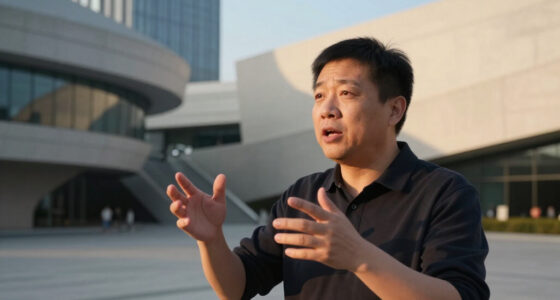
Ippolito Pestellini Laparelli and Erica Petrillo of 2050+ participated in a discussion about ‘The Parking Lot TH’ project. The project reimagines urban space, emphasizing temporary, community-driven interventions. Details about the project’s scope and impact are still emerging.
Ippolito Pestellini Laparelli and Erica Petrillo of 2050+ discussed their involvement in the project ‘The Parking Lot TH’, highlighting its focus on transforming urban public spaces through temporary interventions. The conversation took place recently and underscores the group’s ongoing efforts to rethink city landscapes and community engagement.
The project ‘The Parking Lot TH’ involves a series of temporary interventions in urban parking areas, aiming to demonstrate that public spaces can be dynamically reconfigured for community use. 2050+ members Pestellini Laparelli and Petrillo explained that the initiative seeks to challenge the fixed nature of urban infrastructure, promoting flexible, community-led transformations.
In their discussion, they emphasized that the project is part of a broader movement to reclaim public space from commercial and regulatory pressures. The project includes design proposals that allow for movable, adaptable elements—such as modular walls and landscape features—that can be reconfigured to host sports, cultural events, or social gatherings. The recent focus was on a pilot in Logroño, Spain, where a parking lot was temporarily turned into a site for Basque pelota and other informal sports, illustrating the potential for such interventions to foster community interaction.
Both architects highlighted that the project’s power lies in its symbolic and experimental nature, aiming to inspire similar initiatives elsewhere. They stressed that while the intervention was limited in scope, it serves as a proof of concept that urban spaces can be more adaptable and community-oriented, counteracting the trend of privatization and surveillance in cities.
Potential Impact of Temporary Urban Interventions
This discussion underscores the importance of rethinking urban public spaces in the face of increasing privatization and regulation. Projects like ‘The Parking Lot TH’ demonstrate that temporary, community-driven interventions can challenge the static and commercialized nature of city landscapes. They serve as tangible examples of how cities can be more flexible, inclusive, and participatory, fostering social cohesion and local identity.
For urban residents, such initiatives could restore a sense of ownership and agency over their environments. They also highlight the potential for design and architecture to act as catalysts for social change, encouraging cities to adopt more adaptable, community-centered planning approaches. The discussion by Pestellini Laparelli and Petrillo emphasizes that these efforts are not merely aesthetic but are rooted in social and political significance, addressing issues of access, control, and community resilience.
modular outdoor furniture for public spaces
As an affiliate, we earn on qualifying purchases.
As an affiliate, we earn on qualifying purchases.
Urban Space, Community, and Temporary Interventions
Urban public spaces have historically served as sites for informal social and recreational activities, including sports and gatherings. However, recent trends of commercialization, privatization, and regulatory tightening have reduced the availability of accessible, unregulated spaces. Initiatives like ‘Frontones Danzantes’ in Logroño exemplify efforts to temporarily reclaim and reimagine these areas, transforming parking lots into flexible landscapes for community use.
2050+ has been involved in projects that challenge the fixed nature of urban infrastructure, advocating for adaptable, community-led designs. Their work aligns with a broader movement to preserve and expand public space for informal, spontaneous activities that foster social bonds and cultural expression. The recent discussion about ‘The Parking Lot TH’ situates this project within ongoing debates about the future of urban commons and the role of architecture in shaping inclusive cities.
“Our goal is to show that public space is not fixed but can be continually reclaimed and reshaped by communities.”
— Ippolito Pestellini Laparelli
portable landscape barriers for urban events
As an affiliate, we earn on qualifying purchases.
As an affiliate, we earn on qualifying purchases.
Unclear Scope and Broader Impact of ‘The Parking Lot TH’
Details about the full scope, scale, and long-term impact of ‘The Parking Lot TH’ project remain unclear. It is not yet confirmed whether similar interventions will be implemented in other cities or how policymakers and urban planners will respond to these experimental approaches.
Additionally, the extent to which these temporary projects will influence broader urban policy or infrastructure development has not been established. The discussion so far centers on prototypes and symbolic gestures rather than systemic change, leaving questions about scalability and institutional support open.
reconfigurable park and street furniture
As an affiliate, we earn on qualifying purchases.
As an affiliate, we earn on qualifying purchases.
Next Steps for Community-Led Urban Interventions
Further discussions and presentations are expected, potentially including pilot projects in other cities inspired by ‘The Parking Lot TH’. Urban designers and community groups are likely to explore more adaptable, participatory models for public space use, aiming to influence policy and planning frameworks.
Research and documentation of these initiatives will continue to assess their social and environmental impacts. Policymakers and urban authorities may also be prompted to consider more flexible, community-centered approaches to public space management, based on the success and visibility of early prototypes.
temporary event structures for community gatherings
As an affiliate, we earn on qualifying purchases.
As an affiliate, we earn on qualifying purchases.
Key Questions
What is ‘The Parking Lot TH’ project?
‘The Parking Lot TH’ is an initiative by 2050+ involving temporary interventions in urban parking areas to demonstrate flexible, community-driven reconfigurations of public space.
Who are Ippolito Pestellini Laparelli and Erica Petrillo?
They are members of 2050+ and involved in discussions about urban interventions like ‘The Parking Lot TH’, focusing on reimagining city landscapes for community use.
What are the main goals of the project?
The project aims to challenge the fixed nature of urban infrastructure, promote adaptable public spaces, and inspire community-led urban transformation.
Are these interventions being implemented elsewhere?
It is not yet confirmed whether similar projects will be replicated in other locations, though the concept is intended to serve as a prototype for broader application.
How does this relate to broader urban development trends?
It highlights growing interest in flexible, participatory urban design as a response to increasing commercialization and privatization of public spaces.
Source: designboom
Evergreen bestsellers Picks
bestsellers
As an affiliate, we earn on qualifying purchases.