TL;DR
Good Thanksgiving table decor balances seasonal style with the practical needs of dinner: clear sightlines, serving space, comfortable place settings, and stable decorations. Repeat two or three colors, build around items you already own, and choose a low centerpiece that you can move when the food arrives.
A beautiful Thanksgiving table can still fail the moment the turkey arrives. If the centerpiece blocks your view of your cousin, the serving bowls have nowhere to land, or a candle sits beside a dry leaf, dinner feels more like an obstacle course than a welcome.

Get art and craft supplies delivered free with Prime
- Fast, free delivery on millions of items
- Prime Video, Amazon Music and more included
- Member-only deals all year
The best thanksgiving table decor starts with the meal and the people who will share it. You’ll learn how to plan room for dishes, choose a palette, layer place settings, and add a centerpiece that looks lovely without taking over. These key points for a warm table bring together practical place settings and seasonal details to create a gathering that feels personal, comfortable, and easy to enjoy.
You don’t need a matching dinnerware set or a cart full of decorations. A familiar runner, a few pears, and handwritten place cards can do more for the room than an elaborate display that guests have to work around.
Plan seats and serving space before choosing a centerpiece.
Repeat two or three colors or materials to make mixed dishes feel cohesive.
Keep centerpieces low, narrow, and easy to move when the food arrives.
Use handwritten place cards, family pieces, or gratitude prompts for personal touches.
Choose washable, reusable decorations and check natural materials before putting them near food.
Start with the meal so guests have room to eat
Thanksgiving table decor works best when you plan the meal first, leaving space for guests, drinks, and serving dishes before adding decorations. Count the chairs, decide whether you’ll serve family-style or plate food in the kitchen, and sketch where bowls and platters need to go. A pretty table that cannot hold dinner is not ready for dinner.
For example, if eight people will pass mashed potatoes and green beans around a rectangular table, the center needs usable landing space. Put the biggest platters on a nearby sideboard, then bring them over as guests are ready. If your dining table is small, use narrow place settings and keep the centerpiece compact. Even shifting drinks to a separate counter can free up more space than you expect.
This plan matters because serving style changes how the table needs to work. Family-style dining uses more surface area but lets guests choose portions and pass dishes; plating in the kitchen keeps the table open but asks the host to manage more trips and serving. Neither is inherently better. Choose based on your table, menu, and how much you want to move around once dinner begins. A sideboard can bridge the two approaches: keep backup dishes there and bring them over when needed.
Think about how people move, too. A guest should be able to pass a dish without knocking a vase into someone’s water glass. Leave a clear path around chairs and avoid piling decor near the table’s edge, where a sleeve or serving spoon can catch it. Small amounts of elbow room also make meals more comfortable for guests who need extra space or use mobility aids.
Plan for eating before decorating. If your family-style dishes cannot fit comfortably, move some of them off the table or keep the centerpiece small enough to lift away.
This simple first step helps you avoid last-minute reshuffling when the food is hot and everyone is hungry. The table can still look full and festive; the fullness should come from people and food, rather than objects that compete with them.
Popular right now

Ninja Luxe Café Mini Plus Espresso and Coffee Maker with AutoFroth, Bone & Champagne

De'Longhi Stilosa Compact Manual Espresso Machine with Milk Frother

Vitamix 5200 Professional-Grade Blender
As an affiliate, we earn on qualifying purchases.
Choose two or three colors to make mixed pieces feel connected
A simple palette makes Thanksgiving table decor feel intentional, even when your plates and glasses come from different sets. Pick two or three colors and repeat them in a runner, napkins, flowers, fruit, or place cards. Traditional rust, gold, burgundy, brown, and cream create a familiar autumn look; cream with leafy green or muted blue feels quieter and still seasonal.
Imagine that you own white plates, amber glasses, and only four rust-colored napkins. Use the rust napkins at every other setting and add a few amber leaves or pears down the table. The repeated warm tones help the mismatched pieces look like a choice rather than a shortage. You can also repeat a material, such as linen or wood, to tie different colors together.
There’s no need to buy an entire set in the season’s colors. A runner over a bare wood table defines the center, while placemats mark each seat. If the table already has a handsome surface, leave it visible and use a few small accents instead of covering every inch.
For a less traditional palette, try soft green, ivory, and brown, with herbs or eucalyptus adding a fresh edge. These broad style directions suit many homes, but your own dishes and room matter more than a trend. A color that echoes the kitchen or dining room often feels more at home than a palette chosen from a display. Repetition gives the eye a pattern to follow, which is why different pieces can still feel harmonious. Too many competing colors can make a crowded table feel busier; limiting the palette keeps attention on the meal and conversation. You can still introduce variation through texture, such as linen beside ceramic, without adding another strong color.
Layer place settings without buying a whole new dinnerware set
Layered place settings give each guest a clear spot and add texture without requiring matching dishes. Start with a placemat or charger, add your everyday dinner plate, then finish with a cloth or paper napkin and a small seasonal detail. A consistent color or shape across the table can bring mixed plates together.
Here’s a practical setup for a relaxed dinner: put a woven placemat under each white plate, fold a green napkin beside it, and tuck a handwritten name card under the napkin edge. The plates do not need to match the water glasses or the side plates. Repeating the green at each setting gives the collection a quiet rhythm.
Keep the layers useful. A charger can frame a plate, but it should not leave so little room that guests struggle with cutlery. Cloth napkins feel special and can be washed after dinner; paper napkins may make more sense with young children or a menu that includes sticky ribs and cranberry sauce. Choose what fits your household, not an imaginary formal dinner. Layers also have a practical cost: each extra piece takes up space and adds something to wash or store. On a narrow table, a placemat and dinner plate may be enough. On a larger table, a charger can make each setting easier to distinguish and help the overall arrangement feel balanced.
Small personal touches can make a place setting feel like it belongs to the person sitting there. A family heirloom spoon, a child’s drawing, or a short gratitude prompt can start a conversation. For instance, a simple card asking each guest to name one small thing they appreciated this year gives people an easy way into a meaningful moment. These details can help guests feel considered, but they work best when they invite rather than demand participation; keep the prompt optional so quieter guests can enjoy the meal without being put on the spot.
A few repeated details are enough. You can make a blog article worth saving out of a table plan this simple: gather what you own, repeat one color, and let one personal detail do the talking.
Build a low centerpiece that leaves conversation open
A good Thanksgiving centerpiece creates a focal point without hiding faces or taking over the serving area. Keep it low, narrow, and easy to move; guests should be able to look across the table and food should still have somewhere to land. Flowers, small gourds, branches, fruit, and candles can all work when you scale them to the table.
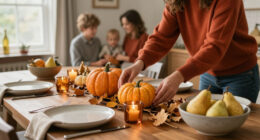
For a six-person table, arrange three small pumpkins, a handful of pears, and a short sprig of foliage along a runner. The result has color and texture, but each piece can move in seconds when the platter of roasted vegetables arrives. On a round table, one low bowl of apples may look better than a long row of objects. The right footprint depends on the meal: dishes that need passing call for more open center space, while a plated meal can accommodate a little more decoration. Making the centerpiece modular lets you clear just one section when serving, instead of lifting a large arrangement mid-meal.
Fresh flowers can add a soft scent and a splash of color, but strongly scented blooms may compete with the smell of roast turkey, warm bread, and herbs. Choose unscented varieties or use branches and foliage if you prefer a calmer table. If you use natural finds such as leaves, pinecones, or twigs, check them for dirt, insects, and moisture before setting them near food or linens. The same restraint applies to height: tall pieces can look dramatic in a room, but at the table they interrupt eye contact and make guests lean around them. A centerpiece should draw the eye briefly, then let the people and food hold attention.
Open flames need stable holders and clear space from dry foliage, napkins, sleeves, and hair. Battery-powered candles offer a similar warm glow with less worry, especially when children are seated nearby. A row of small battery candles can look like fireflies along a runner without adding heat to a crowded table.
Test the view before guests arrive. Sit in each chair and check whether you can see the person across from you. If the centerpiece interrupts conversation, trim it down or divide it into smaller pieces.
Set up the table in six easy steps
To decorate a Thanksgiving table, first map the seats and serving space, then build the look in layers and add fresh items close to dinner. This order keeps you from decorating over the places where food needs to go. Try these six steps the day before, with a short finishing pass on the holiday itself.
- Count guests and seats. Include children’s chairs and any guest who may need extra elbow room.
- Plan food placement. Choose which dishes will sit on the table and which can wait on a counter or sideboard.
- Choose a small palette. Repeat two or three colors through linens, dishes, fruit, or foliage.
- Lay the foundation. Add a tablecloth or runner, then placemats or chargers if they fit comfortably.
- Set the places. Add plates, utensils, glasses, napkins, and handwritten name cards.
- Add the focal point last. Use a compact centerpiece, check sightlines, and set out fresh flowers or food only when they are ready.
For example, if dinner starts at 4 p.m., you can arrange the runner, plates, and place cards in the morning. Add flowers and any chilled food closer to serving time, and keep a clear spot for hot dishes. This makes the table feel finished without leaving perishable items sitting out. The sequence also divides the work into decisions with different timing: seats and serving are structural, while flowers and food are temporary. Settling the structural choices first means you can finish the fresh details quickly without needing to undo them later.
The order also gives you an easy reset when plans change. If two more relatives join, remove a decorative bowl and add two places. If the kitchen is crowded, shift a platter to the counter. Your decorating choices should make those changes simple, not turn them into a redesign. Leave a little flexibility in the plan, such as one spare chair and a clear stretch of table, so a change in headcount does not force you to sacrifice comfort or conversation.
Save money and make the decor work after dinner
Budget-friendly Thanksgiving table decor uses things you own, edible accents, and a handful of low-cost details rather than a complete seasonal set. Start by looking through your kitchen, linen drawer, and garden. White plates, spare ribbon, a glass jar, or a branch from the yard may already give you most of the ingredients for a welcoming table.
Set a few apples or pears in a shallow bowl, tie plain napkins with twine, or write names on paper cards. A small squash can anchor a runner, then join the meal later if it has been handled and stored safely. You can also borrow a vase or extra glasses from a friend instead of buying pieces you will use once. Using edible objects has a useful tradeoff: fruit adds natural color and can be eaten afterward, but it needs to be clean and placed where it will not crowd plates or serving dishes. Borrowing also saves storage space, though it means planning a return and handling someone else’s belongings with care.
Reusable decor can make the work feel worthwhile. Washable napkins, a durable runner, and sturdy candleholders can return next year in a different arrangement. You might use the same runner with greenery one year and pears the next, so the table feels fresh without asking you to replace its foundation. Reusable items cost more upfront than paper or single-use accents, but the cost is spread over multiple meals and they create less cleanup waste. Buy only what you can store and expect to use; otherwise, a one-time detail may be the more practical choice.
Natural items deserve a quick check before they reach the dining room. Brush off dirt, inspect pinecones and foliage for insects, and keep damp leaves away from fabric. If you have young children, choose sturdy items that can handle a bump and place fragile heirlooms beyond easy reach. This small check protects the linens and food area while also helping prevent decorations from shedding or tipping during dinner.
Think about cleanup when choosing details. A few place cards are easy to gather; loose glitter and scattered tiny decorations tend to end up in the rug. A restrained, washable setup can feel just as festive and gives you more time to sit down with everyone else. The time saved is part of the value: decor should support the gathering, and a complicated cleanup can take you away from it just as surely as a crowded table can.
Frequently Asked Questions
How do I decorate a Thanksgiving table on a budget?
Start with the dishes and linens you already own, then repeat one or two colors with inexpensive details such as paper place cards, ribbon, fruit, or gathered foliage. For example, apples in a bowl and handwritten names can make plain white plates feel seasonal without buying a new set.
What colors work well for Thanksgiving table decor?
Rust, gold, burgundy, brown, and cream create a classic autumn palette. Neutrals with green or muted blue also work; repeat two or three colors across napkins, dishes, or the centerpiece so mixed pieces feel connected.
How can I make a centerpiece that does not block conversation?
Keep it low and narrow, and check the view while seated in each chair. A short line of pears and small gourds on a runner is easy to move when dinner is served, while a tall bouquet may hide the person across from you.
How do I decorate a small dining table?
Choose one compact focal point, use slim place settings, and keep serving dishes on a nearby counter or sideboard when possible. A small bowl of fruit can add color without taking the space a wide arrangement would need.
Can I mix and match plates and glasses?
Yes. Repeat a color, material, or shape to tie them together, such as amber glasses paired with a rust napkin at each place. The pieces do not need to match as long as the table has a detail that connects them.
Are real candles safe on a Thanksgiving table?
Use stable holders and leave plenty of clearance from foliage, linens, sleeves, and guests. Battery-powered candles are a lower-risk option, especially when the table is crowded or children are nearby.
Conclusion
Remember this: a welcoming table serves the people around it. Give guests room to eat and talk, repeat a few colors, and add one or two details that carry a story. That might be a pear from the fruit bowl, your grandmother’s serving spoon, or a child’s name card in crooked handwriting.
Set the table, check the view from every chair, and leave a little open space for the food. When the candles glow and the rolls arrive warm, the best decoration will be the people passing them around.