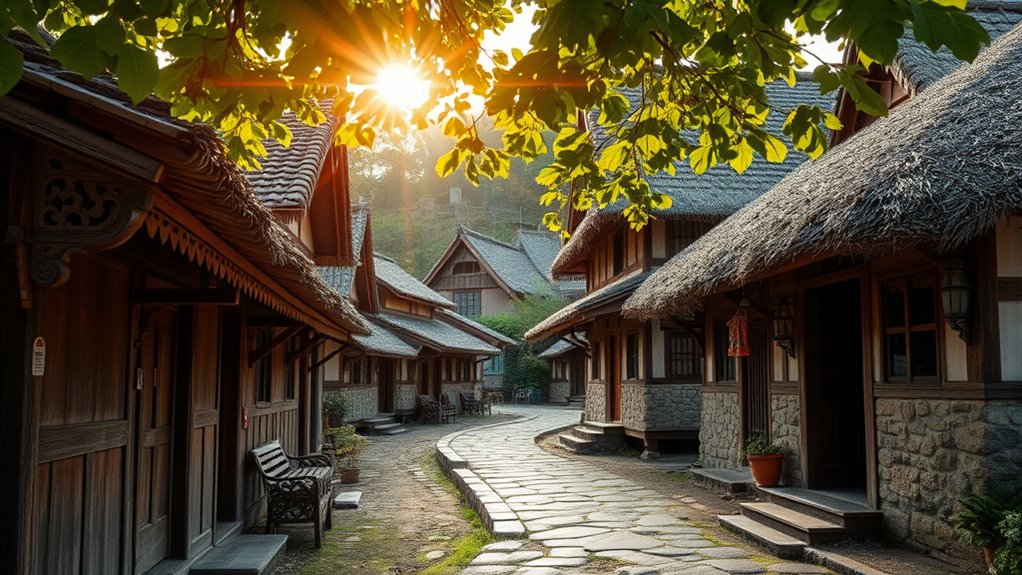

By exploring vernacular architecture revival, you can learn how traditional building methods are shaped by local environments, cultures, and materials. These techniques emphasize sustainability, using durable, region-specific resources that reduce environmental impact. They also foster community involvement, preserve cultural heritage, and improve resilience against climate challenges. By integrating these time-tested practices with modern design, you’ll create meaningful, eco-friendly structures rooted in tradition. Keep exploring to discover how these ancient methods can inspire your projects today.
Key Takeaways
- Reviving vernacular architecture preserves cultural heritage and promotes sustainable building practices rooted in local traditions.
- Learning from indigenous methods enhances resilience and climate adaptability of modern structures.
- Utilization of regional materials reduces environmental impact and supports local economies.
- Integrating traditional techniques with modern design fosters culturally meaningful and functional architecture.
- Emphasizing local craftsmanship maintains community involvement and sustains indigenous building knowledge.
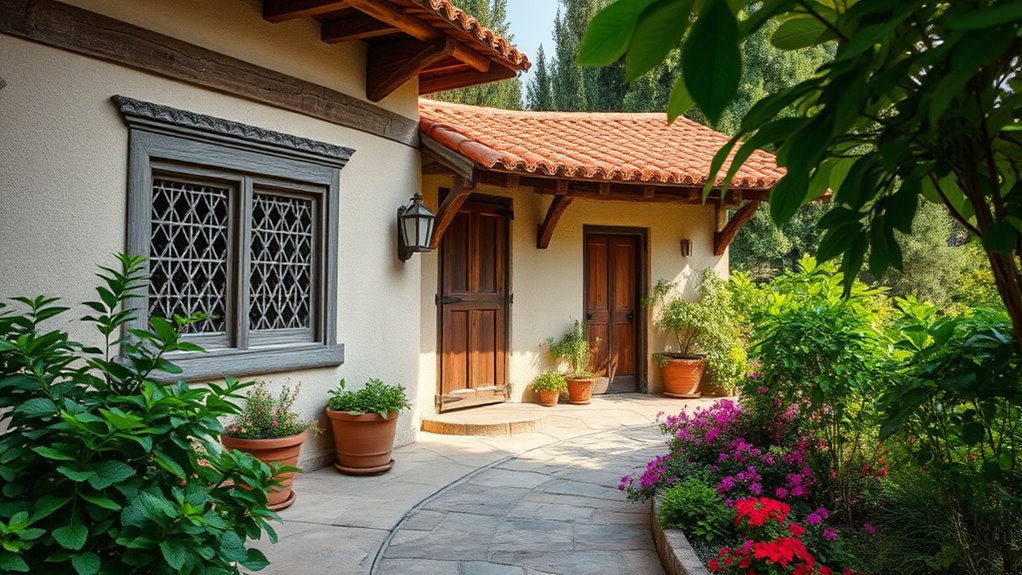
Vernacular architecture is experiencing a renewed appreciation as communities and designers seek to reconnect with traditional building methods and local cultural identities. This movement emphasizes the importance of indigenous building methods, which have been refined over generations to suit specific environments and cultural practices. You’ll find that these methods aren’t just about aesthetics; they embody practical solutions rooted in local knowledge. For example, in regions where heavy rainfall prevails, structures might feature raised floors or sloped roofs to manage water runoff effectively. By understanding and applying these indigenous techniques, you can create buildings that are inherently well-adapted to their surroundings, reducing the need for artificial climate control and extensive maintenance.
Vernacular architecture leverages indigenous methods to create climate-adapted, sustainable, and culturally authentic buildings.
Regional material usage plays a central role in this revival. Instead of relying on imported or industrialized materials, you’re encouraged to source locally available resources that have proven their durability over time. Think of using adobe bricks in arid zones, bamboo in tropical climates, or stone in mountainous regions. These materials are not only more sustainable but also resonate visually with their environment, fostering a sense of place and cultural continuity. When you incorporate regional materials, your designs become more environmentally friendly, lowering transportation costs and minimizing ecological footprints. Plus, they often require less energy for processing, making your projects more sustainable from start to finish.
By embracing indigenous building methods and regional materials, you’re also supporting local economies and traditional craftsmanship. Instead of importing modern construction elements, you can collaborate with local artisans who understand the nuances of these techniques. This approach preserves cultural heritage and promotes community involvement, which adds a layer of social sustainability to your projects. Additionally, structures built with locally sourced materials tend to age gracefully, developing a patina that tells a story about the region’s history and environment. Incorporating traditional building techniques can also improve the resilience of structures against local climate challenges.
In practice, this means conducting thorough research into the specific climate, geography, and cultural practices of your project site. When you design with these principles in mind, your buildings become more than just shelters—they transform into expressions of regional identity. This revival isn’t about rejecting modern technology; it’s about integrating the wisdom of traditional methods with contemporary needs, creating architecture that’s both functional and meaningful. As you explore indigenous techniques and regional materials, you contribute to a more sustainable, culturally rich built environment that respects and celebrates local heritage.
Top picks for "vernacular architecture revival"
Open Amazon search results for this keyword.
As an affiliate, we earn on qualifying purchases.
Frequently Asked Questions
How Can Vernacular Architecture Influence Modern Sustainable Design?
Vernacular architecture influences your modern sustainable design by inspiring you to use innovative materials that are locally sourced and eco-friendly. It encourages you to incorporate cultural symbolism, making your designs more meaningful and connected to the community. By studying traditional methods, you can create energy-efficient buildings that respect local climate and culture, reducing environmental impact while celebrating heritage. This approach helps you develop innovative, sustainable, and culturally resonant architectural solutions.
What Are the Main Challenges in Reviving Traditional Building Techniques?
Reviving traditional building techniques is like restoring an ancient melody—you risk losing its harmony. Your main challenges include material preservation, ensuring authentic resources last, and skill transfer, passing down craftsmanship. Modern techniques may clash with old methods, making integration tricky. You must bridge generations, preserving cultural integrity while adapting to current needs. Success depends on respecting traditions and nurturing skilled artisans to keep these architectural tunes alive and vibrant.
How Do Local Climate Conditions Shape Vernacular Architectural Styles?
You see that local climate conditions directly influence vernacular architectural styles through climate adaptation. For instance, in hot, arid regions, you’ll find thick walls and small windows to keep interiors cool, reflecting regional aesthetics. Conversely, in colder areas, buildings often feature steep roofs and insulation to retain heat. These adaptations not only respond to climate needs but also embody the unique cultural identity of the region.
Can Vernacular Architecture Be Adapted for Urban Environments?
Yes, you can adapt vernacular architecture for urban environments by focusing on adaptive reuse, transforming existing structures while preserving cultural authenticity. This approach maintains the local character and traditional design elements, creating a sense of place within the city. By blending old and new, you foster sustainable development that respects historical context while meeting modern needs, ensuring that urban spaces remain vibrant and connected to their cultural roots.
What Role Does Community Participation Play in Preservation Efforts?
Community involvement plays a crucial role in preservation efforts by ensuring local voices shape the process. Your active participation fosters a sense of ownership and pride, making preservation initiatives more successful. You should engage in preservation partnerships, collaborate with local stakeholders, and share your insights. This collective effort helps protect architectural heritage, maintains cultural identity, and creates sustainable solutions that resonate with the community’s unique traditions and history.
Conclusion
By embracing local traditions, you not only preserve timeless craftsmanship but also unearth secrets that could revolutionize modern architecture. Reviving vernacular styles connects you deeply to history and culture, making your work more authentic and resilient. Ignoring these treasures risks losing an invaluable legacy that’s as vast and profound as the universe itself. So, learn from your roots, honor your heritage, and watch how these ancient practices breathe new life into innovative designs—truly a heartbeat of the future.