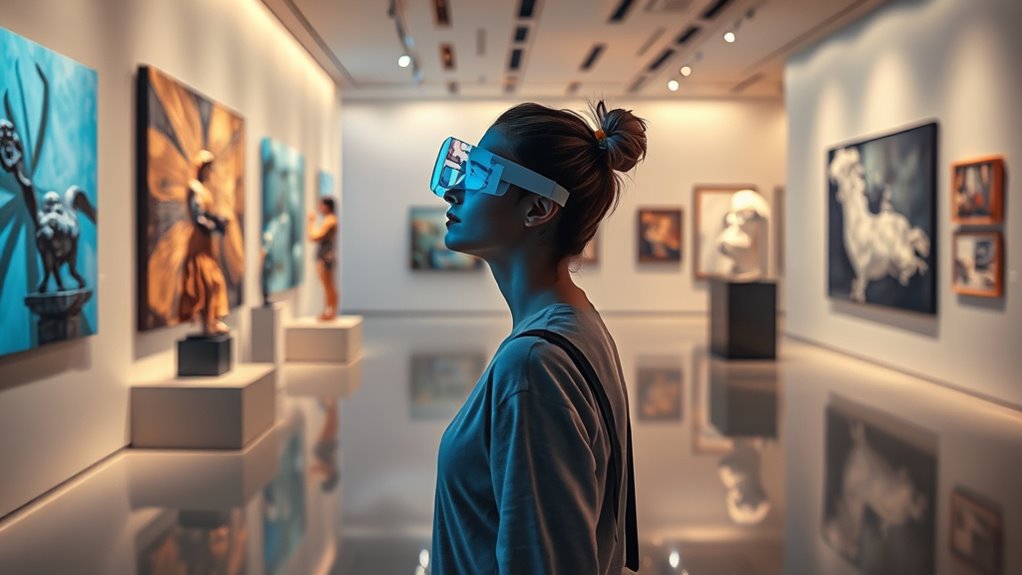

Augmented reality galleries blend physical artworks with digital enhancements to create immersive, interactive experiences. As you explore, digital overlays add context, reveal behind-the-scenes details, or let you manipulate virtual objects, transforming passive viewing into active participation. These galleries make art more accessible and emotionally engaging, allowing visitors to connect on a deeper level. If you’re curious about how this innovative mix is shaping the future of art spaces, there’s much more to discover ahead.
Key Takeaways
- Augmented reality galleries combine physical artworks with digital enhancements for immersive, interactive experiences.
- Visitors can trigger virtual overlays to explore behind-the-scenes details and related works.
- Digital layering enables dynamic, evolving exhibitions tailored to individual visitors.
- AR integration fosters active participation, increasing engagement and emotional connection with art.
- This approach redefines traditional galleries by blending physical presence with real-time digital innovation.

Augmented reality galleries are transforming how you experience art by blending digital and physical worlds in real time. Instead of simply viewing paintings on walls, you’re invited to step into a layered environment where digital enhancements add context, interactivity, and depth. This shift is made possible through virtual curation, which allows curators to design dynamic exhibitions that change based on your perspective or preferences. You might walk through a gallery and see a classic sculpture surrounded by floating information bubbles or watch a painting come alive with animated stories. Virtual curation grants curators the flexibility to craft immersive experiences that are tailored to each visitor, making each journey unique and engaging.
When you visit an augmented reality gallery, you’re not limited to static displays. Instead, you participate in a living, breathing environment that actively responds to your presence. For example, you could point your device at a piece of art, triggering a virtual overlay that reveals behind-the-scenes details, artist interviews, or related works. This seamless integration of digital content enriches your understanding and appreciation of the artwork, transforming passive observation into an active exploration. The immersive nature of these experiences makes art more accessible and enthralling, especially for those who might find traditional galleries intimidating or distant. Additionally, the use of interactive technology enhances engagement and learning, making the experience more memorable. Studies also show that augmented reality can significantly boost visitor satisfaction and knowledge retention, further enriching the experience. Incorporating educational tools into these environments allows visitors to deepen their understanding through guided interactions and multimedia content.
Moreover, augmented reality galleries open up new possibilities for artists and curators to experiment with form, narrative, and interaction. They can create layered stories that unfold as you move around, combining physical sculptures, paintings, and digital animations into a cohesive whole. This blending of media not only heightens emotional impact but also encourages you to engage with the art on multiple levels. As you navigate the virtual curation, you might discover hidden details, participate in interactive storytelling, or manipulate virtual objects, turning your visit into a personalized adventure. These features foster a deeper connection with the artworks, making each experience memorable and meaningful. The integration of virtual curation allows for a level of flexibility that traditional exhibitions cannot easily achieve, enabling dynamic storytelling. Additionally, incorporating genetic variation in dog coats, such as in black Golden Retrievers, exemplifies how blending natural traits can create unique and captivating results.
In essence, augmented reality galleries are redefining how you engage with art by making it more interactive, personalized, and immersive. Virtual curation plays an indispensable role in this transformation, enabling curators to craft flexible and innovative exhibitions that adapt to your interests. As technology continues to evolve, expect these galleries to become even more sophisticated, offering richer, more compelling experiences that blur the line between the physical and digital. Whether you’re an art enthusiast or a casual visitor, augmented reality galleries provide a fresh, exciting way to explore creativity and culture—one that invites you to participate actively in the artistic journey.
Amazon Product B07CT4QCBK
As an affiliate, we earn on qualifying purchases.
Frequently Asked Questions
How Do AR Galleries Impact Traditional ARt Appreciation?
You find that AR galleries transform traditional art appreciation by increasing digital engagement and offering immersive storytelling. Instead of just observing artworks, you interact with them in a dynamic way, deepening your understanding and emotional connection. This blending of physical and digital elements makes art more accessible and engaging, encouraging you to explore new perspectives. As a result, AR galleries enhance your overall experience, making art appreciation more personalized and memorable.
What ARe the Technical Requirements for Visiting an AR Gallery?
To visit an AR gallery, you need compatible hardware like a smartphone or tablet with sufficient processing power. Make sure your device has good internet connectivity, as many AR apps require streaming data or updates. You might also need to download specific AR applications or software. Confirm your device’s camera and sensors are functioning well, so the digital art overlays align properly with your physical environment.
How Do ARtists Create and Integrate AR Elements Into Exhibitions?
Imagine transforming your art into a universe so immersive, it feels like bending reality itself. To create and integrate AR elements, you harness virtual collaboration tools, allowing seamless teamwork across distances. You craft interactive storytelling experiences that captivate viewers, blending digital and physical worlds. By designing 3D models, coding interactive features, and testing in AR platforms, you elevate your exhibitions, making viewers active participants in your visionary art journey.
What ARe the Privacy Concerns Associated With AR ARt Experiences?
You should be aware that AR art experiences raise privacy concerns, especially around data privacy and your digital footprint. When you engage with AR, your device collects location data, usage patterns, and sometimes even personal information. This data can be stored or shared without your full knowledge, risking your privacy. Always review app permissions and privacy policies to protect your data, and be cautious about how much personal info you share during AR interactions.
How Accessible Are Augmented Reality Galleries to the General Public?
You might find augmented reality galleries quite accessible, but cost barriers can limit some people’s participation. If you lack advanced devices or high-speed internet, experiencing AR art becomes harder. Additionally, technological literacy plays a role; if you’re not comfortable with new tech, maneuvering AR platforms could be challenging. While these galleries aim to be inclusive, overcoming these barriers is essential to guarantee broader public access.
Amazon Product B07JVVV9WV
As an affiliate, we earn on qualifying purchases.
Conclusion
As you step into augmented reality galleries, you become both explorer and creator, bridging the tangible and digital worlds. The gallery isn’t just a space; it’s a mirror reflecting endless possibilities—like a seed planted in your imagination, ready to grow. In blending reality and virtuality, you open a new domain where art’s essence flourishes beyond boundaries. Embrace this fusion, for you hold the key to transforming perception into infinite horizons.
Amazon Product B0FRGB29YT
As an affiliate, we earn on qualifying purchases.
Amazon Product B0B72GSD42
As an affiliate, we earn on qualifying purchases.