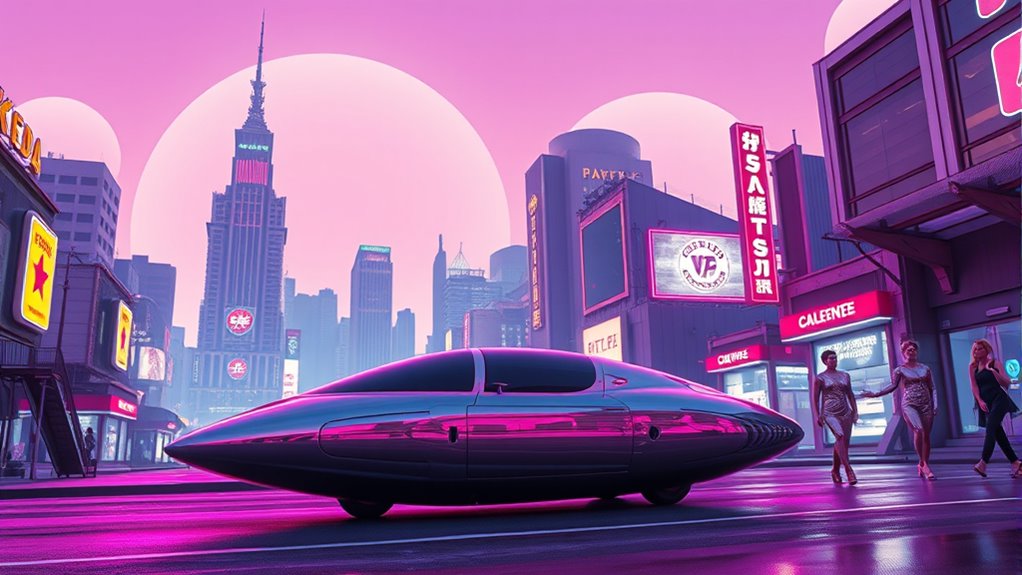

Retro futurism blends vintage visions of the future with contemporary design, creating a style that feels both nostalgic and forward-looking. It features bold colors, geometric shapes, shiny surfaces, and vintage gadgets like old radios and early computers, all reinterpreted with modern touches like neon lights and holographic effects. This aesthetic channels 1950s optimism and space fascination, celebrating the past’s ideals of innovation. Keep exploring to discover how this imaginative style continues to inspire today’s designs and creative worlds.
Key Takeaways
- Retro futurism blends vintage technology with modern design, creating a nostalgic yet forward-looking aesthetic.
- It features bold colors, geometric shapes, shiny surfaces, and neon lighting inspired by mid-20th-century visions of the future.
- The style celebrates optimism about technological progress, combining sci-fi themes with contemporary craftsmanship.
- It evokes environments reminiscent of vintage sci-fi movies, reimagined with sleek, futuristic elements.
- Retro futurism fosters imagination by honoring past design legacies while inspiring innovative visions of the future.
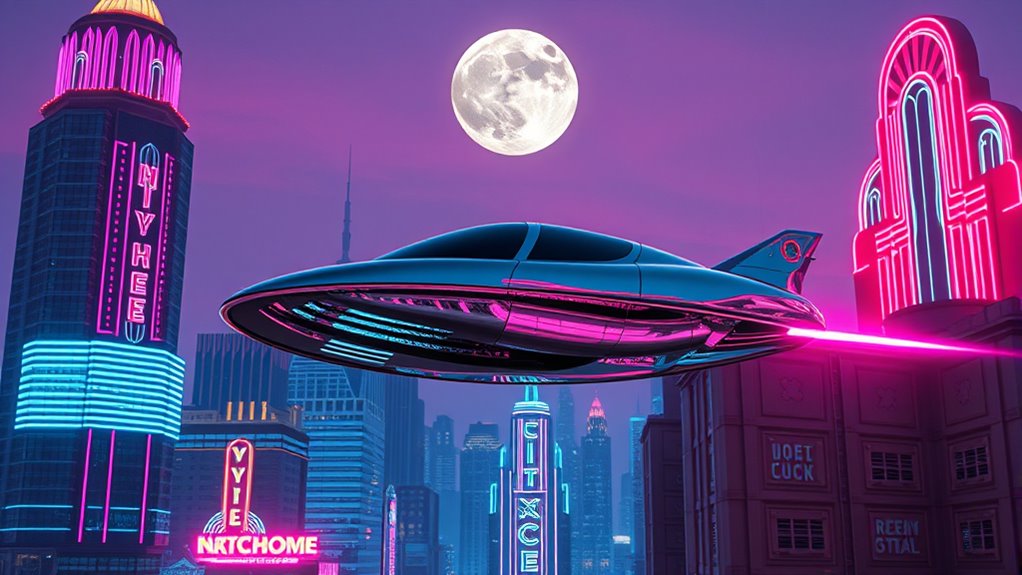
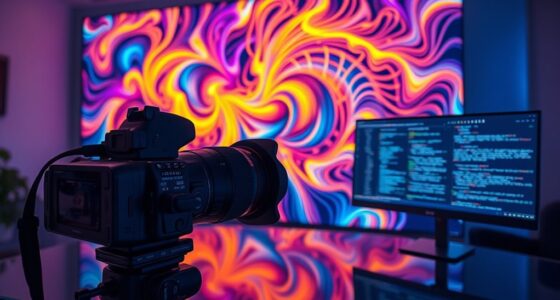
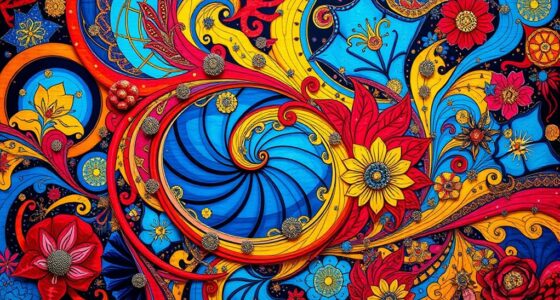
Retro futurism is a design movement that blends past visions of the future with contemporary aesthetics, creating a nostalgic yet forward-looking vibe. You’re drawn to its unique ability to fuse the charm of vintage technology with the sleek, cyber aesthetics inspired by science fiction’s golden age. This style invites you to imagine a world where the optimism of the past meets modern innovation, giving everyday objects and environments a distinct character that feels both familiar and futuristic. When you explore retro futurism, you notice how vintage technology—think old-school radios, chunky monitors, and early computers—gets a fresh, modern twist. These elements aren’t just throwbacks; they’re reimagined with current design sensibilities, often featuring bold colors, geometric shapes, and shiny surfaces that make them pop in today’s context.
Retro futurism fuses vintage tech with sleek, modern design for a nostalgic yet innovative look.
You find yourself captivated by how retro futurism channels the spirit of the mid-20th century’s fascination with space exploration, technological progress, and the future of humanity. It’s like stepping into a parallel universe where the visions of 1950s sci-fi movies and comic books have become tangible realities. As you look around, you might see a room decorated with neon lights, chrome accents, and vintage gadgets that seem to belong to a different era but have been updated with modern materials and craftsmanship. This blend of old and new creates a sense of nostalgia, but it also sparks your imagination about what’s possible.
You also recognize how cyber aesthetics play a pivotal role in shaping retro futurism’s appeal. You notice the emphasis on sleek, luminous designs that evoke a futuristic cityscape or a high-tech control room. These elements often incorporate bold lines, holographic effects, and synthetic textures that feel both nostalgic and innovative. It’s as if you’re inside a sci-fi movie set, but everything is functional and stylish. Vintage technology, on the other hand, grounds this aesthetic in a tangible reality, reminding you of the early days of electronic innovation and the optimism that technology could transform daily life. When these elements come together, they create a universe that celebrates the retro-futuristic dream—looking back to move forward.
In essence, retro futurism invites you to embrace a playful, imaginative perspective. It’s about appreciating the design language of the past while reinterpreting it through contemporary lenses. Whether you’re admiring a vintage-inspired lamp with cyber aesthetics or imagining a future shaped by retro technology, you’re part of a movement that celebrates nostalgia without losing sight of innovation. It’s a style that encourages you to dream about what’s next, all while honoring the design legacies of yesterday.
retro futurism neon LED strip lights
As an affiliate, we earn on qualifying purchases.
As an affiliate, we earn on qualifying purchases.
Frequently Asked Questions
How Does Retro Futurism Influence Modern Design Trends?
Retro futurism influences modern design trends by blending futuristic aesthetics with nostalgia-driven design elements. You’ll notice this in sleek, vintage-inspired visuals that evoke a sense of optimism about the future while honoring the past. This style encourages creativity, combining old-school charm with innovative ideas. As a result, it shapes everything from architecture to fashion, making designs more playful, imaginative, and emotionally resonant for contemporary audiences.
What Are Key Symbols Associated With Retro Futurism?
You’ll spot flying cars and neon lights as iconic symbols of retro futurism, ironically blending old dreams with new tech fantasies. These symbols evoke a nostalgic longing for a future imagined in the past, where flying cars zoom through neon-lit cityscapes. They embody a playful optimism and a desire to merge the futuristic with vintage aesthetics. If you love retro futurism, these symbols are your visual shortcuts to a whimsical, imagined tomorrow.
Who Are Notable Artists Pioneering Retro Futurist Artwork?
You’ll want to check out artists like Syd Mead and Chris Foss, who pioneer retro futurist artwork with their vibrant use of vintage sci-fi and cyberpunk aesthetics. They blend nostalgic visions of the future with sleek, imaginative designs, inspiring both contemporary artists and enthusiasts. Their work captures the essence of retro futurism, making you feel like you’re stepping into a vintage sci-fi universe reimagined through modern eyes.
How Does Retro Futurism Reflect Societal Hopes and Fears?
You might be surprised to learn that 65% of people see retro futurism as a reflection of societal hopes and fears. It blends dystopian visions with technological optimism, showing your fascination with both utopian dreams and cautionary tales. This style captures your longing for a better future while warning against potential pitfalls, making it a powerful mirror of your collective anxieties and aspirations about technology and progress.
What Are Common Themes in Retro Futurist Media?
You’ll notice common themes in retro futurist media like futuristic fashion and space age aesthetics, which highlight optimism about technological progress. These themes often showcase shiny chrome, streamlined designs, and bold colors, reflecting a desire for innovation and progress. You may also see visions of a utopian future, emphasizing hope and curiosity, even as some works hint at fears about overreliance on technology or loss of human connection.
vintage style holographic desk accessories
As an affiliate, we earn on qualifying purchases.
As an affiliate, we earn on qualifying purchases.
Conclusion
While some might see retro futurism as mere nostalgia, it’s actually a bold blend of past dreams and future possibilities. It inspires you to imagine a world where technology and style collide creatively, fueling innovation rather than stifling it. Don’t dismiss it as outdated—embrace its unique ability to challenge expectations and spark your imagination. After all, history shows that looking back can propel us forward in unexpected, exciting ways.
mid-century modern vintage radio replica
As an affiliate, we earn on qualifying purchases.
As an affiliate, we earn on qualifying purchases.
cyberpunk chrome desk lamp
As an affiliate, we earn on qualifying purchases.
As an affiliate, we earn on qualifying purchases.