Holographic exhibits are revolutionizing interactive art installations by combining immersive storytelling with advanced technology. You’ll experience artifacts and artworks that seem to float in mid-air, while holograms bring history and art to life. These exhibits offer engaging, multi-sensory experiences that make art accessible and unforgettable. As technology advances, expect even more personalized and dynamic displays, transforming how you connect with culture. Keep exploring to discover how these innovations continue shaping the future of interactive art.
Key Takeaways
- Holographic exhibits will become more immersive and personalized, enhancing visitor engagement through advanced interactive features.
- Integration of augmented reality and holography will enable deeper storytelling and educational experiences.
- Future installations will utilize cutting-edge display and air purification technologies for realistic, clean, and captivating presentations.
- Holography will improve artifact preservation, allowing close-up exploration without physical handling.
- The growth of holographic art will transform cultural spaces into dynamic, multisensory environments fostering emotional connections.

Have you ever wondered how museums and galleries are transforming their exhibits with cutting-edge technology? Today, holographic exhibits are reshaping the way we experience art and history, offering a new level of engagement that’s both mesmerizing and educational. One of the most exciting developments is the integration of augmented reality, which allows you to see digital images layered seamlessly over the real-world environment. When combined with immersive storytelling, these holographic displays create a dynamic narrative that pulls you into the exhibit like never before. Instead of passively viewing static objects, you become an active participant in a vivid, multidimensional story.
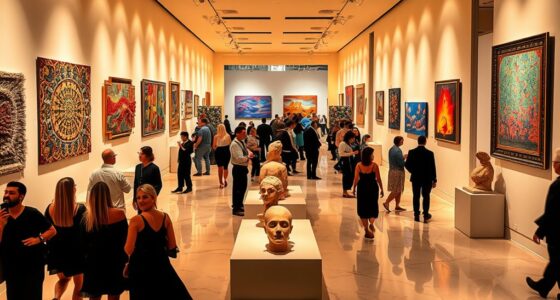
Imagine walking through a gallery where ancient artifacts seem to float in mid-air, their details illuminated by holographic projections. As you move closer, augmented reality enhances your experience by providing contextual information — from the history behind an artifact to the techniques used to create it. These holograms aren’t just visual tricks; they serve as gateways to deeper understanding, making history and art come alive in front of your eyes. With immersive storytelling, the narrative is crafted to evoke emotions and curiosity, transforming a simple display into an engaging adventure. You might find yourself exploring a scene from history, where holographic figures act out moments from the past, or witnessing the inner workings of a complex machine through a 3D projection that responds to your gaze.
This intersection of holography, augmented reality, and storytelling isn’t just about wow factor. It’s about creating a more meaningful connection between you and the subject matter. Instead of reading a plaque, you’re immersed in a story that unfolds around you, making the experience memorable. Museums and galleries are increasingly using these technologies to democratize knowledge, breaking down barriers of language and literacy by offering visual and auditory cues that are accessible to all. The use of holograms allows for the preservation of delicate artifacts by reducing physical handling, while still offering a detailed, close-up examination that was previously impossible. Additionally, integrating air purification technology can ensure a clean environment, enhancing visitor comfort during immersive experiences. Advances in display technology are also contributing to even more realistic and vibrant holographic presentations. Moreover, understanding divorce statistics can help curators and institutions recognize the importance of accessible and engaging educational tools for diverse audiences.
Finally, ongoing research into retail hours demonstrates that flexible access and extended viewing times can significantly improve visitor engagement and satisfaction, further supporting the growth of holographic exhibits as a staple of modern cultural spaces.
Furthermore, the development of secure financial transactions involving holographic displays indicates a broader trend of integrating advanced technology into various sectors, including cultural institutions. In essence, holographic exhibits are pioneering a future where art and education merge seamlessly. They invite you to explore, learn, and feel as if you’re stepping into another world. With augmented reality and immersive storytelling at their core, these exhibits push the boundaries of traditional displays, making every visit an interactive journey into the past, present, or future. As technology continues to evolve, you can expect holographic exhibits to become even more sophisticated, personalized, and integral to how we experience cultural heritage.
holographic art display
As an affiliate, we earn on qualifying purchases.
As an affiliate, we earn on qualifying purchases.
Frequently Asked Questions
What Are the Main Technical Challenges in Holographic Exhibit Development?
You face technical challenges like achieving high hologram resolution to guarantee clarity and detail. Projection alignment is vital; if it’s off, the hologram appears distorted or misplaced. Precise calibration of light sources and display surfaces is indispensable for a seamless, realistic effect. Overcoming these obstacles requires advanced technology and meticulous setup, but solving them enables you to create stunning, immersive holographic experiences that captivate your audience.
How Do Holographic Exhibits Impact Visitor Engagement and Learning?
Imagine immersing yourself in mesmerizing, mind-expanding holographic exhibits that boost your curiosity and comprehension. You’re drawn into dynamic displays that deliver delightful sensory immersion, making learning lively and engaging. Augmented reality enhances this experience, blending real and virtual worlds seamlessly. These exhibits captivate your senses, foster focused fascination, and promote deeper understanding, transforming passive observation into powerful, participatory exploration, ultimately elevating your educational experience and emotional connection.
What Are the Costs Associated With Creating Holographic Art Installations?
When considering holographic art installations, you need to account for several cost factors. Equipment expenses are significant, including high-quality projectors, holographic displays, and powerful computers. Additionally, you might face costs for software, content creation, and technical expertise. While the initial investment can be substantial, these installations can create unique, engaging experiences that justify the expense and attract more visitors. Planning carefully helps manage overall costs effectively.
How Do Holographic Exhibits Compare to Traditional Art Displays?
Isn’t it amazing how holographic exhibits redefine art? You’ll find they offer digital realism and immersive storytelling that traditional displays can’t match. While classic art is tangible and static, holograms captivate your senses, creating interactive experiences. You get to explore layers of meaning and depth, making the art come alive. With holography, you’re not just observing—you’re engaging with a futuristic, dynamic form of expression that transforms how you experience art.
What Are Future Innovations Expected in Holographic Interactive Technology?
You’ll see future innovations in holographic interactive technology like augmented reality, which will make exhibits more immersive and seamless. AI integration will personalize experiences, adapting displays to your preferences in real-time. Expect holograms to become more realistic and interactive, allowing you to explore art in new ways. These advancements will transform how you engage with exhibits, making them more dynamic, accessible, and enthralling than ever before.
augmented reality museum exhibit
As an affiliate, we earn on qualifying purchases.
As an affiliate, we earn on qualifying purchases.
Conclusion
As you explore holographic exhibits, you’ll find they revolutionize how art interacts with audiences. Imagine walking through a gallery where a hologram of a famous artist appears, inviting you to join a live painting session. These immersive experiences, like the case of the Louvre’s holographic displays, make art more engaging and accessible. As technology advances, you’ll discover even more innovative ways to connect with art, transforming the future of interactive installations.
interactive hologram projector
As an affiliate, we earn on qualifying purchases.
As an affiliate, we earn on qualifying purchases.
3D holographic display for art
As an affiliate, we earn on qualifying purchases.
As an affiliate, we earn on qualifying purchases.