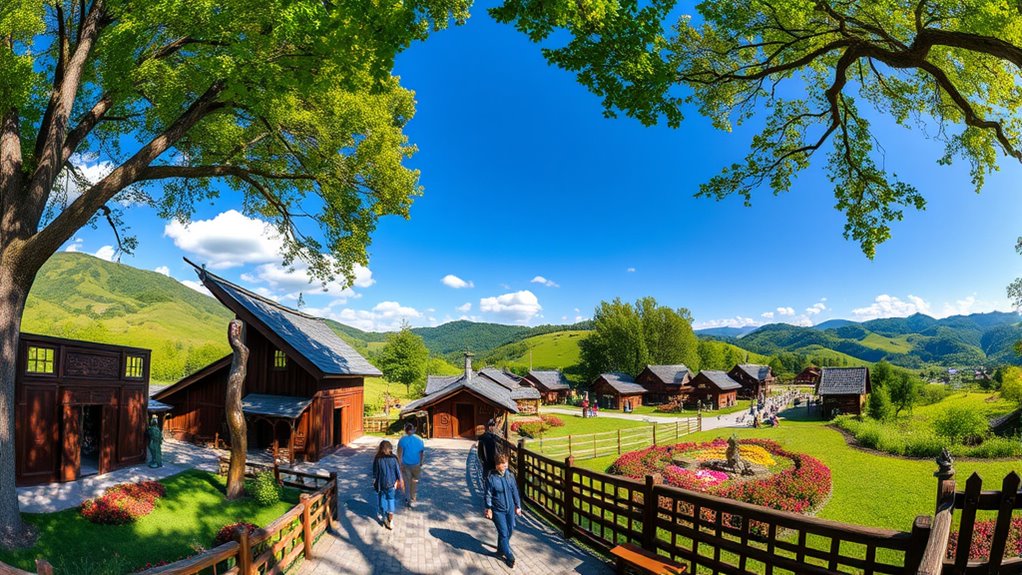

Open-air museums blend art, tradition, and nature by showcasing historic buildings, crafts, and customs in authentic outdoor settings. You’ll experience living displays of cultural practices, from artisan skills to daily routines, immersed in environments that highlight their original context. These museums preserve techniques and stories that might otherwise fade, allowing you to see craftsmanship in action while connecting with nature. Keep exploring, and you’ll discover how they keep cultural history vibrant and alive.
Key Takeaways
- Open-air museums blend cultural art, craftsmanship, and history within natural outdoor settings.
- They showcase traditional buildings and artifacts in authentic landscapes, connecting art with nature.
- Visitors experience art through immersive environments, craft demonstrations, and participatory activities.
- These museums preserve tangible cultural heritage while highlighting the environment where art and daily life intersect.
- They promote community engagement and sustainability, ensuring the ongoing appreciation of cultural and natural beauty.
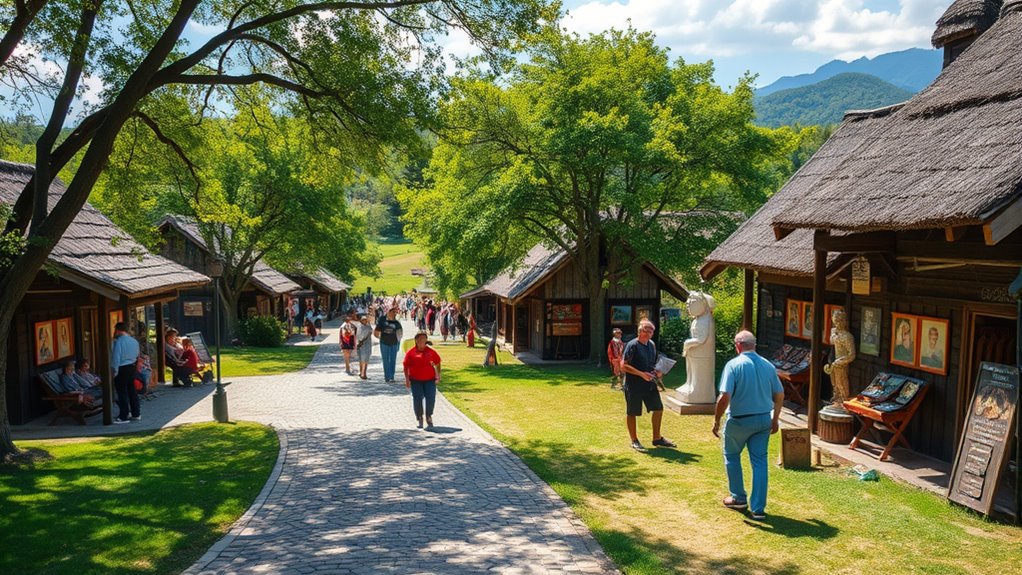
Open-air museums offer a unique way to experience history and culture by showcasing traditional buildings, artifacts, and customs in their original settings. When you visit these outdoor spaces, you’re transported into a different time, where the landscape itself becomes a living classroom. One of the most compelling aspects of open-air museums is their focus on traditional crafts. Here, artisans keep centuries-old techniques alive, demonstrating how to weave baskets, carve wood, or craft pottery. Watching these craftspeople at work allows you to see the skill, patience, and artistry involved—elements that often get lost in modern manufacturing. It’s a hands-on experience that connects you directly to the people who created these objects long ago.
By preserving these traditional crafts, open-air museums play a crucial role in cultural preservation. They serve as repositories of techniques, styles, and materials that might otherwise fade away with time. When you engage with artisans or participate in craft workshops, you’re helping to sustain these skills for future generations. This preservation isn’t just about keeping old methods alive; it’s about maintaining a tangible link to cultural identity. Every woven textile, carved sculpture, or painted sign tells a story about the community’s history, values, and way of life. As you walk through these museums, you gain a deeper understanding of how these crafts shaped daily life and cultural practices.
The setting of the open-air museum enhances this experience. Unlike traditional museums, these spaces allow you to see the context in which these crafts were made and used. You might stroll past a blacksmith’s forge or watch farmers tending to their fields, gaining insight into the interconnectedness of daily routines and craftsmanship. This immersive environment helps you appreciate the importance of preserving not just the objects themselves but the entire cultural landscape that surrounds them. Additionally, incorporating modern techniques into traditional crafts can demonstrate how these skills adapt and evolve over time, bridging history with present-day innovation. This highlights the dynamic nature of cultural preservation and the ongoing relevance of these skills.
Furthermore, open-air museums often host festivals, demonstrations, and seasonal events that celebrate traditional crafts. These activities invite you to participate, learn, and even try your hand at old skills. Such experiences deepen your appreciation for the effort and ingenuity behind each craft, making history come alive in a way that textbooks simply can’t provide. Additionally, modern tuning techniques can be incorporated into these crafts, demonstrating how old skills adapt to new technologies. These activities deepen your appreciation for the effort and ingenuity behind each craft, making history come alive in a way that textbooks simply can’t provide. In doing so, these museums turn the preservation of traditional crafts into an engaging, community-driven effort. They remind you that cultural preservation is an active process—one that requires participation, respect, and ongoing dedication. Visiting one of these museums isn’t just about looking at artifacts; it’s about connecting with living traditions and helping ensure they continue to thrive. Embracing cultural sustainability can ensure that these valuable skills and traditions are preserved for future generations.

Neliblu DIY 12 Wooden Bird House Kits – Creative Arts and Crafts Set for Kids and Adults – Unfinished Wood Birdhouses with Paint Strips, Brushes, Stickers and Strings – 3 Unique Shapes, 2 Sizes
Complete DIY Birdhouse Craft Kit: This birdhouse kit for kids includes two pre-cut wooden birdhouses, paints and brushes,…
As an affiliate, we earn on qualifying purchases.
As an affiliate, we earn on qualifying purchases.
Frequently Asked Questions
How Do Open-Air Museums Influence Local Communities?
Open-air museums positively influence your community by fostering engagement and cultural preservation. You can participate in local events, learn about history, and connect with others who share your interests. These museums help keep traditions alive while attracting visitors, boosting the local economy. As a result, your community becomes more vibrant, unified, and proud of its heritage, creating a lasting impact that benefits everyone involved.
What Are the Most Sustainable Practices for Open-Air Museums?
You can adopt sustainable practices by using eco-friendly materials and sustainable architecture when designing open-air museums. Incorporate renewable energy sources like solar panels, and prioritize local, recycled, or biodegradable materials to minimize environmental impact. Implement water conservation strategies and maintain natural landscapes to support biodiversity. By doing so, you guarantee the museum remains environmentally responsible, inspiring visitors and setting a standard for ecological awareness in cultural preservation.
How Do Open-Air Museums Adapt to Climate Change?
You can enhance climate resilience by implementing adaptive architecture that withstands extreme weather. Adjusting building materials and designs helps open-air museums cope with changing conditions. You might also integrate sustainable practices like renewable energy and water conservation. By continuously monitoring climate trends and updating infrastructure, you guarantee your museum stays resilient, preserving its cultural and artistic value amid climate change challenges.
What Funding Options Are Available for Open-Air Museum Preservation?
You might think funding is tough, but many options exist for open-air museum preservation. You can explore grant opportunities from government agencies, cultural foundations, and international organizations dedicated to heritage. Sponsorship programs also offer partnerships with local businesses and community groups enthusiastic to support these spaces. By actively seeking these resources, you guarantee your museum stays vibrant and resilient, blending art and nature while securing its future.
How Can Visitors Participate in Open-Air Museum Activities?
You can actively participate in open-air museum activities by joining interactive workshops, where you get hands-on experience with local crafts and traditions. Volunteering is another great way; you can help with guided tours, conservation projects, or event organization. Engaging directly with staff and other visitors enhances your experience, making the visit more meaningful. Your participation supports the preservation of these cultural sites while you enjoy an immersive, educational adventure outdoors.

Traditional Woodworking Handtools: A Manual for the Woodworker (Illustrated Workshop)
As an affiliate, we earn on qualifying purchases.
As an affiliate, we earn on qualifying purchases.
Conclusion
As you step back into the embrace of open-air museums, you realize they’re more than just living history—they’re gateways to a world where art and nature intertwine seamlessly. But what secrets lie hidden beneath their tranquil surfaces? The next time you wander through these outdoor galleries, remember: every corner holds a story waiting to be uncovered, a mystery enthusiastic to be explored. Are you ready to discover what lies beyond the next bend?

Muditation Pottery Kit by Pinchit – DIY Air-Dry Clay Craft Set with Tools, Paints, Brushes, Sealant & Guide – Beginner-Friendly – No Kiln or Oven Required – for Adults
Complete DIY Pottery Kit – Includes 2 lbs. of premium air-dry clay, sculpting tools, sponge, paint brushes, base…
As an affiliate, we earn on qualifying purchases.
As an affiliate, we earn on qualifying purchases.

Fun Express 96 Pieces Native American Heritage Handout Kit – Fun Educational Resources for Cultural Awareness and Classroom Activities – Multicolored, Metallic
"Celebrate Native American Heritage Month with this vibrant handout kit! Ideal for gifts, classroom rewards, or general supplies,…
As an affiliate, we earn on qualifying purchases.
As an affiliate, we earn on qualifying purchases.