
TL;DR

Get art and craft supplies delivered free with Prime
- Fast, free delivery on millions of items
- Prime Video, Amazon Music and more included
- Member-only deals all year
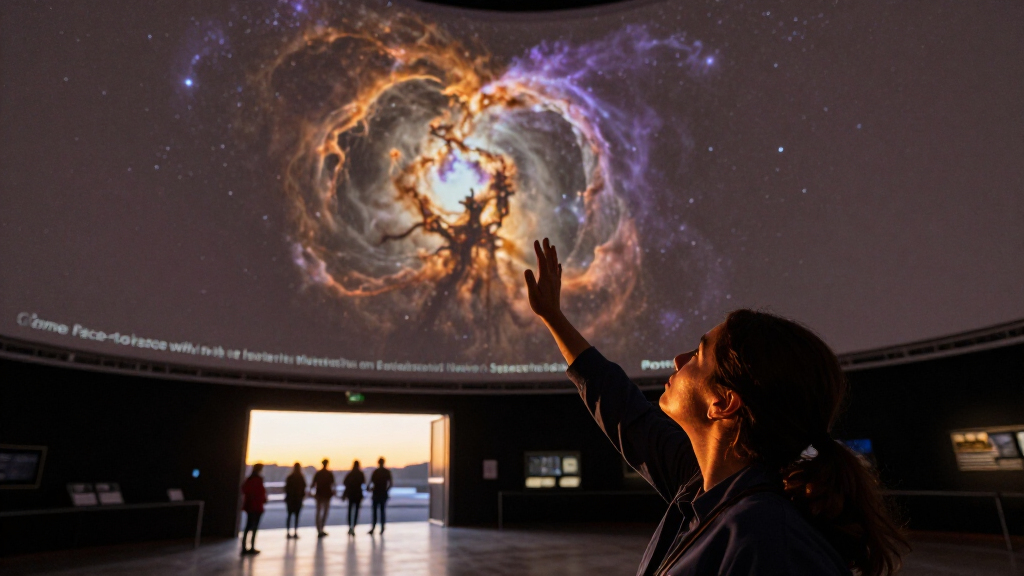
The James Webb Space Telescope has captured new views of the Lion Nebula, or NGC 2392, using its NIRCam and MIRI instruments. The images show structures of gas and dust shaped by radiation from a dying star; astronomers estimate the nebula will disperse in about 10,000 years.
NASA’s James Webb Space Telescope has captured new infrared views of the Lion Nebula, also known as NGC 2392, showing shells and filaments of gas and dust around a dying star. Images from Webb’s NIRCam and MIRI instruments reveal different details of the nebula, which is being reshaped as the star sheds its outer layers.
NGC 2392 is a planetary nebula: a cloud of material expelled by a star late in its life. The source report describes the central object as a white dwarf, the dense stellar core left behind as the star loses its outer layers. In the images, the bright center appears like a small nose within the nebula’s lion-like shape.
NASA says radiation from the hot central star is ionizing surrounding hydrogen and forming a bubble of gas. That bubble includes cavernous shells and rings, with tendrils of material expanding outward. The nebula’s apparent “mane” is the inner part of a shell illuminated by the star, rather than a solid structure.
The MIRI image emphasizes the nebula’s dust structures. NASA says some dust is being destroyed by the star’s radiation, while some filaments persist. The source report does not provide image-release details, exposure information or measurements of the structures, so the pictures are best understood as a new view of the nebula rather than a reported measurement of a change in its size.
A Star Reshapes Its Surroundings
The images make visible a late stage of stellar evolution: a star expels material, and its remaining hot core changes the gas and dust around it. The contrast between dust being eroded and filaments that survive gives researchers a view of how radiation interacts with material in the nebula.
The process also unfolds on different timescales. NASA says the gas and dust took several thousand years to acquire their present forms, while the nebula is still changing. Astronomers estimate it will disperse in roughly 10,000 years. That estimate places the current image within a temporary phase, though it is not a prediction of a specific observable event in the near future.
For readers, the images offer more than a striking shape: they show that a nebula’s visible features are the result of ongoing physical processes. Webb’s infrared instruments help reveal structures in gas and dust that are central to understanding how dying stars return material to their surroundings.
Popular right now

Samsung 48 4K OLED Smart TV (2026) with WireLogic 8ft Ultra High Speed HDMI Cable

LG 77-Inch OLED evo C6 4K Smart TV

Dyson Airwrap i.d. Multi-Styler for Straight and Wavy Hair
As an affiliate, we earn on qualifying purchases.
How NGC 2392 Got Its Shape
The Lion Nebula’s name comes from its appearance in images; its astronomical designation is NGC 2392. The report identifies it as a planetary nebula, a term for material expelled by a star as it reaches the end of its life. Despite the name, planetary nebulae are not planets: the label is historical.
Webb observed the nebula with two instruments. NIRCam records near-infrared light, while MIRI observes mid-infrared wavelengths. The source report says the pair captured brilliant views and singles out MIRI’s image for showing variations in dust. It does not give further technical specifications or describe how the observations compare with earlier images.
NASA’s explanation, as quoted in the source report, links the nebula’s form to the central star’s radiation and the outward movement of expelled material. Although the structures may appear fixed in a single image, NASA says they continue to change as the star drives material away.
What the Images Do Not Establish
The source report does not state when NASA released the images, provide observation dates, or include technical measurements such as the nebula’s dimensions or expansion rate. It also does not specify the method behind the estimate that the nebula will disperse in about 10,000 years. That figure is attributed to astronomers in the report, but no individual researchers or study are named.
The images show the nebula at a particular stage; by themselves, they do not establish how quickly each visible filament is changing. The report also does not say whether Webb’s observations were part of a new research paper or a public image release. Those details remain unreported in the supplied material.
Further Observations Track the Nebula
The source material does not announce a schedule for additional Webb observations or a specific next research milestone. The nebula’s changing shells and dust could be examined through future observations, but no such plans are confirmed here.
For now, the reported development is the new set of views from NIRCam and MIRI, alongside NASA’s explanation of how the dying star shapes its surroundings. Any more precise account of the nebula’s motion, the image-release date or the research behind its estimated dispersal time would require details beyond those provided in the report.
Key Questions
What is the Lion Nebula?
The Lion Nebula is NGC 2392, a planetary nebula made of material shed by a dying star.
Which Webb instruments captured it?
The images were captured with Webb’s NIRCam, which observes near-infrared light, and MIRI, which observes mid-infrared light.
Why does the nebula look like a lion?
Its shells and rings create a lion-like appearance in the images. NASA describes the central region as the face and an illuminated inner shell as the mane; these are visual comparisons, not literal features.
How long will the Lion Nebula remain?
Astronomers estimate that it will disperse in about 10,000 years, according to the source report. The report does not give a more detailed basis for that estimate.
Is the nebula changing now?
NASA says it continues to change as the star drives material away. The report does not provide a measured current expansion rate or say how much the nebula changed between observations.
Source: rss