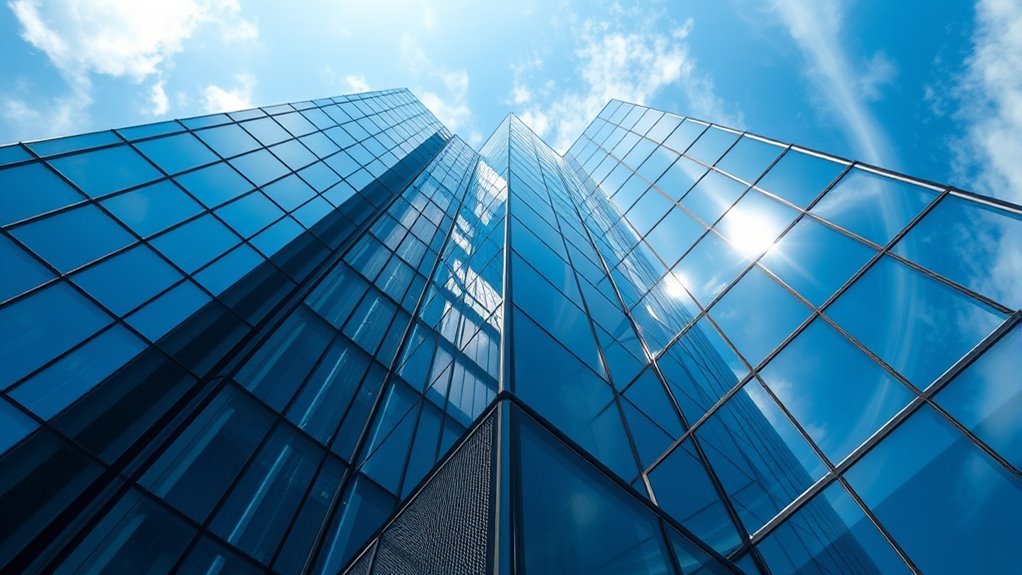

To capture buildings as art in architectural photography, you should master lighting techniques that highlight textures and details, using natural light during golden hour or controlling harsh midday sun with reflectors and diffusers. Pay attention to angles and surroundings to reveal the structure’s character and historical significance. Experiment with different lighting setups to evoke mood and storytelling. If you continue exploring, you’ll discover how to turn every shot into a compelling visual story.
Key Takeaways
- Use lighting techniques like golden hour and diffusers to highlight textures and create mood in architectural shots.
- Incorporate context and historical details through thoughtful angles and framing to enhance storytelling.
- Control harsh sunlight with reflectors or diffusers to soften shadows and emphasize architectural features.
- Capture diverse perspectives by experimenting with different times of day and weather conditions for dynamic results.
- Blend technical skill with artistic vision to portray buildings as expressive, timeless works of art.
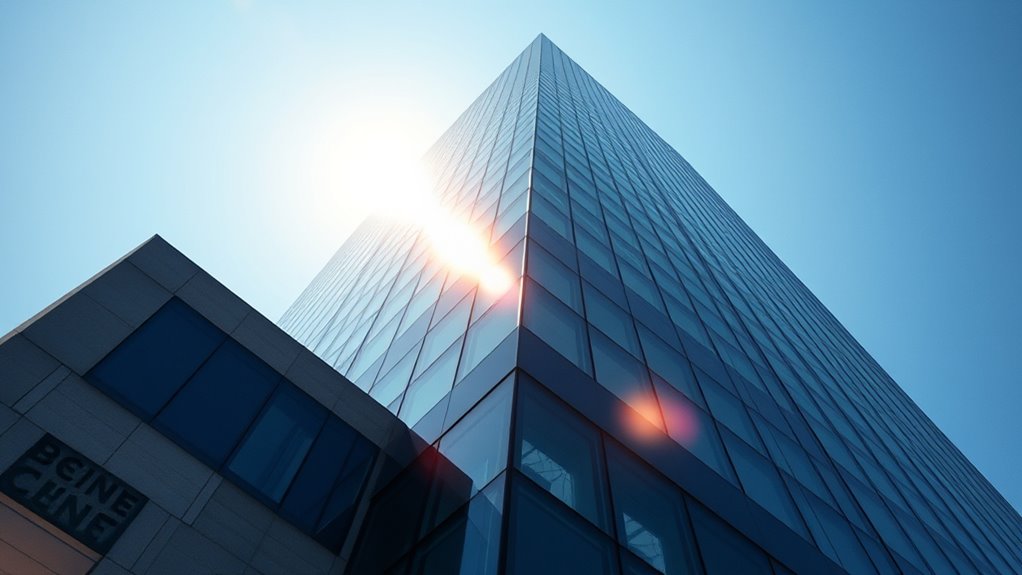
Have you ever wondered how photographers capture the essence and grandeur of buildings? It’s a craft that combines technical skill with an artistic eye, especially when it comes to highlighting the intricate details of historical architecture. One of the most essential tools in your arsenal is lighting techniques. The way you utilize natural and artificial light can transform a mundane shot into a striking piece of art. For historical structures, this means understanding how light interacts with aged stone, ornate facades, and delicate carvings. Shooting during the golden hour, just after sunrise or before sunset, allows you to bathe these buildings in warm, soft light that emphasizes their textures and depth. Conversely, shooting at midday can produce stark, dramatic shadows that reveal the building’s structural details. It’s about choosing the right lighting to evoke the mood you want to convey, whether it’s the timeless elegance or the powerful history embedded in the architecture.
Master lighting to reveal the intricate beauty and history of architectural marvels.
When capturing historical architecture, you need to pay attention to how light influences the perception of the building’s features. Shadows cast by intricate moldings or arches can add a three-dimensional quality that makes your photos pop. You might also experiment with different angles and times of day to showcase the building’s character. Using reflectors or diffusers can help control harsh sunlight, softening shadows and highlighting fine details without overexposing certain areas. These lighting techniques aren’t just about clarity—they’re about storytelling. They let viewers feel the age, significance, and beauty of the structure, making your photos more than just snapshots. Additionally, understanding lighting techniques can help you adapt to various weather conditions and ambient light situations, ensuring consistent quality in your images. Moreover, familiarizing yourself with the principles of light interaction with materials enhances your ability to photograph aged surfaces authentically and compellingly. Developing an awareness of lighting conditions specific to different times and weather can significantly improve your results and add variety to your portfolio.
Furthermore, exploring different lighting setups can help create mood and atmosphere that best suit the architecture’s style and story. Beyond lighting, understanding the history behind the architecture helps you frame your shot with purpose. Knowing the cultural and historical context allows you to capture the essence of the building more meaningfully. For instance, highlighting specific features that reflect a particular era or style can deepen the viewer’s appreciation. When photographing historical architecture, it’s also important to respect its integrity. Use angles that showcase the craftsmanship without causing physical harm or distraction. Incorporating elements like surrounding landscapes or nearby structures to provide context and contrast, enriching the story your photograph tells. Additionally, mastering lighting manipulation techniques can further enhance your ability to highlight architectural details in challenging lighting conditions.
Ultimately, capturing buildings as art hinges on your ability to blend technical mastery with an understanding of the structure’s history and significance. Mastering lighting techniques tailored to each architectural style, especially for historical sites, enables you to produce compelling images that celebrate both the form and story of the architecture. Your goal is to evoke emotion and admiration, transforming cold stone and mortar into timeless works of art that speak to their era and inspire viewers.

EMART 8.5 x 10 ft Backdrop Support System, Professional Photography Lighting Kit with 5500K 50W LED, 6 * 9ft Backdrop *3, Reflector,Umbrellas&Softbox Lighting Kit for Studio, Portrait, Video Shooting
【8.5x10ft Backdrop Support System】The backdrop support system includes three 6x9ft muslin backdrops (black/white/green) and features adjustable backdrop stand…
As an affiliate, we earn on qualifying purchases.
As an affiliate, we earn on qualifying purchases.
Frequently Asked Questions
What Camera Settings Are Best for Interior Architectural Shots?
When shooting interior architectural shots, you should focus on the right camera settings. Use a tripod for stability, and set a narrow aperture like f/8 to f/11 for sharpness. Adjust your ISO to keep noise low, and choose a wide-angle lens to capture more of the space. Employ effective lighting techniques, such as natural light or additional lighting, to highlight details and create a balanced exposure.
How Do I Handle Reflections and Glare in Architectural Photography?
Reflections and glare can feel like stubborn shadows that refuse to leave the scene. To handle them, you should use polarized filters, which act like sunglasses for your camera, reducing glare and reflections effectively. Adjust the filter until reflections fade or become less distracting. This simple tool helps you reveal the true beauty of the architecture without unwanted shiny spots, making your shots clearer and more professional.
What Are the Best Times of Day for Capturing Exterior Buildings?
You should aim to shoot exterior buildings during the golden hour and blue hour for stunning results. During the golden hour, just after sunrise or before sunset, you’ll get warm, soft light that highlights details beautifully. The blue hour, right before sunrise or after sunset, offers cool, moody tones perfect for dramatic shots. These times provide natural lighting that enhances architectural features without harsh shadows or glare.
How Can I Incorporate People Into Architectural Photos Effectively?
Imagine the bustling life around a building, adding a touch of human scale that brings your photos to life. You can incorporate people by patiently waiting for candid moments, capturing authentic interactions that highlight the architecture’s grandeur. Position your subjects thoughtfully to emphasize size and context, ensuring they blend seamlessly. By doing so, you create images that tell a story, blending structure with the vibrant energy of human presence.
What Post-Processing Techniques Enhance Architectural Images Without Overdoing It?
To enhance your architectural images without overdoing it, focus on subtle post-processing techniques. Use HDR blending to bring out detail in both shadows and highlights, ensuring the building’s features stand out naturally. Perspective correction helps straighten lines and fix distortion, making your photos more accurate. Keep adjustments balanced, and avoid excessive saturation or contrast, so your images remain true-to-life while highlighting the architecture’s beauty.

NEEWER 22 Inch/60 Centimeter Light Reflector Light Diffuser 5 in 1 Collapsible Multi Disc with Bag – Translucent, Silver, Gold, White, and Black for Studio Photography Lighting and Outdoor Lighting
Use it stand alone or simply zip on whichever surfaces you wish to use to changes the lighting…
As an affiliate, we earn on qualifying purchases.
As an affiliate, we earn on qualifying purchases.
Conclusion
As you continue to explore architectural photography, you’ll find it’s more than just capturing buildings—it’s about revealing their silent stories and hidden beauty. With each shot, you subtly invite viewers to see beyond the surface, discovering artistry in every line and shadow. Remember, the true magic lies in your perspective, gently guiding others to appreciate the often overlooked elegance around them. Keep capturing, and let your images softly inspire a newfound admiration for the built world.

Camera Lens Filter 77mm Midas Touch Liquid Golden Glow Effect for Photography and Video Dreamy Warm Light Diffusion Glass for Portraits Weddings and Cinematic Shoots
Golden glow light effect: The Midas Touch camera lens filter transforms light into a warm liquid golden glow…
As an affiliate, we earn on qualifying purchases.
As an affiliate, we earn on qualifying purchases.

Amazon Basics 50-inch Lightweight Portable Camera Tripod Stand with Quick-Release Plate, Adjustable Height, Aluminum, for Travel Photography, Champagne
Camera mount tripod stand with zippered storage bag
As an affiliate, we earn on qualifying purchases.
As an affiliate, we earn on qualifying purchases.