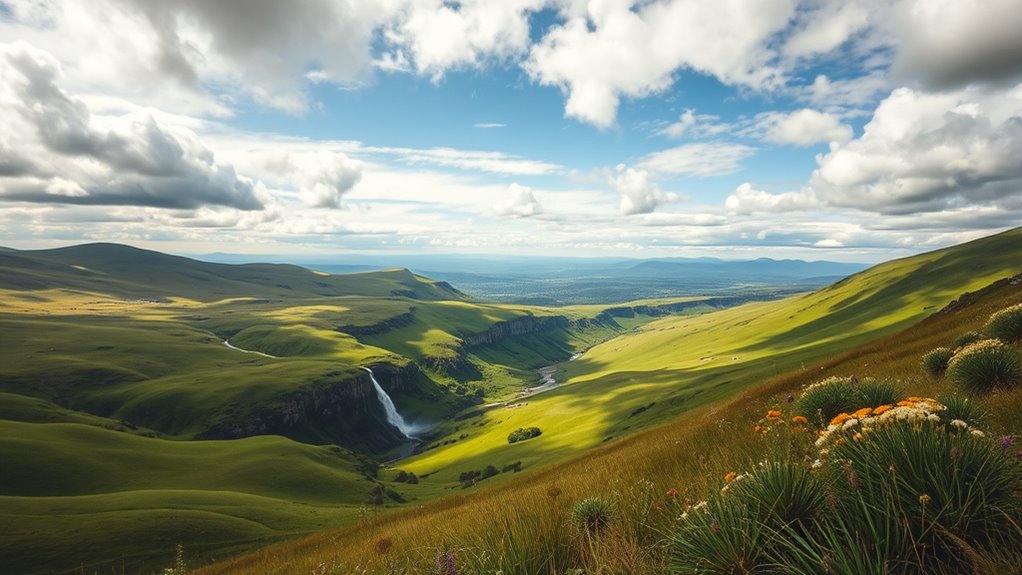

To excel in sweeping landscape photography, you can use advanced techniques like capturing stunning night reflections, employing long exposures to create mirror-like water effects, and exploring aerial perspectives with drones or high vantage points. These methods highlight the vastness and beauty of natural scenes, adding depth and drama to your images. Mastering these skills takes practice, but if you continue exploring, you’ll discover how to transform ordinary landscapes into breathtaking visual stories.
Key Takeaways
- Incorporate both ground and sky to create immersive, comprehensive landscape images that emphasize vastness and depth.
- Use long exposures with stable tripods at night to capture stunning reflections of stars, city lights, or landscapes.
- Utilize aerial perspectives via drones to reveal hidden patterns and add dramatic context to your compositions.
- Plan shoots carefully, considering weather, lighting, and vantage points to optimize shot quality and effects.
- Combine advanced techniques like night reflections and aerial views for unique, captivating landscape photography results.
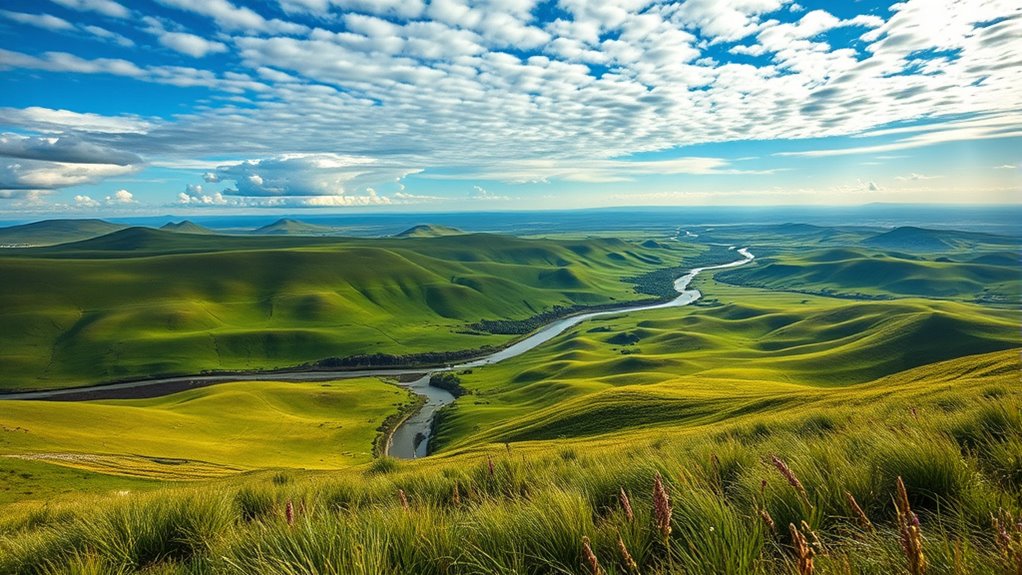
Have you ever wondered how to capture stunning landscape images that truly showcase the beauty around you? One of the most engaging ways to do this is by mastering sweeping landscape photography techniques that encompass both the ground and the sky. To elevate your shots, consider exploring night reflections, which can transform a simple scene into a mesmerizing canvas of light and color. When you find yourself near a calm lake, river, or even wet pavement, you can use long exposures to capture the mirror-like reflections of starry skies, city lights, or illuminated landscapes. These reflections add depth and a sense of serenity to your images, making viewers feel as if they’re right there with you. Night reflections demand patience and precision, but the resulting images are often worth the effort, creating a magical atmosphere that daylight shots simply can’t match.
Another powerful technique to take your landscape photography to new heights is utilizing aerial perspectives. With the advent of drones and advanced camera gear, you can now shoot from vantage points that were once impossible to access. Aerial perspectives give you a unique vantage point, revealing patterns, textures, and landscapes from above that are often hidden at ground level. When capturing these shots, look for areas where the landscape’s shapes and colors create compelling compositions—rivers winding through valleys, forests forming intricate mosaics, or mountain ranges stretching into the horizon. These perspectives not only add drama but also provide context, showcasing the grandeur of the environment in a way that ground-level shots can’t achieve. Combining aerial shots with traditional ground photography allows you to tell a more complete story of the landscape, giving viewers a sense of scale and perspective. Incorporating advanced techniques like night reflections and aerial perspectives is essential for creating truly captivating images that stand out. To make the most of night reflections and aerial perspectives, plan your shoots carefully. Scout locations beforehand, considering the time of day and weather conditions that will enhance your desired effects. For night reflections, look for calm, still water and clear skies to maximize the mirror effect. For aerial perspectives, choose vantage points that offer interesting foregrounds or compositions that emphasize scale. Use a sturdy tripod for stability during long exposures, especially at night, and practice your drone flying skills to get smooth, well-framed shots. By combining these advanced techniques with your own creative vision, you’ll produce sweeping landscape images that fascinate and inspire. Whether capturing the quiet beauty of night reflections or revealing the vastness of the terrain from above, these methods will help you push your landscape photography further.

75" Heavy Duty Camera Tripod Stand with Bluetooth Remote – Max Load 15LB, Aluminum Travel Tripod for DSLR/Phone/Tablet/Projector, 3-Way Pan Head & Quick Release Plate, Compact Foldable Design (Blue)
【75Inch Tall Tripod 】This is a lightweight camera tripod stand that can be adjusted in height from 19.7…
As an affiliate, we earn on qualifying purchases.
As an affiliate, we earn on qualifying purchases.
Frequently Asked Questions
What Are the Best Times of Day for Sweeping Landscape Shots?
The best times of day for sweeping landscape shots are during the golden hour and sunrise contrast. During these periods, you’ll find soft, warm light that enhances colors and textures, creating stunning images. Shooting at sunrise offers a fresh perspective with vibrant contrasts, while the golden hour provides a gentle glow that highlights details beautifully. Plan your shoots around these times to capture breathtaking, dynamic landscapes with rich, natural lighting.
How Do Weather Conditions Impact Landscape Photography?
Weather conditions can dramatically transform your landscape shots, shaping atmospheric effects that seem almost otherworldly. Storms, fog, and clear skies each bring unique moods, while varying weather patterns influence lighting and colors. Rain can add a shimmering gloss, fog creates mysterious depths, and sunlight through clouds enhances contrast. Embrace these elements, as they turn ordinary scenes into extraordinary visual stories, elevating your photography to breathtaking heights.
What Gear Is Essential for Capturing Large-Scale Landscapes?
To capture large-scale landscapes, you need a sturdy tripod for stability, especially in windy conditions. Select a wide-angle lens to encompass expansive scenes and a telephoto lens for distant details. Make sure your gear is lightweight for mobility, and carry extra batteries and filters to adapt to changing light. This combination helps you achieve sharp, detailed shots, regardless of weather or terrain.
How Can I Protect My Camera During Outdoor Shoots?
To safeguard your camera during outdoor shoots, always use camera accessories like a sturdy camera bag or weather-resistant cover. Keep lens filters on your lens to shield against dust, scratches, and moisture. Carry microfiber cloths for quick cleaning, and use lens caps when not shooting. Additionally, consider a rain cover or plastic bag in unexpected weather. These steps help guarantee your gear stays safe and performs at its best in challenging outdoor conditions.
Are There Specific Apps for Planning Landscape Photography Locations?
You can use apps like PhotoPills, The Photographer’s Ephemeris, or PlanIt! to assist with location scouting for landscape photography. These apps help you plan your shoots by showing sun and moon positions, golden hour timing, and map details. They’re perfect for discovering new spots, understanding lighting conditions, and optimizing your shoots. Download these app recommendations to streamline your planning process and capture stunning landscape images.

The Photographer's Guide to Drones
As an affiliate, we earn on qualifying purchases.
As an affiliate, we earn on qualifying purchases.
Conclusion
Now that you know these advanced landscape photography techniques, you’re ready to capture stunning, sweeping scenes. Remember, using filters and mastering composition can dramatically improve your shots. Did you know that over 70% of professional landscape photographers swear by using polarizing filters? Keep experimenting with your gear and techniques, and you’ll consistently create breathtaking images that stand out. So, get out there and turn those scenic views into mesmerizing masterpieces!

ShowMaven Photography Lighting Kit, Softbox Lighting Kit with Photo Backdrop for Product Photography, Portrait photography, Video Shooting Photography
This photo shoot lights and background kit includes almost everything you need. Photo studio photography equipment includes: 1…
As an affiliate, we earn on qualifying purchases.
As an affiliate, we earn on qualifying purchases.

LILIYA Color Gel Filter, 12 Pcs Transparent Correction Lighting Gel Filter Sheet Colored Overlays Transparency Color Film Plastic Sheets, for Led Landscape Lights or Reading
Gel filter material: gel filters are made of high light transmission plastic material, lightweight, steady color temperature and…
As an affiliate, we earn on qualifying purchases.
As an affiliate, we earn on qualifying purchases.