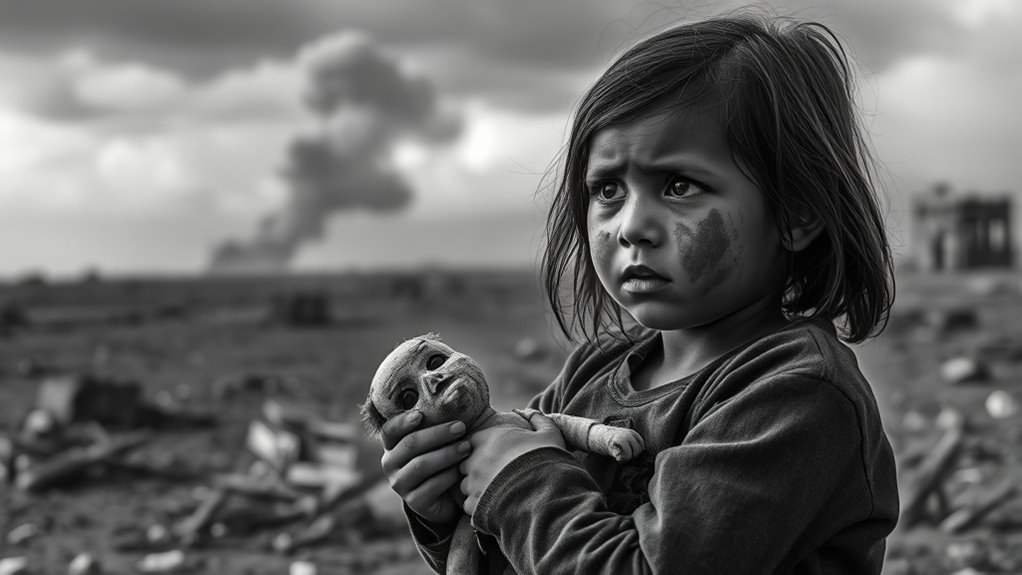

Iconic war photographs hold incredible power to influence public opinion and even alter the course of history. They capture raw emotion, brutal realities, and human suffering, making distant conflicts feel immediate and personal. These images can spark outrage, inspire activism, or prompt policy changes. Their impact depends on composition, framing, and ethical considerations. If you want to discover which images have shaped history and how they continue to influence us, there’s more to explore below.
Key Takeaways
- Iconic war photos powerfully depict brutality and humanity, shaping public opinion and influencing political decisions.
- Strategic composition and framing evoke strong emotional responses, amplifying the image’s impact.
- Ethical considerations ensure photos respect subjects’ dignity while conveying truth without sensationalism.
- Such images can mobilize public action, foster understanding, and prompt policy changes.
- Responsible sharing and technical awareness preserve authenticity and deepen the photograph’s lasting influence.

Few images capture the brutality and humanity of war as powerfully as iconic war photos do. When you see a photograph that instantly conveys suffering, resilience, or hope, it becomes more than just a picture — it becomes a symbol that can shape public opinion and influence history. These images don’t just document events; they evoke strong emotional impact, compelling viewers to confront realities they might prefer to ignore. The emotional power of these photos often depends on their composition and framing, which guide the viewer’s focus and emotional response. But behind every powerful war photo lies a complex web of photojournalism ethics. As a viewer or a photographer, you must recognize the delicate balance between capturing truth and respecting the dignity of those depicted. Ethical considerations demand honesty without exploitation, ensuring that the suffering isn’t sensationalized or used for shock value. When a war photo hits the right ethical notes, it resonates deeply without crossing moral boundaries, fostering genuine understanding rather than voyeuristic curiosity.
Iconic war photos balance truth and dignity to evoke genuine understanding without exploitation or sensationalism.
Your emotional response to these images can be profound. A single photograph can ignite outrage, inspire activism, or bring tears to your eyes. It has the power to humanize distant conflicts, making the abstract painfully real. Photographers often face a moral dilemma: should they intervene to help a suffering subject or focus on capturing the scene for historical record? This tension underscores the importance of photojournalism ethics, which guide professionals in making responsible choices. Ethical photojournalism respects the subject’s humanity, avoids manipulation, and endeavors for truthfulness. When these principles are upheld, photos become authentic reflections of war’s realities, rather than distorted or sensationalized images. Additionally, understanding the contrast ratio and other technical factors can influence how impactful and clear these images appear to viewers. Incorporating technological advancements has also enhanced the emotional depth and clarity of iconic war photographs, influencing how powerful they are perceived.
You must also consider how these images are presented and received. An iconic war photo can sway public opinion, prompting governments or organizations to act or change policies. Yet, it’s essential to remember that such images are often carefully curated to maximize emotional impact while maintaining journalistic integrity. The photographer’s intent, the context, and the aftermath all influence how the image shapes perceptions. As a viewer, you should approach these powerful photos with awareness of their ethical complexity. Recognize their potential to educate and motivate, but also remain critical of how they are used or framed. Furthermore, the visual techniques employed in creating these photographs can greatly enhance their emotional impact, emphasizing the importance of technical skill in photojournalism. Recognizing the role of photo editing and post-processing can also help in understanding the authenticity of the images. Ultimately, iconic war photos serve as stark reminders of both the horrors and the resilience found in war zones. They challenge you to confront uncomfortable truths, fostering empathy and understanding. When created and shared with respect for photojournalism ethics, these images can truly be catalysts for change, making their emotional impact not just memorable but meaningful.
Frequently Asked Questions
How Do Photographers Choose Their Subjects for War Images?
When choosing subjects for war images, you focus on storytelling that evokes emotion and highlights the reality of conflict. Your subject selection involves identifying moments or individuals that best represent the story you want to tell, often aiming to create a powerful visual narrative. You consider the impact of your images, seeking scenes that reveal truth, human suffering, or resilience, ultimately enhancing the power of your visual storytelling.
What Ethical Considerations Are Involved in War Photography?
Have you ever considered the moral dilemmas photographers face in war zones? You must balance revealing harsh realities with respecting consent issues and human dignity. Ethical considerations involve avoiding exploitation, minimizing harm, and ensuring subjects aren’t put at further risk. Do you prioritize the story over individual privacy? Staying sensitive and responsible helps maintain integrity, ensuring your images inform without infringing on the rights or safety of those portrayed.
How Have War Images Influenced International Policy Changes?
You see that war images often influence international policy changes through propaganda manipulation and emotional storytelling. When you share powerful photos, you evoke public empathy and outrage, pressuring governments to act or change policies. These images cut through political rhetoric, making the realities of war undeniable and compelling policymakers to respond. As a result, visual storytelling becomes a strategic tool to shape global responses and promote peace or intervention.
Can War Photos Ever Fully Capture the Reality of Conflict?
War photos are like a window to chaos, but they can’t fully capture its depth. You realize that, despite their emotional impact, war photography ethics limit what’s shown and how it’s portrayed. No single image can encompass every detail, nuance, or the true human toll. While powerful, these photos offer only a snapshot, reminding you that true conflict’s reality is far more complex and layered than any picture can convey.
What Role Does Technology Play in Modern War Photography?
Technology plays a vital role in modern war photography by enabling you to capture more detailed and immediate images. Drone surveillance allows you to document conflicts from unique perspectives, while digital enhancement helps clarify and emphasize essential moments. These tools give you the power to tell stories more accurately and impactfully, shaping public perception and influence, making your photographs not just images but potent symbols that can sway opinions and even change the course of events.
Conclusion
You see, iconic war photos are like sparks that ignite change, shaping public opinion and influencing history. Just as a single drop can cause ripples across a pond, one powerful image can stop a war in its tracks. These photographs remind us of the human cost of conflict and the power of visual storytelling. So remember, a single picture can be more impactful than a thousand words, changing the course of history forever.