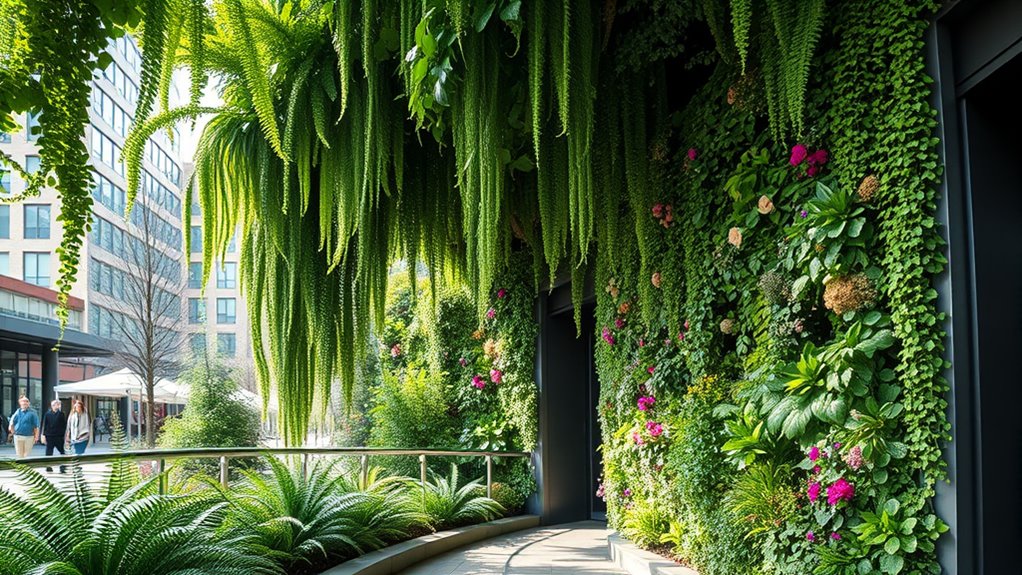

Biophilic and living walls in public spaces help you bring nature into urban areas, making environments more vibrant and sustainable. They boost biodiversity by providing habitats for wildlife and improve ecological health. These walls are installed using modular panels, sturdy frameworks, and efficient irrigation systems, ensuring easy maintenance and growth. Choosing native plants and considering environmental factors guarantees success. Continue exploring to discover how these innovative green solutions can transform your public space into a thriving ecosystem.

Get art and craft supplies delivered free with Prime
- Fast, free delivery on millions of items
- Prime Video, Amazon Music and more included
- Member-only deals all year
Key Takeaways
- Biophilic and living walls enhance urban public spaces by integrating nature, promoting biodiversity, and reconnecting communities with the environment.
- Installation techniques involve sturdy supports, modular panels, proper drainage, and irrigation systems for sustainable growth.
- Plant selection considers climate, exposure, and ecological benefits, emphasizing native, drought-tolerant, or flowering species.
- Modular systems enable easy maintenance, plant replacement, and adaptation to changing ecological and aesthetic needs.
- Proper structural and ecological planning ensures durability, supports local ecosystems, and maximizes sustainability benefits.
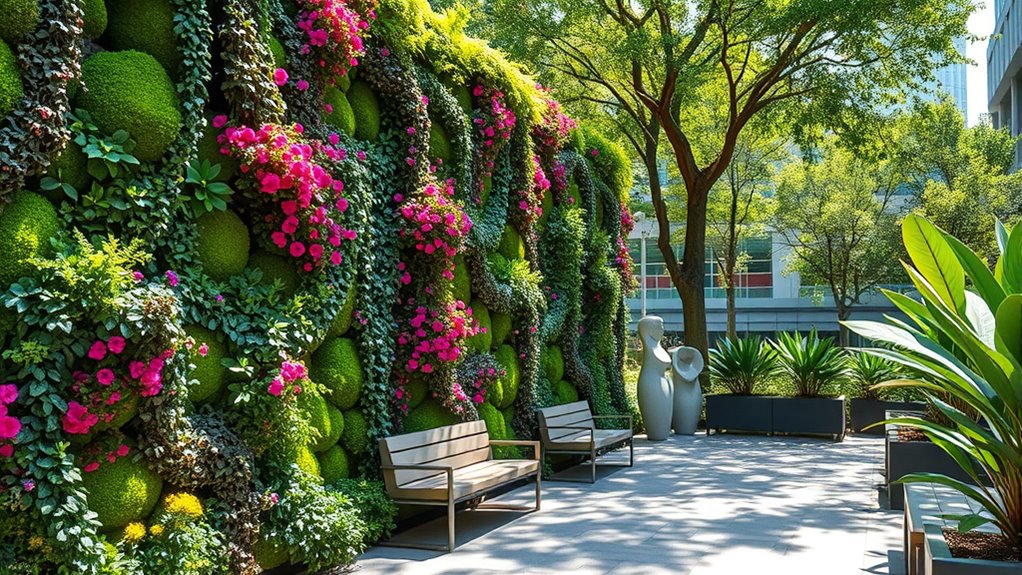
In recent years, biophilic and living walls have become a popular way to enhance public spaces by bringing nature into urban environments. These walls don’t just add aesthetic appeal; they also promote urban biodiversity by creating habitats for birds, insects, and other wildlife. When you incorporate these green structures into cityscapes, you help reconnect people with nature, making urban areas more vibrant and sustainable. The key to successful biophilic walls lies in understanding wall installation techniques, which guarantee plants thrive and the structure remains durable over time.
Starting with the basics, wall installation techniques involve choosing the right framework and planting system suited to the environment and the type of vegetation you want to support. You typically begin with a sturdy backing or support structure, often made from metal or reinforced concrete, designed to withstand weather and structural loads. Once the framework is in place, you install modules or panels filled with a growing medium—such as soil, specialized substrates, or hydroponic systems—that retains moisture and nutrients. These systems allow for efficient planting and maintenance, assuring that your wall remains lush and healthy.
Choose sturdy supports and modular planting systems for thriving green walls.
When planning your installation, consider the climate and exposure of the space; some plants require full sun, while others thrive in shade or partial sunlight. You might opt for drought-tolerant succulents or mosses for low-maintenance walls, or introduce flowering plants to attract pollinators. The choice of wall installation techniques directly impacts the success of plant growth and the ecological benefits your wall provides. For example, modular panel systems allow you to easily replace or rearrange plants, promoting biodiversity and resilience. You can also incorporate irrigation systems into the design, which deliver water efficiently and reduce maintenance efforts.
Another important aspect of wall installation techniques is ensuring proper drainage and airflow to prevent issues like root rot or mold. Proper sealing and waterproofing protect the structural integrity of the wall while allowing the plants to flourish. If you’re aiming for maximum urban biodiversity, consider planting native species that are adapted to local conditions, supporting local ecosystems. These techniques not only enhance the visual appeal of your public space but also create a living habitat that encourages a diverse range of species to thrive amidst the urban environment. Additionally, understanding the nutritional value of plants can help select species that contribute more effectively to ecological health.
Ultimately, the success of biophilic and living walls relies on thoughtful planning and execution of wall installation techniques. They’re an investment in the health of urban ecosystems, providing cleaner air, cooler temperatures, and a more inviting atmosphere. As you design and build your green wall, remember that choosing the right methods and plants will guarantee your project is sustainable, inspiring, and beneficial for both people and wildlife.
As an affiliate, we earn on qualifying purchases.
Frequently Asked Questions
What Maintenance Is Required for Biophilic Walls in Public Spaces?
You need to regularly check plant health and guarantee your irrigation systems are functioning properly. Water your biophilic wall as needed, especially during dry periods, and prune plants to encourage growth. Inspect for pests and diseases, and replace any unhealthy plants promptly. Keep the irrigation systems clean and calibrated to prevent overwatering or underwatering. Consistent maintenance helps keep your wall vibrant, healthy, and visually appealing year-round.
How Do Living Walls Impact Urban Air Quality?
Living walls improve urban air quality by actively filtering pollutants through air purification. As you incorporate these green structures, they help mitigate pollution by absorbing carbon dioxide and trapping airborne particles. This process not only enhances air quality but also creates healthier environments for public spaces. You’ll notice cleaner, fresher air around living walls, making cities more livable and reducing the health risks associated with pollution.
Are Biophilic Walls Suitable for All Climate Zones?
Biophilic walls are generally suitable for most climate zones, but their success depends on climate adaptability and regional plant selection. You need to choose plants that thrive in your specific environment, considering temperature, humidity, and sunlight. Proper regional plant selection guarantees the wall’s longevity and health. With the right approach, biophilic walls can enhance spaces regardless of climate, creating a sustainable, beautiful, and functional addition.
What Is the Typical Lifespan of a Living Wall System?
A living wall system typically lasts 5 to 15 years, depending on plant selection and system durability. If you choose hardy, well-suited plants and guarantee proper maintenance, your wall can thrive longer. Regular inspections, replacing damaged plants, and using durable materials for the structure also extend its lifespan. By prioritizing these factors, you maximize the longevity and beauty of your living wall in any public space.
How Do These Walls Influence Visitor Well-Being and Productivity?
Research suggests that living walls boost visitor well-being and productivity by providing psychological benefits like reduced stress and increased focus. You’ll notice improved mood and engagement as these green installations create calming environments. Plus, they positively impact the environment by improving air quality and supporting biodiversity. These walls foster a sense of connection to nature, which enhances overall mental health and helps you perform better in public spaces.
urban green wall irrigation system
As an affiliate, we earn on qualifying purchases.
As an affiliate, we earn on qualifying purchases.
Conclusion
Imagine transforming urban spaces into breathing, vibrant havens that reconnect us with nature’s soul. Biophilic and living walls don’t just beautify—they inspire, soothe, and heal. As you walk through these living masterpieces, remember you’re part of a bigger picture—one where nature and humanity thrive side by side. Embrace this green revolution, and let these walls remind you that, even in concrete jungles, life blossoms beautifully—if only we choose to nurture it.
As an affiliate, we earn on qualifying purchases.
outdoor living wall support structure
As an affiliate, we earn on qualifying purchases.
As an affiliate, we earn on qualifying purchases.
Fall Picks
fall essentials
As an affiliate, we earn on qualifying purchases.