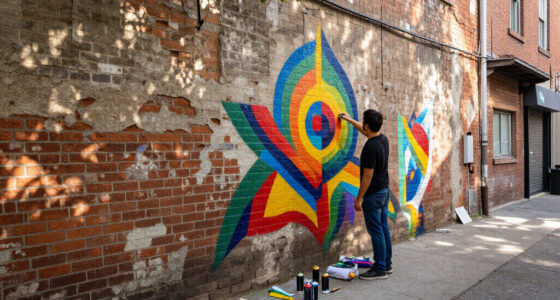
Climate-responsive and sustainable murals use eco-friendly materials like biodegradable paints and natural sealants, minimizing environmental harm. They often incorporate urban greening, such as moss or vertical gardens, to absorb CO₂ and cool cities. These murals promote environmental awareness and are designed for durability and easy maintenance. By blending art with ecological principles, they create vibrant, meaningful spaces that support sustainability. Keep exploring to discover how these murals can transform urban landscapes and inspire action.

Get art and craft supplies delivered free with Prime
- Fast, free delivery on millions of items
- Prime Video, Amazon Music and more included
- Member-only deals all year
Key Takeaways
- Utilizes biodegradable paints and natural sealants for eco-friendly, durable mural designs.
- Integrates living green elements like moss and vertical gardens to enhance urban ecosystems.
- Promotes environmental awareness through thematic imagery of natural landscapes and conservation.
- Implements sustainable practices to minimize ecological footprint and improve air quality.
- Supports community engagement in greening efforts, fostering climate-responsiveness and ecological responsibility.
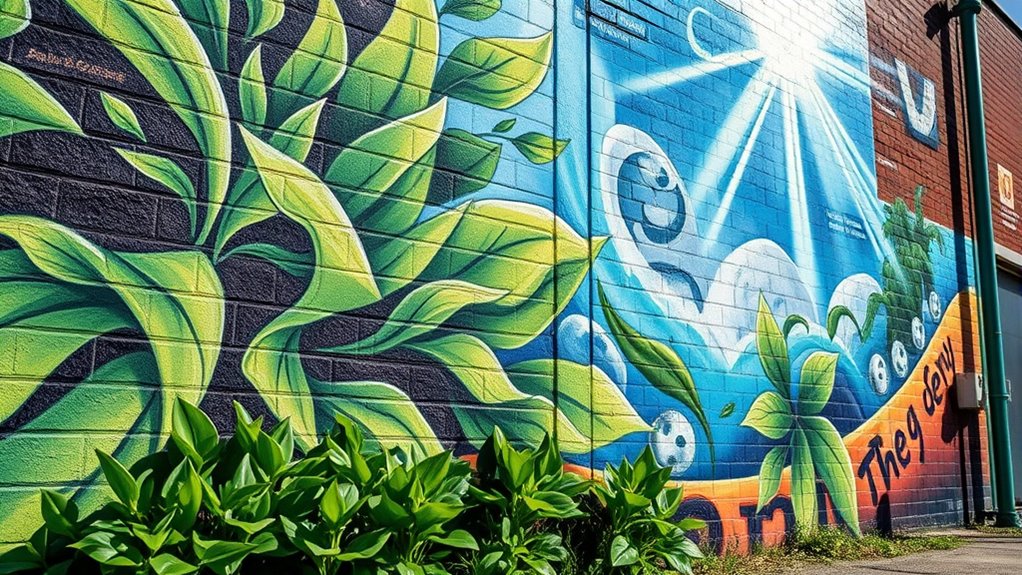
Climate-responsive and sustainable murals are transforming public art by integrating eco-friendly materials and design practices that adapt to their environment. These murals go beyond mere aesthetics; they serve as tools for urban greening and environmental awareness. By incorporating sustainable principles, you actively contribute to reducing urban heat islands and improving air quality. One key approach is using biodegradable paints that break down naturally over time, minimizing environmental impact and avoiding long-term pollution. These paints often contain natural pigments and non-toxic binders, making them safer for both the environment and the artists applying them. When you choose biodegradable paints, you’re ensuring that the mural remains vibrant without introducing harmful chemicals into the ecosystem, aligning art with ecological responsibility.
Urban greening plays a essential role in these murals’ design. Instead of just painting walls, you might integrate living elements like moss, succulents, or vertical gardens into the artwork. These greenery elements help absorb carbon dioxide, produce oxygen, and reduce temperatures in crowded city spaces. As you work on these murals, think about how the artwork can encourage community involvement in urban greening initiatives. Murals that include or promote plant life make the surrounding environment healthier and more inviting. They also serve as visual reminders of the importance of nature in urban settings, fostering a connection between residents and their environment. Incorporating air purification technologies into mural design can further enhance air quality, making the space healthier for the community.
Using eco-friendly materials and sustainable practices in murals also means considering the longevity and maintenance of your work. You want your art to endure while still being environmentally conscious. That’s why biodegradable paints and natural sealants are ideal—they protect the mural without creating waste or pollutants when it’s time for touch-ups or removal. This approach aligns with the ethos of sustainability, ensuring that your art contributes positively without leaving a lasting ecological footprint. Additionally, designing murals with environmental themes or incorporating imagery of natural landscapes can inspire viewers to appreciate and protect their surroundings.
biodegradable eco-friendly mural paints
As an affiliate, we earn on qualifying purchases.
As an affiliate, we earn on qualifying purchases.
Frequently Asked Questions
How Are Mural Materials Selected for Environmental Impact?
You select mural materials by prioritizing eco-friendly pigments and recycled substrates to minimize environmental impact. You evaluate the durability, safety, and sustainability of each pigment, ensuring they’re non-toxic and sourced responsibly. Recycled substrates, like reclaimed wood or recycled metal, reduce waste and resource use. By choosing these materials, you create murals that are not only visually striking but also environmentally conscious, supporting a sustainable approach to urban art.
What Is the Lifespan of Climate-Responsive Murals?
Your climate-responsive mural can last 10 to 20 years if you choose durable, eco-friendly materials. Think of it as a lasting story painted on a wall, blending aesthetic appeal with cultural significance. Proper maintenance, like gentle cleaning and protective coatings, extends its life, ensuring the mural continues to inspire and educate communities about sustainability. With care, your mural remains a vibrant symbol of environmental consciousness for decades.
Can Murals Adapt to Changing Climate Conditions Over Time?
Yes, murals can adapt to changing climate conditions over time using adaptive design techniques and biodegradable paints. You can choose materials that respond to environmental shifts, ensuring the mural stays relevant and sustainable. By incorporating biodegradable paints, you reduce environmental impact and allow for easier updates. This approach helps your mural remain resilient, eco-friendly, and visually engaging, even as climate conditions evolve.
How Do Murals Contribute to Urban Heat Island Mitigation?
Your murals can dramatically reduce the urban heat island effect, acting like a cool oasis in a concrete jungle. By reflecting sunlight and providing urban cooling, they lessen the city’s temperature spikes. Plus, their vibrant visual impact captures attention and inspires change. You help transform cityscapes into more comfortable, climate-resilient spaces, proving that art isn’t just beautiful—it’s a powerful tool for sustainable urban cooling.
Are There Specific Certifications for Sustainable Mural Practices?
Yes, there are specific certifications for sustainable mural practices. You should look for green certification programs that recognize eco-friendly initiatives. These programs often require the use of eco-friendly paints, such as low-VOC or non-toxic options, ensuring your mural is environmentally responsible. Achieving such certifications demonstrates your commitment to sustainability and helps promote environmentally conscious art practices within your community.
As an affiliate, we earn on qualifying purchases.
Conclusion
As you step back and admire these murals, you realize they’re more than just vibrant walls—they’re living canvases that breathe with the Earth’s pulse. By embracing climate responsiveness and sustainability, you’re helping craft a future where art and nature dance in harmony. These murals become your silent symphony, echoing hope and resilience across urban landscapes. Together, you and these artworks turn cityscapes into lush gardens of imagination, inspiring change one brushstroke at a time.
As an affiliate, we earn on qualifying purchases.
air purification mural technology
As an affiliate, we earn on qualifying purchases.
As an affiliate, we earn on qualifying purchases.
Fall Picks
fall essentials
As an affiliate, we earn on qualifying purchases.