TL;DR

Get art and craft supplies delivered free with Prime
- Fast, free delivery on millions of items
- Prime Video, Amazon Music and more included
- Member-only deals all year
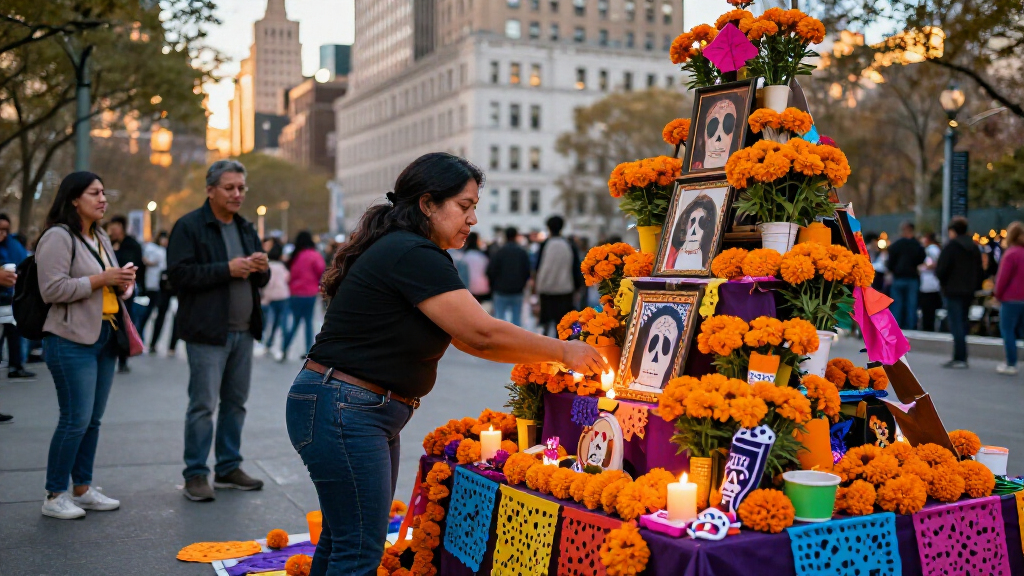
A large public ofrenda titled “Twenty Petal Flower” begins appearing in Manhattan’s Flatiron North Plaza on Oct. 26, ahead of Día de Muertos. Made by artisans from Mexico’s Mestiz Studio in partnership with Brooklyn’s Powerhouse Arts, the altar invites passersby to leave offerings, candles, gifts and mementos through Nov. 3.
A large public ofrenda titled “Twenty Petal Flower” begins taking shape in Flatiron’s North Plaza in Manhattan on Oct. 26, giving visitors a place to leave offerings for loved ones ahead of Día de Muertos. The altar, made by artisans from Mexico’s Mestiz Studio with Brooklyn arts organization Powerhouse Arts, is scheduled to welcome offerings, candles, gifts and mementos through Nov. 3.
The work is built as a tiered arrangement of enlarged marigold forms. Its title refers to the flower’s names in Nahuatl, cempōhualxōchitl, and Spanish, cempasúchil. In Mexican Día de Muertos traditions, marigolds are believed to help guide the souls of the dead back to their living family members.
The altar is designed as a public community space, rather than solely as an artwork to view. Passersby can add personal offerings and mementos honoring people who have died. The announcement identifies the installation location and dates, but does not specify opening hours or whether visitors need to follow particular rules for placing items.
Artisans from Mestiz Studio, based in San Miguel de Allende, Mexico, created the work in partnership with Powerhouse Arts in Brooklyn. The project draws attention not only to the altar’s use in remembrance but also to the people involved in bringing the marigold from cultivation to the ofrenda, Mestiz founder and creative director Daniel Valero told Hyperallergic.
The Manhattan installation brings a Día de Muertos altar into a public plaza and invites people who pass through the area to take part. Its participatory format makes remembrance visible in a shared urban setting, while allowing visitors to contribute personal objects rather than encounter the ofrenda only as a finished display.
The project also connects the ritual’s familiar marigold imagery with the labor behind it. Valero said the studio wanted to honor people involved in the flower’s journey, from cultivation to the altar. That framing places makers and growers alongside the families and loved ones remembered through the offerings.
The invitation is open to passersby, but the source material does not detail how contributions will be handled after the installation closes. The public nature of the work therefore raises practical questions about the care and removal of offerings that have not yet been answered in the available announcement.
Popular right now

Ninja Foodi DZ201 8-Quart DualZone 6-in-1 Air Fryer

Vitamix Propel Series 750 Professional-Grade Blender, 4 Programs, Black

Ninja DualZone Smart Air Fryer, 10 Qt, 6-in-1, DZ950
As an affiliate, we earn on qualifying purchases.
Marigolds and Día de Muertos
Día de Muertos, or Day of the Dead, is observed on Nov. 1 and 2 in many communities, with local practices varying. Ofrendas are altars assembled to honor the dead; they may include photographs, candles, food and other objects connected to the people being remembered. The Flatiron project’s offering period begins on Oct. 26 and ends on Nov. 3, extending across the lead-up to and observance of the holiday.
The installation’s name refers to cempasúchil, the Mexican marigold associated with the holiday. The source report says these flowers are believed to guide deceased relatives back to their families. “Twenty Petal Flower” translates that association into an enlarged, tiered public artwork, with the marigold form serving as both the visual structure and a reference to the seasonal ritual.
““A Día de Muertos altar is traditionally a tribute to someone we love who is no longer with us. With Twenty Petal Flower, we wanted to honor the people behind the cempasúchil’s entire journey, from cultivation to the ofrenda.””
— Daniel Valero, founder and creative director of Mestiz Studio, speaking to Hyperallergic
Visitor Details Still Unspecified
The announcement gives the installation dates and location, but does not list daily hours, accessibility arrangements, or instructions for adding offerings. It also does not say whether there are limits on the type or size of objects visitors may leave.
Further details about the installation’s construction, the number of artisans involved and what will happen to offerings after Nov. 3 are not provided in the source report. Those practical arrangements remain unclear; no additional information should be inferred from the invitation to participate.
Offerings Continue Through Nov. 3
The altar is scheduled to remain available for contributions through Nov. 3. Visitors can add offerings, candles, gifts or mementos to honor loved ones during that period, according to the project announcement reported by Hyperallergic.
Any further information about opening hours, visitor guidance or the handling of items after the closing date would need to come from the organizers. The available report does not identify a later event or a planned next location for “Twenty Petal Flower.”
Key Questions
Where is the “Twenty Petal Flower” ofrenda?
It is in Flatiron’s North Plaza in Manhattan, according to the report.
When can visitors leave offerings?
The installation begins on Oct. 26 and is scheduled to welcome offerings through Nov. 3. The source does not list daily visiting hours.
Who made the installation?
Artisans from Mestiz Studio in San Miguel de Allende, Mexico, made it in partnership with Powerhouse Arts in Brooklyn.
What can people leave at the altar?
The announcement invites visitors to place offerings, candles, gifts and mementos honoring loved ones. It does not give additional instructions or restrictions.
What does the title “Twenty Petal Flower” refer to?
The title refers to names for the Mexican marigold in Nahuatl and Spanish. In Día de Muertos traditions, marigolds are believed to help guide deceased relatives back to their living families.
Source: rss