
TL;DR

Get art and craft supplies delivered free with Prime
- Fast, free delivery on millions of items
- Prime Video, Amazon Music and more included
- Member-only deals all year
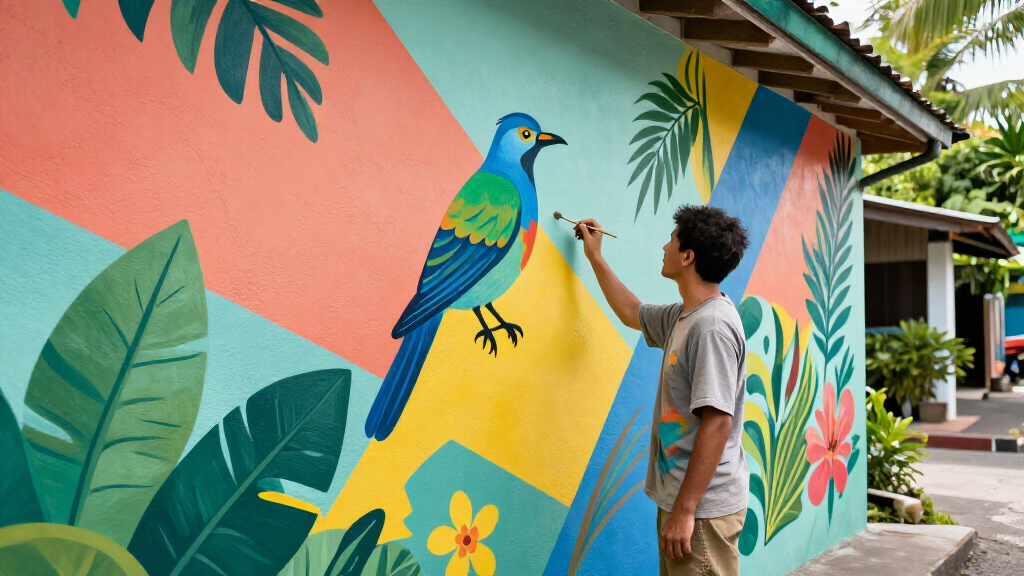
A Colossal report published in October 2026 profiles murals by Amok Island, the artist born in Amsterdam and based in Fremantle, Western Australia. The works depict plants and animals associated with the places where they are painted; the report presents them as a way to draw attention to local biodiversity and conservation.
A new Colossal profile published in October 2026 highlights murals by Amok Island, an artist born in Amsterdam and based in Fremantle, Western Australia, whose large-scale works depict plants and animals associated with the places where they appear. The report connects the paintings to concerns about biodiversity loss and describes public art as a way to make local species more visible to residents.
The murals feature a range of subjects, including birds, mammals, crustaceans and flowers. Examples named in the report include “The Honey Eaters” in Ravensthorpe and “Grevillea bipinnatifida” in Dwellingup, both dated 2021, as well as “The Last Swans” in Northam, dated 2020. Other works include “Seagulls and Chip” in Fremantle and “V. kershawi on E. websteriana” in Perth City, both from 2024.
The profile also lists projects from 2026: “Leopard Cat” in Hong Kong and “The banning of Second-Generation Anticoagulant Rodenticides” in South Perth, created for the NMBW Festival. The works vary in subject and setting, but the report describes a consistent focus on organisms connected with particular regions, painted on urban walls and community or industrial structures.
Colossal identifies the artist as Amok Island and says the murals show nearby wildlife and plant life that local people can learn about and enjoy. The report frames that approach as part of a wider conservation conversation. It does not provide project budgets, audience figures, or independent evidence measuring whether the murals change public awareness or conservation outcomes.
Local Species on Public Walls
The paintings put regional plants and animals into everyday public spaces, where residents and visitors may encounter them outside a museum or nature reserve. That can make otherwise unfamiliar species more visible and give a place a recognisable connection to its natural surroundings. Colossal presents this visibility as a way to encourage interest in conservation, though it does not report research showing a direct effect on behaviour.
The subject matter also sits against an urgent but difficult-to-measure problem. Species can disappear before they are documented, while habitat loss, pollution and climate change place pressure on ecosystems. By focusing on individual organisms and local settings, the murals offer a public-facing form of attention to biodiversity; they are an artistic contribution to that discussion, not a substitute for conservation policy or scientific monitoring.
Popular right now

LG 85-inch QNED75B Mini LED Smart TV Bundle with HDMI and CPS Protection Plan

De'Longhi Stilosa Compact Manual Espresso Machine with Milk Frother

Vitamix 5200 Professional-Grade Blender, 64 oz. Container, Black
As an affiliate, we earn on qualifying purchases.
A Practice Rooted in Place
Amok Island was born in Amsterdam and is now based in Fremantle, Western Australia, according to Colossal. The report says the artist has painted across his home state and in other parts of the world, choosing subjects that reflect creatures and specimens found in the relevant regions. The examples span several years and locations, from Western Australian towns to Hong Kong.
The report places the work alongside broader biodiversity research, mentioning the announcement of a new wild cat species in Bolivia and the Ocean Census initiative’s documentation of marine species. It also notes that the number of species disappearing annually is hard to establish when scientists have not yet identified the full range of life. These points are presented as context for the murals’ conservation theme, rather than as findings about the murals themselves.
What the Profile Does Not Establish
Colossal’s account is an art profile, not an evaluation of conservation impact. It does not include direct comments from Amok Island, local residents, ecologists or festival organisers, and it does not explain how each species was selected or whether scientific advisers verified the depictions. The report’s descriptions of the works and their conservation purpose should therefore be distinguished from independently measured results.
The article also gives no figures for how many people have seen the murals, whether related educational programmes accompany them, or whether any work has led to changes in local conservation activity. Its introductory discussion refers to possible annual extinctions but does not establish a precise global count. Those questions remain outside the information supplied in the profile.
More Works and Their Local Stories
The report directs readers to Amok Island’s Instagram for more of the artist’s work. It does not announce a forthcoming mural, exhibition or conservation programme, and it gives no schedule for future projects. The next developments, if any, will depend on announcements from the artist, host organisations or venues.
For readers interested in the existing works, the locations and dates listed by Colossal provide a starting point for finding the murals and learning about their subjects. Any stronger claims about public response or conservation benefits would require additional reporting, including comment from the artist and local partners and evidence about how audiences engage with the projects.
Key Questions
Who is Amok Island?
Amok Island is an artist born in Amsterdam and based in Fremantle, Western Australia, according to Colossal. The report describes murals he has made in Western Australia and other locations.
What do the murals depict?
The works show regional plants and animals, including birds, flowers, mammals and crustaceans. Named examples include “The Honey Eaters,” “The Last Swans” and “Leopard Cat.”
Where are the featured murals?
The profile lists locations including Ravensthorpe, Dwellingup, Northam, Perth City, Fremantle and South Perth in Western Australia, as well as Hong Kong. It gives dates ranging from 2020 to 2026.
Do the murals have a proven conservation impact?
The report does not establish a measurable impact. It presents the works as drawing attention to local biodiversity but provides no audience research or evidence that they changed conservation behaviour.
Source: rss