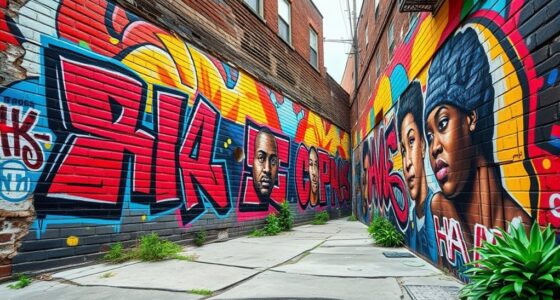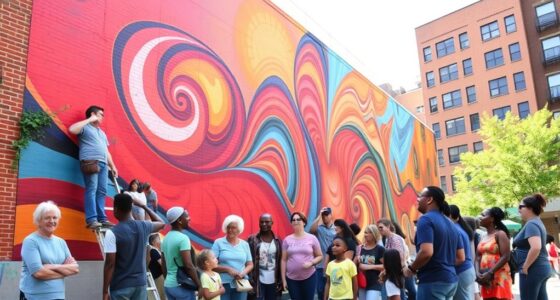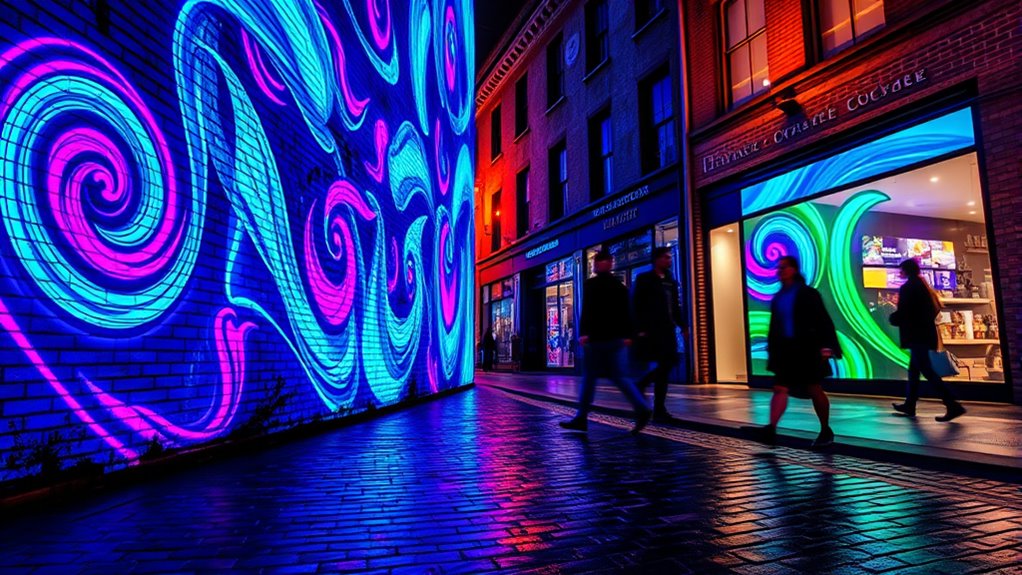

Digital projections are revolutionizing street art by turning blank urban walls into lively, interactive displays. Using augmented reality and digital animations, you can experience vibrant visuals that seem to come alive in real time. These projections transform cityscapes into immersive galleries, allowing your participation to influence the artwork. This innovative approach makes street art more accessible and flexible, encouraging community engagement. Keep exploring to discover how this technological shift is reshaping urban expression in exciting new ways.

Get art and craft supplies delivered free with Prime
- Fast, free delivery on millions of items
- Prime Video, Amazon Music and more included
- Member-only deals all year
Key Takeaways
- Digital projections transform urban walls into animated, immersive canvases replacing traditional street art forms.
- Augmented reality layers enhance projections, creating multi-dimensional storytelling visible through AR devices.
- Interactivity allows viewers to influence visuals through gestures, fostering active participation and personalized experiences.
- Digital projection street art is easily deployed, temporary or permanent, revitalizing urban spaces quickly and accessibly.
- It reflects social, cultural, and emotional narratives, strengthening community engagement and urban vibrancy.
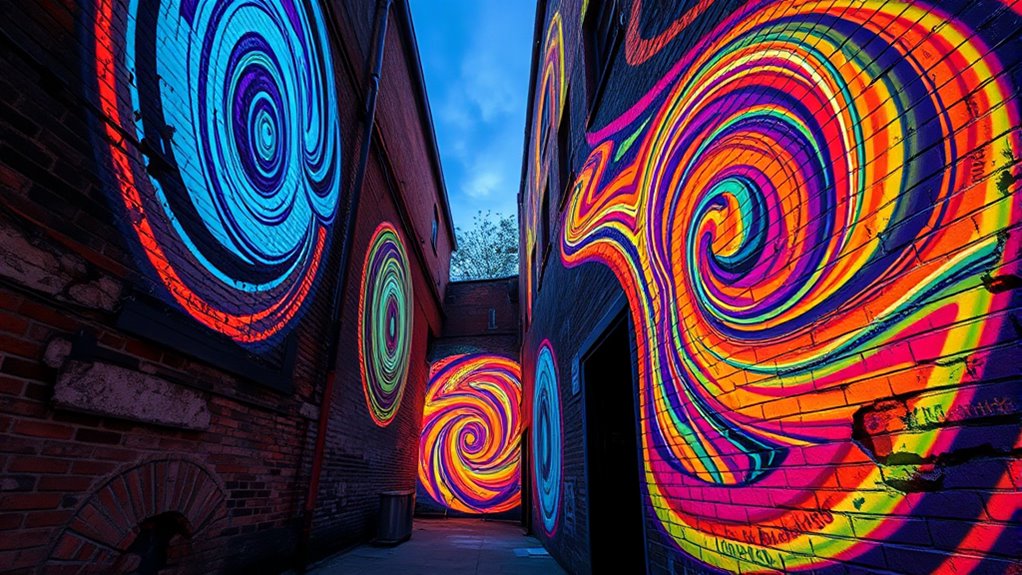
Digital projections are transforming city streets into dynamic canvases, blending technology with urban art in innovative ways. Instead of traditional murals or graffiti, you now see vibrant visuals that seem to come alive through the power of augmented reality and interactive installations. These projections don’t just sit passively on walls; they engage you, making you a part of the artwork. As you walk through the city, you might notice a blank wall suddenly burst into color, telling a story or creating an immersive scene that shifts and changes as you move. This evolution turns everyday urban spaces into living, breathing exhibitions where art becomes participatory rather than static.
Digital projections turn city walls into lively, interactive art that evolves with your movement.
Augmented reality plays a huge role in elevating digital projections. When you use your smartphone or AR glasses, you can uncover layers of digital content layered over the physical environment. Imagine pointing your device at a building and seeing a mural transform into a moving scene or a historical event unfold right before your eyes. This technology blurs the line between the physical and digital worlds, allowing artists to craft complex, multi-dimensional stories that are only fully visible through augmented reality. It invites you to explore, discover, and interact with art in ways that traditional street art simply can’t match.
Interactive installations further deepen this connection between the viewer and the artwork. Instead of just observing, you become an active participant. You might trigger animations, change colors, or influence the visuals by your movements or gestures. For example, standing in front of a projected display could cause the visuals to respond to your presence, creating a personalized experience. This interactivity makes the art more engaging and memorable, encouraging you to spend more time exploring these digital landscapes. It also shifts the power dynamic—no longer are you just a spectator; you’re a co-creator, shaping the art through your actions.
These digital projections are also democratizing street art, making it accessible to a broader audience. You don’t need special skills or permissions to experience or even create your own digital art on city walls. Artists can project large-scale, vibrant pieces overnight, transforming dull facades into lively spectacles. This flexibility means cities can host temporary or permanent displays that reflect current social issues, celebrations, or cultural stories, making urban landscapes more vibrant and relevant. As a viewer, you gain a new appreciation for the intersection of technology and creativity, witnessing how digital projections revolutionize the way we experience and participate in street art. Additionally, understanding the emotional impact of these dynamic visuals can deepen your connection to urban spaces and foster community engagement.
Popular right now

Bose QuietComfort True Wireless Earbuds with Active Noise Cancellation, Black

Vitamix Propel Series 510 Professional-Grade Blender, 3 Programs, Black

iRobot Roomba Max 715 Pet Robot Vacuum with AutoEmpty Dock
As an affiliate, we earn on qualifying purchases.
Frequently Asked Questions
What Equipment Is Needed for Digital Street Projections?
To create digital street projections, you need a powerful projector, a compatible media source, and sturdy mounting equipment. Make certain your projection techniques suit the surface you’re working with, and check your equipment regularly for maintenance to guarantee clear visuals. You might also want a remote control or software for easy adjustments. Proper setup and maintenance help your projections stay vibrant and effective during your street art displays.
How Do Artists Secure Permissions for Public Projections?
You should start by researching local public space regulations and contacting the relevant authorities to obtain necessary permits. It’s important to clarify your intent and make certain your work aligns with community standards. You may also need to secure artist licensing, which grants you legal permission to create projections in public spaces. Always communicate openly with officials, follow guidelines, and keep documentation to avoid legal issues.
What Are the Legal Considerations of Digital Street Art?
You need to be aware of legal liabilities and copyright issues when creating digital street art. Make sure you have permission from property owners and rights holders to avoid infringement. If you don’t, you risk fines or legal action. Always check local laws about public projections, and consider licensing your work properly. Staying informed helps you safeguard yourself and ensures your art remains within legal boundaries.
How Long Do Digital Projections Typically Last?
You might find that digital projections typically last from a few hours to several nights, depending on projection durability and weather conditions. If you want your artwork to shine longer, you’ll need regular maintenance to keep the projection clear and vibrant. Think of it as a flash in the pan or a fleeting moment—its longevity relies heavily on the quality of equipment and environmental factors.
Can Digital Projections Be Environmentally Sustainable?
Yes, digital projections can be environmentally sustainable. You can use eco-friendly materials for projectors and screens to minimize waste. Additionally, choosing energy-efficient technology helps reduce electricity consumption. By combining these approaches, you make your digital projection art more eco-friendly, lowering its carbon footprint. It’s a smart way to enjoy innovative street art while being mindful of the environment and promoting sustainability in urban spaces.
Conclusion
You can’t deny that digital projections have transformed street art into a mind-blowing spectacle, turning city walls into living, breathing canvases. As you walk through illuminated streets, you realize this art form is revolutionizing how you experience creativity—more vibrant and dynamic than anything before. It’s like witnessing a city waking up with a thousand colors bursting to life, forever changing the way you see public spaces. This isn’t just art; it’s an unstoppable force reshaping our world.