Preserving outdoor street art is challenging because it faces constant threats from weather, pollution, and vandalism. Protecting murals often requires special coatings or restoration, but these efforts can be controversial and difficult to implement. Legal rules vary, making it hard to secure lasting protection for artworks that reflect community culture. If you want to understand how these issues are managed and what solutions exist, there’s more to explore below.

Get art and craft supplies delivered free with Prime
- Fast, free delivery on millions of items
- Prime Video, Amazon Music and more included
- Member-only deals all year
Key Takeaways
- Outdoor street art faces deterioration from environmental factors like rain, sun, pollution, and dirt, complicating preservation efforts.
- Vandalism, including graffiti over murals and tagging, poses a significant threat to maintaining outdoor artworks.
- Preservation techniques such as protective coatings and restorations must balance safeguarding art with respecting urban aesthetics.
- Legal ambiguities and inconsistent enforcement hinder efforts to protect and conserve outdoor street art effectively.
- Community initiatives and legal protections, like designated zones, are essential for sustainable preservation of outdoor street art.
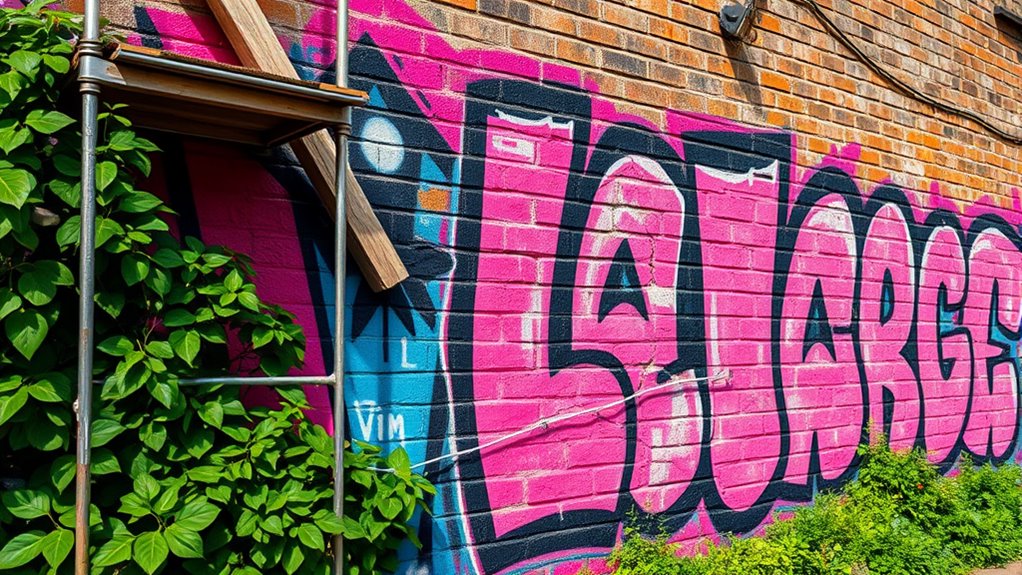
Have you ever wondered why preserving street art matters? It’s because these murals and graffiti pieces are more than just visual expressions; they’re cultural artifacts that reflect a community’s identity, history, and voice. Yet, outdoor street art faces constant threats, especially from graffiti vandalism, which can quickly erase or damage these works. When someone tags over a mural or defaces it with spray paint, it’s not just an act of vandalism but a loss to the cultural fabric of the area. This is why understanding legal regulations around street art is essential. Many cities have specific laws that differentiate between illegal graffiti vandalism and sanctioned street art, but enforcement can be inconsistent. Without clear legal protections or designated legal spaces, artists and preservationists struggle to safeguard these works.
Street art’s outdoor nature makes it particularly vulnerable. Weather elements like rain, wind, and sun cause deterioration over time, fading colors and weakening surfaces. Pollution and dirt can also obscure details, making restoration difficult. When combined with graffiti vandalism, these environmental factors accelerate the decay process. Preservation efforts must balance protecting the original artwork with respecting the urban environment. This often involves applying protective coatings or barriers, but such interventions can be controversial, especially if they alter the artist’s original intent or aesthetic. Additionally, ongoing restoration techniques are needed to combat the effects of environmental wear and tear on outdoor murals.
Legal regulations play a significant role in this preservation challenge. They determine what is permissible and what isn’t, influencing how authorities respond to damage or unauthorized work. Some cities have implemented laws that allow for the official preservation of certain murals, recognizing their artistic and cultural value. Others may impose strict penalties for graffiti vandalism but lack the infrastructure to support conservation. This inconsistency hampers efforts to maintain outdoor street art, which is often seen as ephemeral or vandalistic rather than valuable. As a result, community groups and artists often push for legal reforms, advocating for designated legal walls or protected zones where street art can thrive without fear of vandalism or destruction.
In the end, preserving outdoor street art requires a clear understanding of legal regulations and active measures against graffiti vandalism. It’s about creating a balance that allows artists to express themselves freely while respecting the community’s right to maintain its cultural landmarks. Without these protections, many beautiful murals risk fading into obscurity, lost forever to vandalism or neglect. Recognizing the importance of legal frameworks and proactive conservation strategies is essential in ensuring that street art continues to inspire and represent the voices of generations to come.
Popular right now

Breville Barista Pro Espresso Machine with Grinder, Brushed Stainless Steel

Vitamix 5200 Professional-Grade Blender, 64 oz. Container, Black

KitchenAid Artisan Series 5-Quart Tilt-Head Stand Mixer, Dried Rose (KSM150PS)
As an affiliate, we earn on qualifying purchases.
Frequently Asked Questions
How Do Weather Conditions Affect Outdoor Street Art Longevity?
Weather conditions markedly impact outdoor street art longevity. You’ll notice paint fading quickly in direct sunlight and rain accelerates graffiti erosion by breaking down the paint layers. Cold temperatures cause cracking, while humidity promotes mold and mildew growth. Wind and storms can physically damage or peel off the artwork. To preserve it, you need protective coatings and regular maintenance, especially in areas with harsh weather, to minimize weather-induced deterioration.
What Materials Are Best for Preserving Street Art Outdoors?
Think of your street art as a fragile bloom needing armor. You should use durable materials like high-quality acrylic or spray paints combined with chemical treatments and protective coatings. These materials act as a shield against weather and pollution, extending your artwork’s life. Applying UV-resistant and waterproof coatings helps preserve vibrant colors, ensuring your masterpiece withstands the test of time, even when nature throws its worst at it.
How Can Communities Participate in Street Art Conservation?
You can participate in street art conservation by engaging with your community through educational programs and awareness campaigns. Attend workshops, volunteer for local preservation projects, and promote respect for murals and graffiti. Your involvement helps protect these artworks from vandalism and deterioration. By fostering community engagement, you guarantee street art remains vibrant and meaningful, encouraging others to appreciate and support preservation efforts for outdoor artworks.
Are There Legal Challenges to Restoring or Preserving Street Art?
Yes, there are legal challenges to restoring or preserving street art. You might face legal disputes involving property rights, especially if the artwork is on private property without permission. Property owners may oppose preservation efforts, and local laws can restrict or complicate conservation activities. To navigate these legal hurdles, you should work with property owners, seek permits, and understand local regulations to guarantee your efforts are lawful and respectful of rights.
What Innovative Technologies Are Used in Street Art Conservation?
You’re witnessing a revolution in street art conservation! Innovative technologies like digital scanning capture every detail, ensuring none of the vibrant essence is lost. Chemical treatments are also used to stabilize and protect delicate layers from weather and pollution. These advancements act like a time machine, helping preserve artwork for future generations while maintaining the artist’s original vision. Embrace these tools—they’re transforming how we safeguard urban masterpieces.
Conclusion
As you appreciate street art’s striking surfaces, remember that preservation is a passionate pursuit. Protecting these powerful pieces requires patience, precision, and proactive policies. By prioritizing preservation, you help keep the vibrant visuals vibrant and valuable. With deliberate dedication and collective care, we can combat the corrosive challenges outdoors pose. Let’s lead the charge, cherish creativity, and champion change—so street art continues to inspire, ignite, and influence future generations.