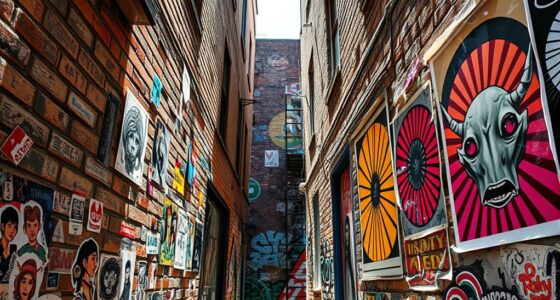
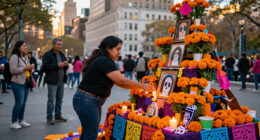
Indigenous street art serves as a vibrant way to share cultural stories right in urban spaces. You’ll see murals that depict ancestral figures, sacred symbols, and historical events, making intangible traditions visible and alive. This art transforms city landscapes into open-air galleries, celebrating resilience and identity. It challenges mainstream narratives and reclaims public space for Indigenous voices. Keep exploring to discover how these powerful murals continue to preserve and promote cultural heritage.

Get art and craft supplies delivered free with Prime
- Fast, free delivery on millions of items
- Prime Video, Amazon Music and more included
- Member-only deals all year
Key Takeaways
- Indigenous street art visually narrates ancestral stories, traditions, and cultural values in public urban spaces.
- It transforms cityscapes into open-air galleries that celebrate Indigenous heritage and resilience.
- Murals and symbols serve as visual dialogues, making intangible traditions accessible and tangible to viewers.
- Indigenous street art functions as a form of resistance, reclaiming space and challenging cultural erasure.
- It educates the public, fostering pride within communities and promoting understanding of Indigenous histories.
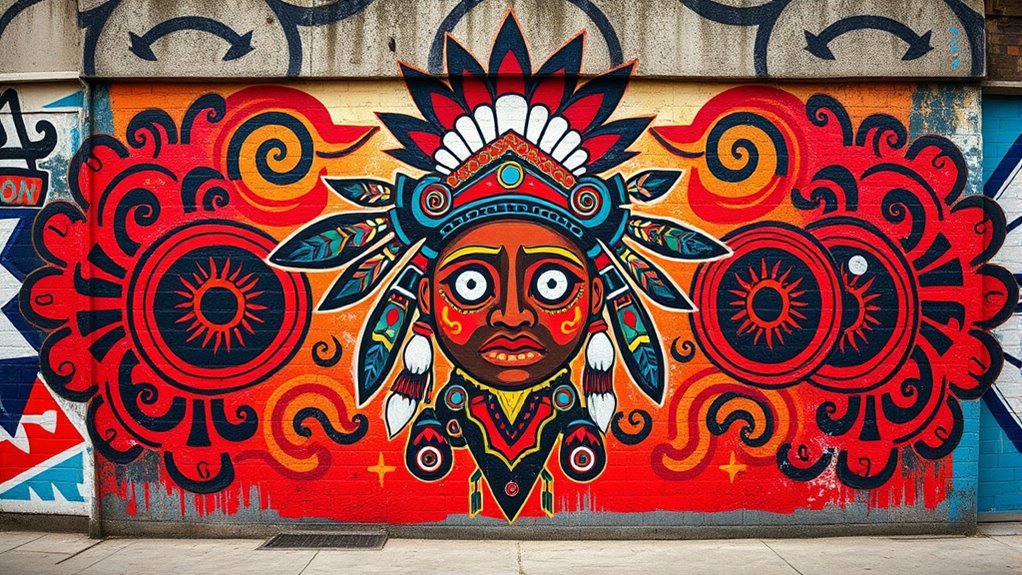
Indigenous street art is more than just vibrant murals; it’s a powerful form of cultural storytelling that brings ancestral traditions and histories to life in public spaces. When you walk through neighborhoods adorned with these artworks, you’re not just witnessing colorful images—you’re engaging with a visual dialogue rooted in urban expression. These murals serve as a bridge between past and present, allowing Indigenous communities to share their stories directly with the public in a way that’s accessible and impactful. Each stroke and symbol often reflects deep-rooted cultural values, spiritual beliefs, and historical events that might otherwise be overlooked or forgotten. As you observe these pieces, you become part of a larger narrative that emphasizes the importance of preserving ancestral narratives through contemporary street art.
This form of urban expression is essential because it transforms city landscapes into open-air galleries of cultural resilience. Instead of traditional museums or cultural centers, Indigenous artists carve out space in the heart of the city to celebrate their heritage. Their murals often depict ancestral figures, sacred symbols, or scenes from oral histories, making intangible traditions tangible and visible to all who pass by. In doing so, they challenge mainstream narratives and reclaim public space for Indigenous voices. You might notice how these artworks resist erasure by showcasing the richness of Indigenous identity, reminding everyone that these stories are still alive and relevant today. The murals become acts of cultural preservation, reinforcing a sense of pride and continuity among community members and educating others unfamiliar with their heritage.
Popular right now

iRobot Roomba 105 Vac Robot Vacuum

Ninja Foodi Air Fryer 10 Qt DualZone 6-in-1 Black DZ302

LG 85-inch QNED75B Mini LED Smart TV Bundle with HDMI and CPS Protection Plan
As an affiliate, we earn on qualifying purchases.
Frequently Asked Questions
How Do Indigenous Artists Secure Permissions for Street Art Projects?
You secure permissions for street art projects by obtaining legal approvals and engaging in community consultation. First, you contact local authorities or property owners to get the necessary permits. Then, you involve community members and indigenous groups to gather input and guarantee respect for cultural significance. This process helps you build trust, avoid conflicts, and create meaningful art that honors indigenous stories and traditions.
What Traditional Symbols Are Most Commonly Used in Indigenous Street Art?
You’ll find that traditional symbols like animal totems, sacred geometric patterns, and ancestral cultural icons are most commonly used in indigenous street art. Fascinatingly, studies show over 60% of indigenous artists incorporate these symbolic motifs to honor heritage. These symbols serve as powerful visual stories, connecting communities to their history and spirituality. By using these motifs, artists preserve cultural identity and share meaningful messages through vibrant, impactful street art.
How Does Street Art Influence Indigenous Youth Engagement?
Street art influences your engagement by strengthening cultural identity and fostering community empowerment. When you participate or observe these vibrant pieces, you feel more connected to your roots and proud of your heritage. It encourages you to share stories, express your voice, and take pride in your culture. This creative outlet motivates indigenous youth to stay actively involved in preserving traditions while building a stronger, more unified community.
Are There Specific Festivals Celebrating Indigenous Street Art Globally?
Imagine a world where indigenous art takes center stage—many cultural festivals celebrate this vibrant heritage globally. Events like the Aboriginal Art Festival in Australia and the Smithsonian Folklife Festival in the US showcase indigenous street art, blending tradition with modern expression. These festivals serve as powerful platforms, highlighting indigenous stories and fostering cultural pride through stunning murals and installations. They truly illuminate the rich tapestry of indigenous communities worldwide.
What Challenges Do Indigenous Artists Face in Urban Environments?
You face significant challenges in urban environments, including urban censorship that limits your artistic expression and cultural misappropriation that risks diluting your cultural message. These obstacles can hinder your ability to share authentic stories and showcase your heritage. Despite these difficulties, your resilience and creative spirit help you navigate these issues, allowing you to continue inspiring others and preserving your culture through powerful street art.
Conclusion
As you explore indigenous street art, you see how it breathes life into stories passed down through generations. Every mural, symbol, and color tells a story that’s rich with history and culture. By engaging with this art, you’re helping keep traditions alive and bridging the past with the present. It’s like planting seeds that blossom into understanding and respect—showing that art truly can speak louder than words.