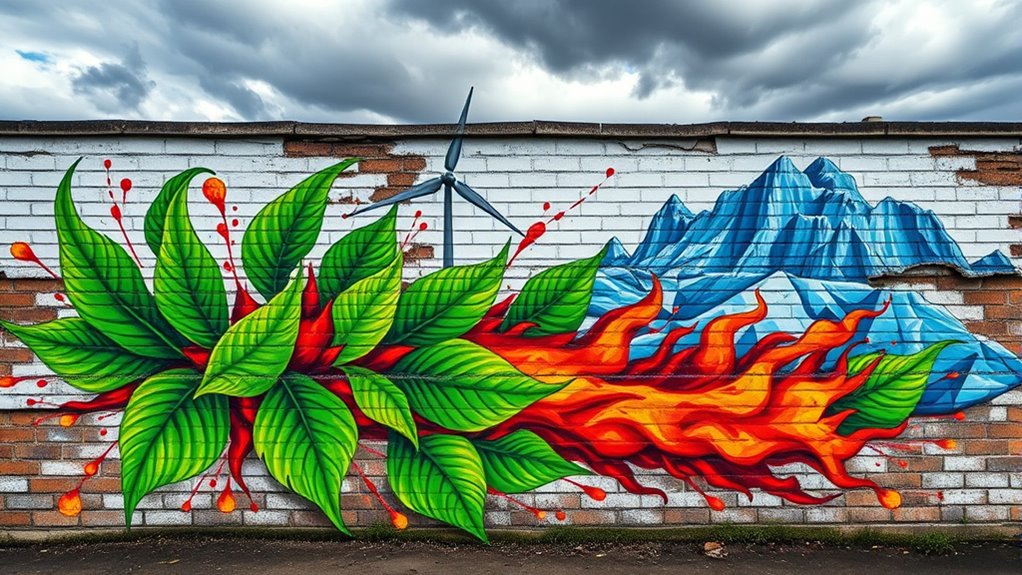

Street art transforms city walls into powerful tools for climate activism, capturing urgent environmental issues like melting glaciers, endangered species, and pollution. These vibrant murals and graffiti raise awareness, inspire action, and challenge perceptions of urban landscapes. By visually confronting problems such as smog, waste, and climate change, street art encourages community engagement and responsibility. To discover how these striking visuals are shaping environmental movements, keep exploring how artists use walls as platforms for change.
Key Takeaways
- Street art visually highlights climate issues like melting glaciers and pollution, raising awareness and prompting public reflection.
- Murals depict endangered species and environmental crises, fostering empathy and conservation responsibility.
- Bold visuals and messages on walls inspire community engagement and activism for climate action.
- Street art transforms urban landscapes into educational platforms promoting sustainability and ecological responsibility.
- Public murals serve as accessible tools for environmental advocacy, amplifying messages beyond scientific discourse.
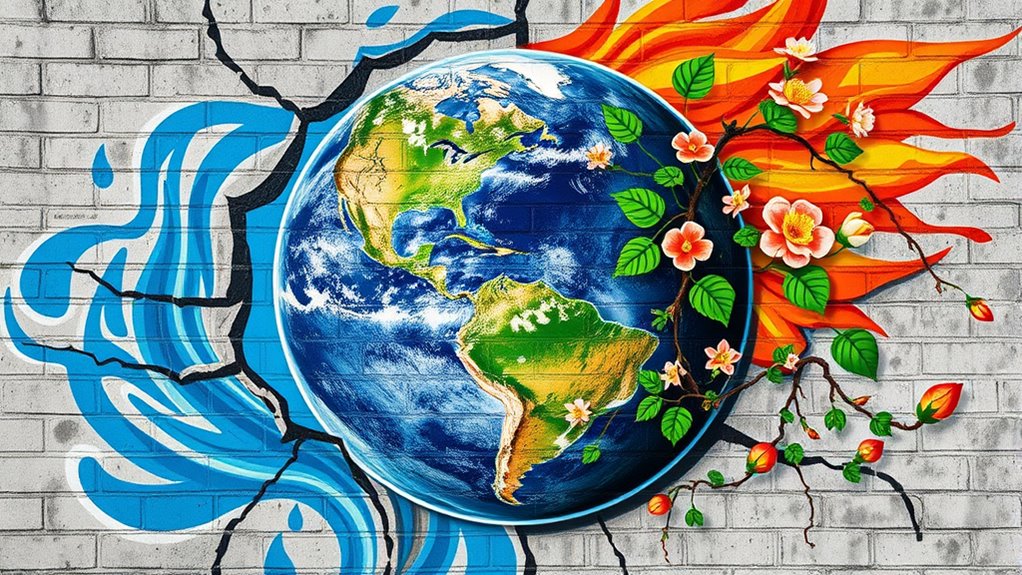
Have you ever noticed how street art often tackles urgent environmental issues? These vibrant murals and graffiti pieces are more than just visual expressions; they’re powerful tools for raising awareness about the planet’s most pressing challenges. When you walk through city streets adorned with colorful murals depicting melting glaciers, endangered animals, or smog-choked skies, you’re witnessing art that speaks directly to the climate crisis. These works serve as a call to action, urging viewers to contemplate their impact on the environment and inspiring change. Street art’s accessibility makes it an effective platform for promoting pollution reduction and conservation awareness, especially in urban areas where environmental problems are most visible.
By transforming plain walls into canvases for environmental messages, street artists draw attention to issues like air and water pollution, deforestation, and waste management. You might see murals depicting overflowing landfills, smoky factories, or polluted rivers, all crafted to evoke emotional responses and prompt reflection. These images highlight the importance of pollution reduction, encouraging communities to adopt cleaner, greener practices. Artists often include slogans or symbols urging viewers to recycle, reduce emissions, or support sustainable policies. This visual dialogue helps bridge the gap between scientific data and everyday life, making environmental concerns more relatable and urgent. As you encounter these artworks, they serve as constant reminders that individual choices and collective action can make a difference.
Moreover, street art fosters conservation awareness by spotlighting endangered species, ecosystems, and natural resources that need protection. Murals of animals like polar bears, elephants, or coral reefs often serve as poignant symbols of biodiversity loss. They evoke empathy and a sense of responsibility, motivating people to participate in conservation efforts. Street artists frequently incorporate educational messages into their murals, encouraging viewers to support conservation programs or reduce their ecological footprint. These visual stories often go viral, spreading messages beyond the city streets and reaching a wider audience. By doing so, street art becomes a grassroots movement that promotes environmental stewardship, emphasizing that protecting nature is a shared responsibility.
In essence, street art’s role in environmental activism is about more than just aesthetics; it’s about communication and impact. When you see these murals, remember they’re designed to spark conversations about pollution reduction and conservation awareness. They transform urban landscapes into open-air classrooms, inspiring individuals and communities to take meaningful action. Through bold visuals and compelling messages, street art continues to challenge us to rethink our relationship with the environment—making sustainability a visible and urgent part of our daily lives.
street art climate activism posters
As an affiliate, we earn on qualifying purchases.
As an affiliate, we earn on qualifying purchases.
Frequently Asked Questions
How Do Street Artists Choose Their Environmental Themes?
You choose your environmental themes based on powerful symbolic imagery and cultural symbolism that resonate with your message. You might focus on climate change, pollution, or conservation, selecting visuals that evoke emotion and inspire action. Your decisions are influenced by current issues, personal experiences, and community concerns. By aligning your artwork with meaningful symbols, you guarantee your message connects deeply, raising awareness and sparking conversations about environmental activism.
What Impact Does Street Art Have on Climate Policy?
Street art plays a powerful role in shaping public awareness and influencing policy. When you see bold, striking murals, you’re more likely to feel connected to climate issues and motivated to act. Artists challenge policymakers by highlighting urgent environmental concerns, sparking conversations that can lead to policy changes. Your engagement with these artworks helps amplify their message, ultimately driving societal and legislative shifts toward more sustainable practices.
Are There Legal Risks for Artists Creating Eco-Themed Murals?
Yes, you face legal consequences for creating eco-themed murals without permission, including fines or removal orders. You might also encounter copyright issues if you use protected images or artwork without consent. To avoid these risks, seek permission from property owners and verify your work respects intellectual property laws. Being aware of local regulations helps you express climate activism safely and legally while inspiring change through your art.
How Do Local Communities Respond to Environmental Street Art?
Like a vibrant tapestry, local communities often respond to environmental street art with a mix of enthusiasm and skepticism. Your community engagement can shape perceptions, fostering appreciation for the murals’ messages. Some residents embrace the art, seeing it as a call to action, while others view it as vandalism. Cultural perceptions vary, but open dialogue helps bridge gaps, encouraging support for eco-themed murals that raise awareness and inspire change.
Which Regions Are Most Prominent in Climate Activism Street Art?
You’ll notice that regions like North America, Europe, and parts of Asia lead in climate activism street art. These areas often emphasize urban conservation and regional symbolism to highlight local environmental issues. By engaging the community through vibrant murals, activists draw attention to climate change’s impact, inspiring action. Your awareness of these regional differences helps you appreciate how street art becomes a powerful tool for global and local environmental activism.
environmental awareness murals wall decals
As an affiliate, we earn on qualifying purchases.
As an affiliate, we earn on qualifying purchases.
Conclusion
As you walk through these vibrant murals, you realize street art isn’t just decoration—it’s a powerful call to action. You feel the urgency of today’s climate crisis echoing from every wall, reminding you that change starts with awareness. Just like the brave activists of the past who fought for a better world, today’s artists inspire you to stand up and make a difference. Remember, every wall can be a canvas for hope and change.
eco-friendly graffiti spray paint
As an affiliate, we earn on qualifying purchases.
As an affiliate, we earn on qualifying purchases.
recyclable street art supplies
As an affiliate, we earn on qualifying purchases.
As an affiliate, we earn on qualifying purchases.