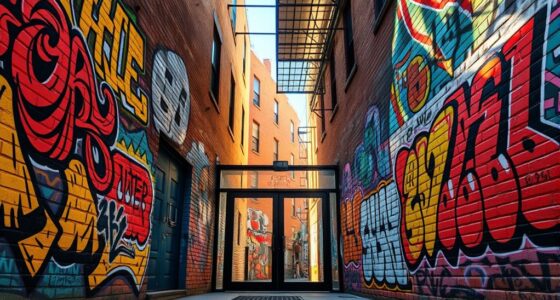
Street art has shifted from rebellious vandalism to a respected form of urban culture, capturing community stories and transforming cityscapes. As cities recognize its cultural value, more legal spaces are created for artists to showcase their work without fear of punishment. This legitimacy boosts their presence in galleries and museums, influencing mainstream art markets. If you want to explore how street art’s journey continues to evolve and impact cities worldwide, keep looking deeper.
Key Takeaways
- Street art has transitioned from vandalism to recognized cultural expression, gaining legitimacy in galleries and museums.
- Cities increasingly establish legal zones and collaborative projects to legitimize street art practices.
- Legal recognition fosters greater acceptance, enabling artists to showcase work without fear of penalties.
- Street art now influences mainstream art markets, with collectors valuing its cultural and aesthetic significance.
- Technological advances like AI enhance visibility and appreciation, further integrating street art into the global art scene.

Street art has transformed from rebellious vandalism into a respected form of artistic expression, capturing the attention of communities and collectors alike. As you observe this evolution, you realize how street art now plays a significant role in shaping urban identity. Murals and graffiti have become more than just bold visuals; they serve as cultural signatures, reflecting the history, struggles, and aspirations of city dwellers. These artworks foster a sense of belonging and pride, transforming blank walls into open dialogues about community values. Yet, despite its growing acceptance, the journey hasn’t been without legal challenges. You might notice how city officials and property owners often see graffiti as a nuisance or damage, leading to strict enforcement and removal efforts. This creates a constant tension for artists who want to express themselves freely while steering through the legal landscape. You understand that many street artists face fines, arrest, or destruction of their work, which can discourage creativity and limit the space for artistic experimentation. However, some cities are beginning to recognize the cultural significance of street art, offering designated legal zones or collaborative projects that legitimize the practice. These efforts allow artists to contribute to the urban fabric without fear of repercussion, helping to shift perceptions and reduce legal hurdles. You can see how this shift influences the broader acceptance of street art, pushing it from the margins toward mainstream galleries and museums. As a result, some artists now leverage legal opportunities to showcase their work in curated exhibitions, elevating street art from clandestine acts to celebrated art forms. This shift not only benefits the artists, who gain recognition and financial support, but also the communities, which enjoy vibrant, meaningful public spaces. Still, legal challenges remain a significant hurdle for many, especially in areas where policies haven’t yet adapted to this evolving art scene. You might think about how the tension between maintaining public order and supporting artistic freedom continues to shape the future of street art. Despite these obstacles, the cultural and artistic legitimacy of graffiti and murals grows stronger, influencing mainstream art markets and collectors worldwide. You see this progression as a testament to the resilience of street artists and their ability to redefine urban landscapes. You observe that AI-driven personalization in art curation and marketing can further elevate street art’s visibility and appreciation. In the end, street art’s journey from vandalism to galleries underscores a broader acceptance of diverse artistic expressions and a recognition of their importance in shaping urban identity. It’s a story of transformation, resilience, and the power of art to challenge, inspire, and ultimately, integrate itself into the fabric of city life.
graffiti spray paint set
As an affiliate, we earn on qualifying purchases.
As an affiliate, we earn on qualifying purchases.
Frequently Asked Questions
How Do Street Artists Finance Their Work?
You finance your street art through gallery collaborations and brand sponsorships, which provide essential funding. When you work with galleries, they often support your projects financially or help sell your art. Brand sponsorships allow you to partner with companies that share your style, giving you resources and exposure. These collaborations help you sustain your craft while boosting your reputation and expanding your reach in the evolving street art scene.
What Legal Consequences Do Graffiti Artists Face?
Imagine you’re caught in a rainstorm without an umbrella—that’s how legal repercussions hit street artists. You could face vandalism charges, fines, or even jail time if caught painting without permission. These legal consequences serve as a reminder that, despite the creativity, illegal graffiti isn’t just art; it’s a crime. Stay aware of local laws to avoid penalties that could wash away your artistic ambitions.
How Has Social Media Impacted Street Art Visibility?
Social media has dramatically increased your street art visibility through digital showcases and viral exposure. When you share your work online, it reaches a global audience instantly, helping you gain recognition beyond your local area. This exposure can lead to new opportunities, collaborations, and even gallery shows. Social media amplifies your voice, making your art more accessible and influential, transforming street art into a respected and celebrated form of contemporary expression.
Are There Notable Differences Between Graffiti and Street Art?
You might think graffiti and street art are the same, but they differ markedly. Graffiti often focuses on tags and lettering, while street art incorporates diverse techniques and evolving styles influenced by various cultures. Street art tends to carry more social messages and artistic intent, whereas graffiti emphasizes individual identity. These differences highlight how techniques evolve and cultural influences shape each form, making street art a broader, more expressive movement.
What Are the Future Trends in Street Art?
You’ll see future street art continue to evolve through urban culture and artistic innovation. Expect more interactive and immersive installations that engage communities directly. As digital technology advances, virtual and augmented reality will blend with physical murals, expanding creative possibilities. Artists will push boundaries, merging traditional graffiti with contemporary art forms, making street art more mainstream and influential. Embrace these trends as they reshape how you experience and interpret urban artistic expression.
street art stencils for spray painting
As an affiliate, we earn on qualifying purchases.
As an affiliate, we earn on qualifying purchases.
Conclusion
As street art transforms from vandalism to value, as graffiti gains recognition and galleries embrace its creativity, you see its power grow. You witness its evolution from rebellion to art, from illegality to legitimacy. You recognize its ability to inspire change, to challenge norms, to beautify communities. You understand that street art’s journey is ongoing, its impact undeniable, its voice louder. And you realize that this art form continues to push boundaries, redefine spaces, and inspire generations to come.
urban mural painting supplies
As an affiliate, we earn on qualifying purchases.
As an affiliate, we earn on qualifying purchases.
artistic graffiti markers
As an affiliate, we earn on qualifying purchases.
As an affiliate, we earn on qualifying purchases.