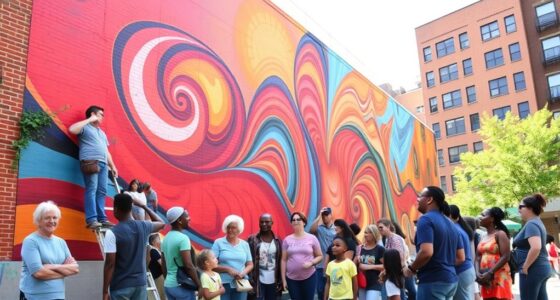
Political street art and protest murals are powerful tools for communities to challenge authority, voice social and cultural identities, and spark public debate. They confront societal norms, serve as visual acts of resistance, and transform public spaces into platforms for dialogue. These artworks often incorporate symbols tied to history and pride, amplifying marginalized voices and inspiring social change. If you want to explore how these images shape communities and challenge power, there’s more to discover ahead.
Key Takeaways
- Political street art and protest murals serve as visual tools to voice community perspectives and challenge societal norms.
- They incorporate cultural symbols and imagery to deepen emotional and political impact.
- Murals act as rebuttals to authority, responding to censorship and oppressive messages.
- These artworks foster community identity, unity, and social reflection through cultural symbolism.
- Protest murals inspire resistance, promote societal change, and enable communities to bypass censorship.
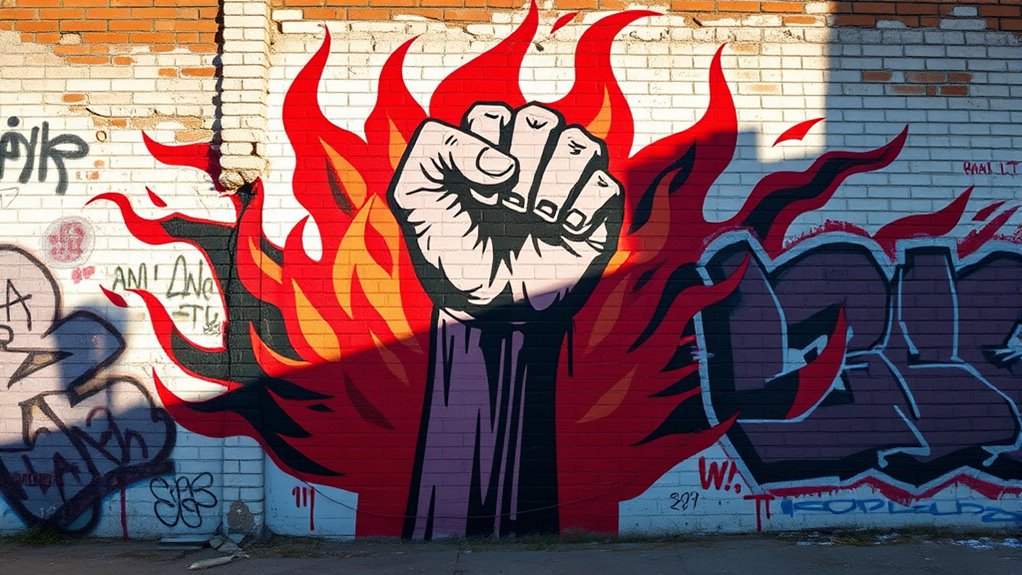
Street art and protest murals have become powerful tools for communities to voice their voices and challenge societal norms. When you see these vivid expressions on city walls, you’re witnessing more than just creative visuals; you’re observing a form of activism that confronts government messages and highlights cultural symbolism. These murals serve as visual protests, often directly opposing official narratives or policies, making them a potent form of resistance. They transform public spaces into platforms for dialogue, allowing marginalized voices to be seen and heard in ways that traditional channels might silence or overlook.
Street murals challenge norms, amplify marginalized voices, and transform public spaces into powerful acts of resistance and cultural expression.
You might notice that many protest murals incorporate cultural symbolism to deepen their messages. These symbols connect the artwork to a community’s history, identity, or collective experience, amplifying its emotional and political impact. For example, a mural depicting a historical figure or an indigenous motif isn’t just decorative; it’s a statement about identity, resilience, or resistance to systemic oppression. By weaving cultural symbolism into their designs, artists create a layered message that resonates with viewers on a personal level, inspiring solidarity and action. You realize that these murals aren’t just about aesthetics—they’re about reclaiming space, asserting identity, and challenging dominant narratives.
As you walk through neighborhoods adorned with protest murals, you see how they function as visual rebuttals to government messages that might be dismissive or oppressive. When authorities attempt to control or silence dissent, street art often springs up as a form of defiance. It’s a way for communities to express dissent directly in the public eye, bypassing censorship and reaching a broad audience. These murals often depict themes of freedom, justice, and resistance, serving as a constant reminder that public discourse isn’t limited to formal political channels. Instead, it’s alive in the colors and images painted on city walls, asserting that the community’s voice matters and that change is possible.
Additionally, understanding the cultural symbolism embedded in these murals deepens your appreciation of their messages, as they often reflect the collective history and identity of a community. You also recognize that protest murals foster a sense of unity among viewers. They invite you to reflect on social issues, question authority, and consider alternative visions for society. The act of creating or witnessing these murals becomes a collective effort to challenge the status quo. They turn urban landscapes into open dialogues, where art becomes a weapon against injustice, a symbol of cultural pride, and a call for societal transformation. In essence, street art and protest murals are not just visual statements; they’re active, living expressions of resistance that challenge government messages and embed cultural symbolism into the fabric of community life.
street art spray paint kit
As an affiliate, we earn on qualifying purchases.
As an affiliate, we earn on qualifying purchases.
Frequently Asked Questions
How Do Authorities Typically Respond to Political Street Art?
Authorities usually respond to political street art with vandalism penalties and censorship measures. They often see it as illegal and quickly remove or paint over it, aiming to suppress dissent. You might find them imposing fines or arresting artists involved. Sometimes, they enforce strict policies to prevent the spread of such messages, but these measures can also spark more protests or underground art movements.
What Legal Risks Do Artists Face When Creating Protest Murals?
When creating protest murals, you face legal repercussions like fines, vandalism charges, or even criminal prosecution, depending on local laws. You might also encounter artist liabilities if your work damages property or violates regulations. To avoid these risks, make certain you have permission, understand the legal boundaries, and consider consulting legal advice. Ignoring these precautions could lead to serious consequences, including legal actions that could impact your ability to create art freely.
How Has Social Media Influenced the Spread of Protest Street Art?
Imagine a spray can turning into a megaphone, amplifying your message across city walls and screens. Social media fuels this transformation, turning your protest art into a viral sharing storm. It broadens your reach, transforming local murals into symbols of digital activism. Through shares and hashtags, your artwork sparks conversations worldwide, inspiring others to take action. This digital wave empowers you to challenge norms and unite voices beyond physical boundaries effortlessly.
Are There Differences in Street Art Styles Across Cultures?
You’ll notice that street art styles differ across cultures by emphasizing unique cultural symbolism and employing distinct artistic techniques. For example, some cultures favor vibrant colors and intricate patterns, while others focus on bold, minimalist imagery. These variations reflect local traditions, history, and social issues, giving each region’s street art its own identity. By recognizing these differences, you gain a deeper appreciation for how art communicates diverse cultural narratives through visual expression.
What Is the Impact of Street Art on Political Change?
Street art has a powerful impact on political change by serving as urban expression and fueling community activism. When you engage with street art, you become part of a movement that challenges norms and raises awareness. It fosters dialogue, inspires action, and can pressure authorities to address issues. Your support or creation of such art amplifies voices of marginalized groups, making political change more accessible and rooted in community-driven efforts.
protest mural stencils
As an affiliate, we earn on qualifying purchases.
As an affiliate, we earn on qualifying purchases.
Conclusion
So, step onto the street, see the striking scenes, and stand for what you believe. Political street art and protest murals become powerful voices, painting passion and protest in public places. By breaking barriers and boldly broadcasting messages, you can help foster change. Remember, your voice matters in this vivid visual voyage—making murals more than mere murals, but mighty movements. Stay strong, stay seen, and let your voice loudly lead the way.
urban graffiti art supplies
As an affiliate, we earn on qualifying purchases.
As an affiliate, we earn on qualifying purchases.
cultural symbolism mural prints
As an affiliate, we earn on qualifying purchases.
As an affiliate, we earn on qualifying purchases.