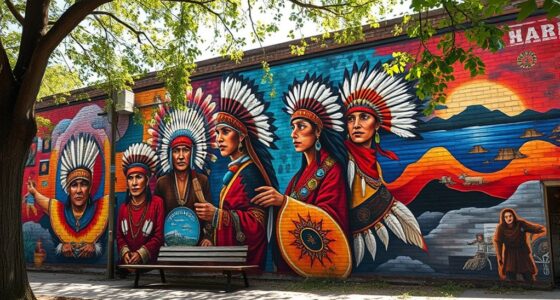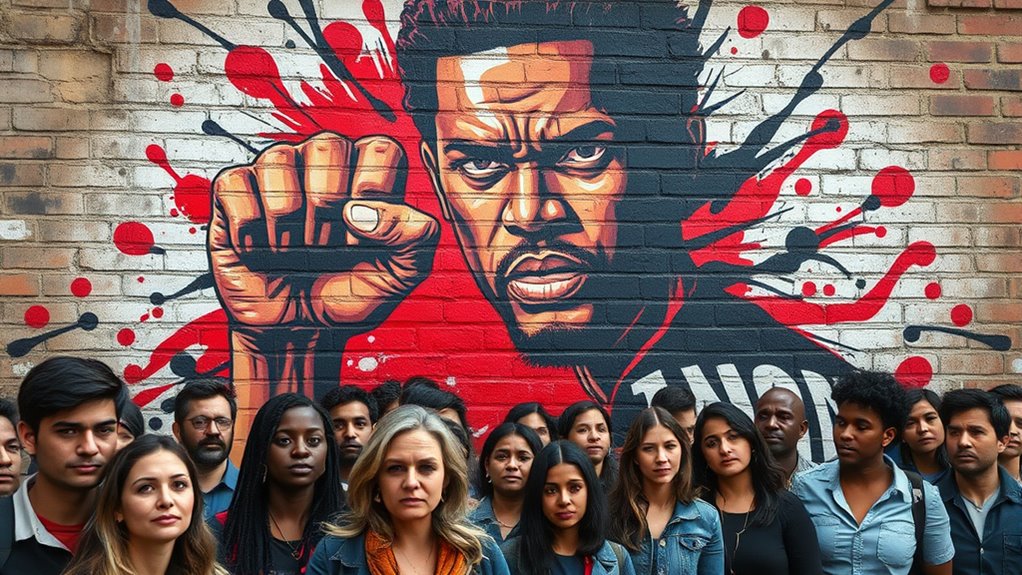

Public murals become the voice of social movements because they transform blank walls into powerful symbols of resistance, hope, and shared identity. By involving communities, these murals vividly communicate struggles and aspirations, making social issues accessible and immediate. They serve as lasting reminders of victories and challenges, sparking conversations and inspiring action. If you explore further, you’ll discover how murals continue to shape societal change and give marginalized voices a platform.
Key Takeaways
- Murals visually communicate social issues, making complex messages accessible and immediate to the public.
- They involve community participation, fostering collective ownership and amplifying marginalized voices.
- Murals serve as lasting symbols of resistance, resilience, and collective memory in social movements.
- Their prominent locations turn public spaces into platforms for awareness and activism.
- Preserved murals become enduring landmarks that inspire ongoing reflection and action.

Public murals have long served as powerful tools for social movements, transforming blank walls into vibrant statements of resistance, hope, and identity. When you see a mural in your neighborhood, you’re witnessing more than just artwork; you’re observing a bold act of artistic expression that communicates a collective voice. Murals capture the emotions, struggles, and aspirations of communities, turning public spaces into open forums for dialogue. They’re accessible and immediate, allowing everyday people to engage with social issues visually and emotionally. As a form of artistic expression, these murals challenge conventional boundaries, blending creativity with activism to create impactful messages that resonate with viewers. They often serve as visual manifestos, highlighting injustices or celebrating cultural heritage, making them powerful tools for raising awareness and inspiring action. Incorporating community participation enhances the authenticity and relevance of murals, ensuring they truly reflect local experiences and needs.
Community engagement is at the heart of public murals‘ effectiveness in social movements. When you participate in or witness the creation of a mural, you’re directly involved in a collective effort that fosters a sense of unity and purpose. Murals are rarely just the work of a single artist; they are community projects that bring together residents, activists, and local organizations. This collaborative process strengthens social bonds and guarantees that the artwork reflects the community’s voice. It’s not just about aesthetics; it’s about making space for marginalized voices, giving them visibility, and empowering individuals to tell their stories. The shared experience of creating or viewing a mural encourages dialogue, understanding, and a sense of ownership among community members. It transforms passive spectators into active participants in social change. Additionally, the integration of state-specific benefits can enhance the impact of murals by providing resources and support that sustain these community projects. Recognizing the importance of artistic techniques can also help communities develop more compelling and meaningful murals that resonate deeply with viewers. Furthermore, the ongoing preservation and care of murals are essential to maintain their role as symbols of resilience over time.
Moreover, public murals serve as lasting symbols of resistance and resilience. Unlike fleeting protests or temporary banners, murals endure on walls, constantly reminding the community and passersby of ongoing struggles or victories. They become landmarks of social history, embodying collective memory and identity. When you see a mural that speaks to social justice, it often sparks conversations and reflection, encouraging you to think critically about societal issues. These artworks can also mobilize communities to take further action—whether through protests, educational campaigns, or policy change—making murals an integral part of social movements’ strategies. In essence, public murals are not just paintings on walls; they are dynamic, living expressions of community spirit and activism that transform public spaces into canvases of resistance. The ongoing preservation and maintenance of murals are crucial to ensure they continue to serve as powerful symbols over time. Effective community-led initiatives are vital for sustaining the relevance and visibility of these murals for future generations.

DANG Prime Spray Paint Set of 12 Popular Colors, 400ml Cans, Matte Graffiti Art Supplies, Weather Resistant Graffiti Supplies, Spray Paint for Metal, Mural, Glass, Canvas, Wood, 12 Carolina Caps
The DANG Prime Spray Paint Set features top spray paint colors for graffiti, mural paint, and creative projects…
As an affiliate, we earn on qualifying purchases.
As an affiliate, we earn on qualifying purchases.
Frequently Asked Questions
How Do Murals Influence Public Opinion Over Time?
Murals shape public perception by visually telling stories that resonate with communities, gradually influencing opinions over time. As you observe these vibrant artworks, their cultural impact grows, fostering dialogue and reflection. Through repeated exposure, murals can challenge stereotypes and inspire change, making them powerful tools for social awareness. Over time, they become landmarks of collective memory, reinforcing community values and shifting public attitudes toward social issues.
What Legal Challenges Do Mural Artists Face?
You face legal challenges like copyright disputes, especially if your mural incorporates copyrighted images without permission. Vandalism concerns also pose risks, as some authorities or property owners may view murals as defacement, leading to potential fines or removal. Steering through these issues requires understanding legal boundaries and securing necessary permissions, so you can create impactful art without risking legal trouble or compromising your message.
How Do Communities Decide Mural Themes?
You might find that communities often lean on cultural symbolism and community engagement to choose mural themes. They listen to local voices, traditions, and shared stories, ensuring everyone’s perspective is reflected. Through conversations, meetings, and collaborations, residents decide what messages resonate most deeply. This collective process helps murals become powerful symbols of identity, pride, and social values, making them meaningful expressions of the community’s spirit and aspirations.
Can Murals Effectively Inspire Long-Term Social Change?
You might wonder if murals can inspire lasting social change. The answer is yes, because they serve as powerful forms of artistic expression rooted in cultural identity. When you see a mural that resonates with your community’s values, it can spark conversations and motivate action over time. These visual stories keep social issues alive, fostering a sense of unity and encouraging ongoing engagement toward meaningful change.
What Role Do Digital Media Play in Mural Activism?
Imagine your voice echoing beyond walls—digital media amplifies mural activism like a roaring thunder. You can harness digital storytelling to share powerful murals worldwide, inspiring empathy and action. Online platforms enable immediate, widespread amplification, turning local art into global movements. As you engage with this digital landscape, you become part of a larger narrative, where your support fuels social change, making murals not just art, but catalysts for transformation.

28 PCS Paint Roller Kit with Extension Pole, 4" 9" Paint Roller with Tray, Paint Brushes Set for Professional Painting, House Wall Ceiling Painting Supplies for All Latex and Oil Paints & Stains
【Great Value Set】28-piece paint roller kit includes: 21 to 45 inch handle extension pole*1, 4" paint roller covers*6,…
As an affiliate, we earn on qualifying purchases.
As an affiliate, we earn on qualifying purchases.
Conclusion
So, next time you see a mural, remember it’s more than just art—it’s a voice for change. Sometimes, a simple wall becomes a mirror of society’s hopes and struggles, almost by chance. You might pass by without thinking, but that mural could be the spark that lights a movement. After all, history shows that the most powerful messages often appear where you least expect them, right on the streets you walk every day.

Walls That Speak: How to Build a Professional Mural Painting Business in Your Community – From Pricing and Prep to Storytelling Walls
As an affiliate, we earn on qualifying purchases.
As an affiliate, we earn on qualifying purchases.
Canvas Wall Art for Bedroom Green Trees Landscape Sunshine Over Forest Photograph Printed Living Room Wall Decoration Large Mural Wall Art Print Artwork Natural Outdoor Pictures Size:30x58inch
CANVAS PRINTS: Green Landscape Size: 30x58inchesx1pcs(75x147cmx1pcs),Green trees Relax your eyes.
As an affiliate, we earn on qualifying purchases.
As an affiliate, we earn on qualifying purchases.