
The economics of street art have shifted from illegal vandalism to a thriving industry where commissioned murals and brand collaborations play a key role. Factors like size, location, artist reputation, and complexity influence pricing. Brands seek murals for visibility and community connection, often collaborating with renowned artists for high-profile projects. Legal and regulatory aspects guarantee legitimacy, while market demand and uniqueness drive value. If you keep exploring, you’ll discover how these factors continue shaping street art’s economic growth.
Key Takeaways
- Commissioned murals significantly increase street art’s market value, influenced by size, location, artist reputation, and complexity.
- Legal and regulatory compliance, including IRS guidelines, impact mural pricing and ensure legitimacy for artists and clients.
- Brand collaborations boost mural revenue, enhance community engagement, and elevate street art’s legitimacy and visibility.
- Market demand, rarity, and impact drive the valuation of murals, with high-profile projects attracting media attention.
- The evolution from vandalism to a lucrative industry has expanded street art into a valuable asset for collectors and brands.
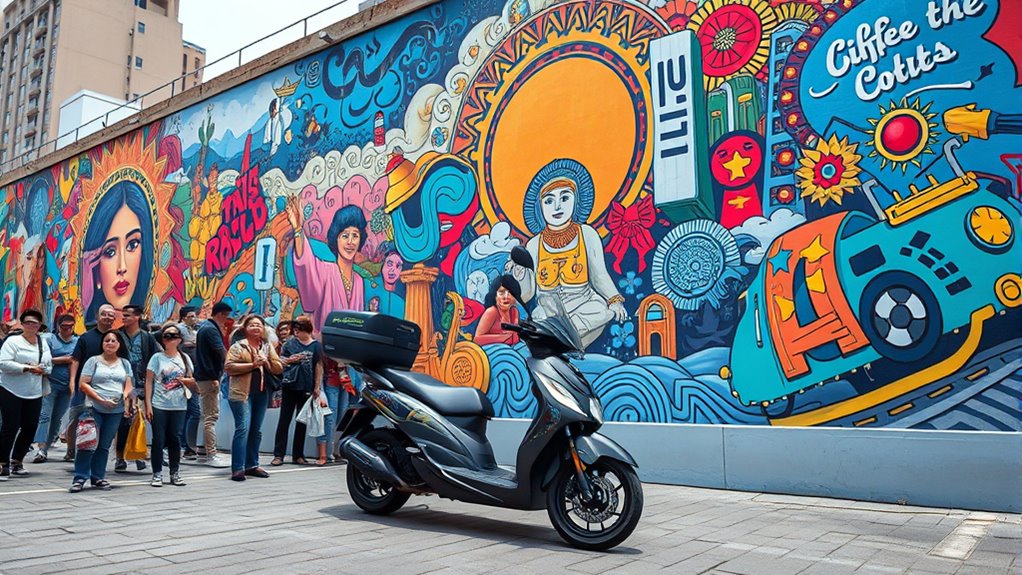
Street art has transformed from rebellious vandalism into a lucrative industry that influences local economies and global markets. As you explore this evolving scene, you’ll notice how commissioned murals now play a central role in shaping urban landscapes and generating revenue. The art market surrounding street art has grown exponentially, turning graffiti and murals into valuable assets that attract collectors, investors, and brands alike. When considering mural pricing, it’s clear that factors like size, location, artist reputation, and complexity considerably impact the costs. A small, simple mural in a lesser-known neighborhood might fetch a few thousand dollars, while large-scale works by renowned artists in high-traffic areas can command six figures or more. This fluctuation reflects the increasing demand and perceived value of street art within the broader art market. Additionally, IRS regulations govern the use of commissioned murals, especially when they involve commercial transactions or sponsorships, ensuring legal compliance for artists and property owners alike. You, as someone interested in the economics behind street art, should understand that pricing isn’t arbitrary. It’s driven by the same principles that govern traditional art sales—demand, rarity, and impact. Artists with established reputations can leverage their fame to command higher mural pricing, turning their public works into lucrative commissions. Meanwhile, property owners and brands see murals as a way to boost visibility, attract foot traffic, and enhance neighborhood appeal. This dynamic fuels a competitive market where artists and clients negotiate based on the mural’s potential influence and reach. Brand collaborations have become a major driver of street art’s economic expansion. Companies now see murals as an authentic way to connect with community and youth audiences, often commissioning artists to create branded murals that blend commercial messaging with artistic expression. These partnerships not only elevate the artist’s profile but also generate substantial revenue streams. You might notice that these collaborations often result in high-profile projects that garner extensive media coverage, further increasing the mural’s value and the artist’s marketability. Such projects contribute to the legitimacy of street art within the commercial art world, pushing mural pricing even higher and encouraging more brands to invest in public murals as part of their marketing strategies.

DANG Prime Spray Paint Set of 12 Popular Colors, 400ml Cans, Matte Graffiti Art Supplies, Weather Resistant Graffiti Supplies, Spray Paint for Metal, Mural, Glass, Canvas, Wood, 12 Carolina Caps
The DANG Prime Spray Paint Set features top spray paint colors for graffiti, mural paint, and creative projects…
As an affiliate, we earn on qualifying purchases.
As an affiliate, we earn on qualifying purchases.
Frequently Asked Questions
How Do Artists Negotiate Mural Pricing With Clients?
You negotiate mural pricing by applying effective pricing strategies and negotiation tactics. Start by researching fair market rates and evaluating your skill level, then clearly communicate your value to clients. Be confident, flexible, and ready to discuss project scope and deadlines. Use negotiation tactics like offering tiered options or discounts for repeat clients. This approach helps you set fair prices while building strong relationships and ensuring both parties feel satisfied.
What Legal Considerations Impact Street Art Commissions?
Imagine you’re planning a mural in a public space; you must secure legal permits to avoid fines or removal. You also need to address copyright issues, ensuring you have rights to any images or logos included. Failing to obtain permits or infringing on copyright can lead to legal disputes, penalties, or even the loss of your work. Always verify local laws and secure clear rights before starting your street art project.
How Do Brand Collaborations Influence Street Art Authenticity?
Brand collaborations can challenge your street art’s authenticity by risking your artistic integrity. When you work with brands, it might seem like you’re compromising your message or cultural impact for commercial gain. You need to balance the influence of sponsors with your creative vision to maintain genuine expression. If you navigate these partnerships thoughtfully, they can enhance your work without diluting its cultural significance or authenticity.
What Is the Typical Profit Margin for Commissioned Murals?
You can expect profit margins for commissioned murals to typically range from 20% to 60%, depending on factors like size, complexity, and your pricing strategies. To maximize profits, you should carefully assess the scope of each project, set clear rates, and consider additional costs such as materials and permits. By adjusting your pricing strategies accordingly, you guarantee a healthy profit margin while delivering quality work that satisfies clients.
How Do City Policies Affect Street Art Commercialization?
City policies markedly influence street art commercialization by regulating public space and shaping cultural impact. When policies are strict, they can limit opportunities for artists to showcase their work legally, reducing commercialization and cultural expression. Conversely, supportive policies encourage artists to thrive within public space, fostering cultural impact and allowing commercial collaborations to flourish. Your understanding of these policies helps you navigate how street art interacts with urban development and community identity.

Chroma Mural Paint, Assorted Primary Colors, Pints, Set of 6
Mural paint offers lasting results on both outdoor and indoor murals, canvas, and other mediums
As an affiliate, we earn on qualifying purchases.
As an affiliate, we earn on qualifying purchases.
Conclusion
As you see, street art isn’t just about self-expression; it’s a thriving economy shaping brands and communities alike. With murals and collaborations, artists turn passion into profit, proving that every cloud has a silver lining. So, don’t underestimate the power of a spray can—you’re witnessing a movement where hustle and heart go hand in hand. When all is said and done, it’s clear that art truly has the power to change the game.

Rust-Oleum Rust-O Acrylic Spray Paint | Street Artist Spray Paint for Murals | Weather Resistant for Concrete, Wood, Brick and Other Surfaces | 11 Ounce | Matte Taxi
VERSATILE APPLICATION AND ULTIMATE CONTROL: Achieve precise, controlled strokes with ease on concrete, brick, wood, metal, canvas, wicker…
As an affiliate, we earn on qualifying purchases.
As an affiliate, we earn on qualifying purchases.

Stencil1 Boombox Stencil 5.75" x 6" – Durable Quality Reusable Stencils for Drawing Painting – Music Stencil Urban Graffiti Decorating Items and Decor on Walls Fabric & Furniture Art Craft
THE QUALITY OF STENCIL1: Stencil1 was born from a tradition of handmade customized crafting, painting, and creating. With…
As an affiliate, we earn on qualifying purchases.
As an affiliate, we earn on qualifying purchases.