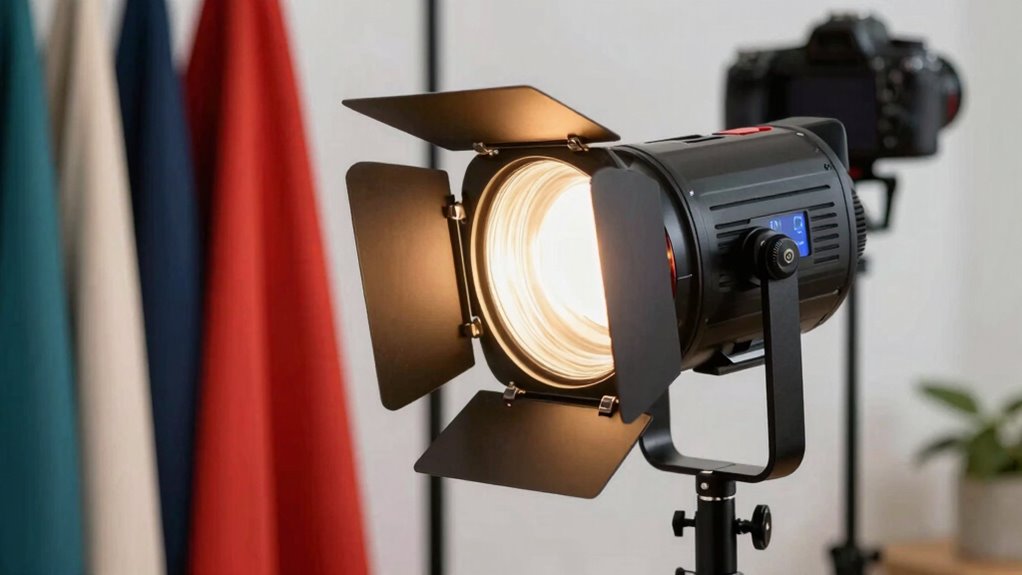

Your studio lights’ CRI (Color Rendering Index) shows how well they reproduce colors naturally. A low CRI can cause colors to shift, skin tones to look unnatural, and overall images to lose accuracy, affecting your professional quality. Choosing lights with a high CRI (90+) ensures vibrant, true-to-life colors. To avoid pitfalls, learn how to test and select the right lighting setup. Keep going to discover all the tips for perfect color fidelity.
Key Takeaways
- Low CRI lighting can distort colors, making skin tones and objects appear unnatural in photos and videos.
- High CRI ratings (90+) ensure accurate color rendering, preserving true-to-life skin tones and object hues.
- Spectral coverage and lighting environment influence how well colors are reproduced, impacting overall image quality.
- Relying solely on CRI without considering spectral distribution or proper calibration can lead to color inaccuracies.
- Using proper testing methods, like test shots and color calibration tools, helps verify if lighting maintains color fidelity.

NiceVeedi 2-Pack Photography Lighting Kit, 36W Bi-Color Studio Lights 2700-6500K CRI 95+, Dimmable LED Video Light Kit with Remote Control & 72” Tripod Stand, Lighting for Video Recording/Photography
【BI-COLOR LIGHTING WITH POWERFUL OUTPUT】The photography lighting features a high output of 36W which provides powerful but stable…
As an affiliate, we earn on qualifying purchases.
As an affiliate, we earn on qualifying purchases.
What Is CRI and Why Is It Important for Studio Lighting?
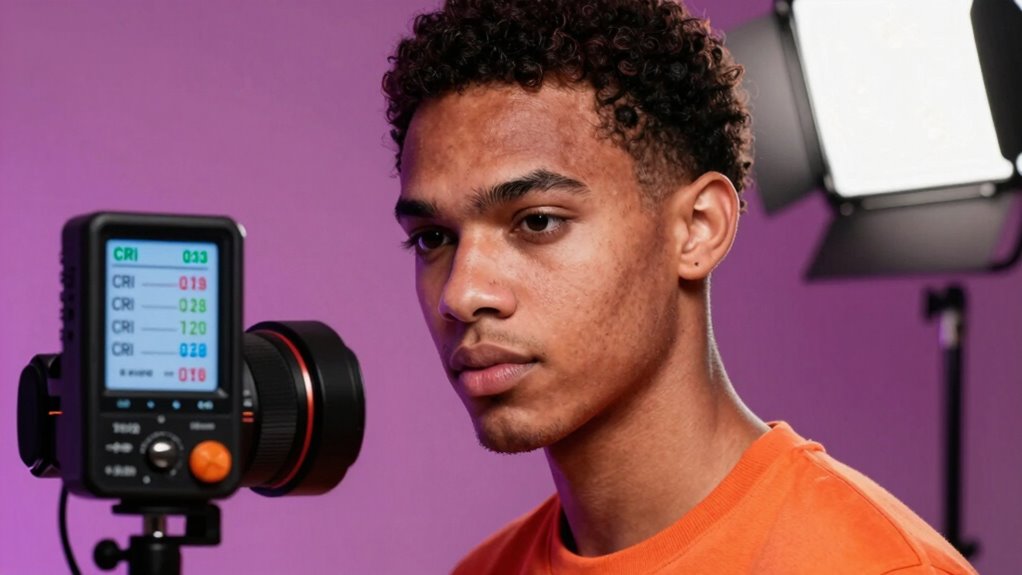
Have you ever wondered why some lighting sources make colors look vibrant and true, while others leave them dull or distorted? This comes down to CRI, or Color Rendering Index, which measures a light’s ability to display colors accurately. A high CRI means the light has excellent color rendering, making skin tones and objects look natural. Color accuracy is essential for ensuring that colors are perceived correctly and consistently across different lighting conditions. When selecting studio lights, considering the CRI value can help you achieve more realistic and appealing visuals. Additionally, Lighting quality encompasses factors such as color temperature and light dispersion, which influence how colors are perceived in your scene. Properly balanced color temperature and controlled light dispersion create an environment where colors appear vibrant, accurate, and appealing, essential for professional-quality photos or videos. In fact, understanding these lighting parameters can significantly improve your overall image quality and viewer perception.
NiceVeedi 2-Pack Photography Lighting Kit, 36W Bi-Color Studio Lights 2700-6500K CRI 95+, Dimmable LED Video Light Kit with Remote Control & 72” Tripod Stand, Lighting for Video Recording/Photography
【BI-COLOR LIGHTING WITH POWERFUL OUTPUT】The photography lighting features a high output of 36W which provides powerful but stable…
As an affiliate, we earn on qualifying purchases.
As an affiliate, we earn on qualifying purchases.
How Low CRI Ratings Can Lead to Color Inaccuracy in Your Photos
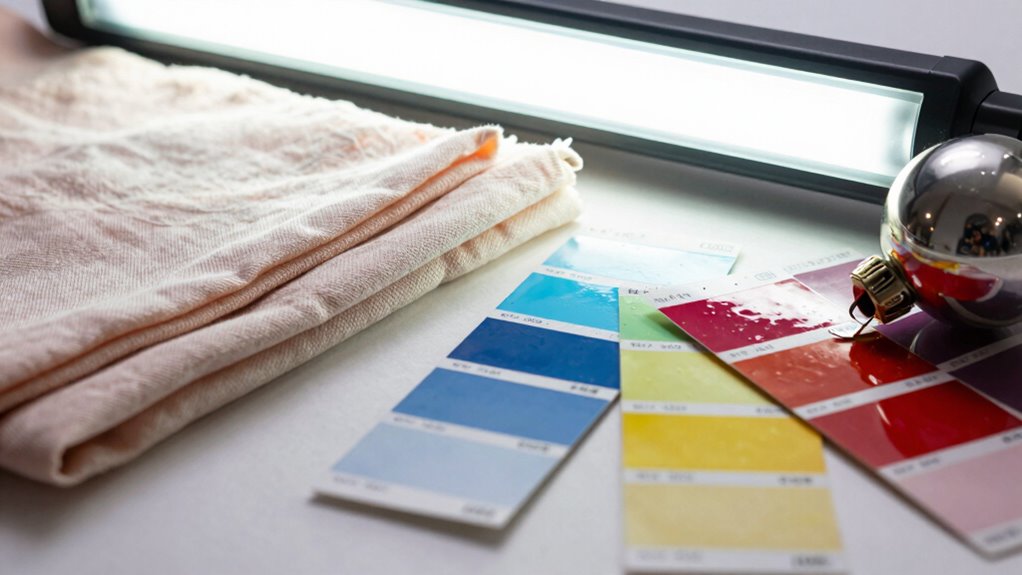
When you use lighting with a low CRI rating, colors in your photos can shift unexpectedly. Skin tones may look unnatural, and other colors might not match what you see in real life. This can compromise the accuracy and quality of your images. To improve your photos’ fidelity, choosing lighting with a higher CRI rating is essential, especially when capturing vibrant or detailed images for accurate color reproduction. Additionally, understanding the contrast ratio of your lighting setup can further enhance the depth and realism of your photos. Recognizing the lighting quality and its impact on color fidelity is also crucial for achieving professional results. Analyzing the spectral distribution of your light source can help ensure consistent and true-to-life color rendering. In the context of lighting for photography, considering the electric power of your light sources can also influence overall performance and color accuracy.
Color Shifts Under Low CRI
Low CRI lighting can cause noticeable color shifts in your photos, making objects appear less true to life. When the spectral distribution of a light source is limited or uneven, it hampers accurate color rendering, especially for colors outside its peak emissions. This means certain hues may look muted, distorted, or overly saturated, depending on the light’s deficiencies. With low CRI lights, some colors might shift toward cooler or warmer tones, creating a false impression of the scene. These color inaccuracies can throw off your overall composition and lead to inconsistent results across different shots. Recognizing how spectral distribution influences color rendering helps you choose lighting that maintains true-to-life colors, ensuring your photos reflect reality without unwanted color shifts. Understanding the importance of spectral distribution can help you select lighting that preserves accurate color reproduction.
Skin Tones and Color Fidelity
Color shifts caused by low CRI lighting don’t just affect overall hues—they can considerably distort skin tones, making portraits look unnatural. When your lighting lacks high CRI, it hampers accurate color reproduction, which complicates color grading later. Skin undertones may appear off, turning warm tones cool or vice versa, disrupting the authentic look of your subject. This inaccuracy forces you to spend extra time correcting colors in post-production, often with limited success. High CRI lights ensure that skin tones remain true to life, reducing the need for extensive adjustments. Proper lighting preserves natural skin undertones, creating realistic and flattering portraits. If color fidelity is compromised, your images risk looking unnatural, and your work might lose credibility. Additionally, vetted products are more likely to deliver consistent and reliable color performance, which is crucial for professional results. Choosing lights with a high CRI is essential because it directly impacts the color accuracy and overall quality of your work, saving you time and effort in editing. Ultimately, choosing lights with a high CRI is essential for true-to-life skin tones and effortless color grading.
NiceVeedi 2-Pack Photography Lighting Kit, 36W Bi-Color Studio Lights 2700-6500K CRI 95+, Dimmable LED Video Light Kit with Remote Control & 72” Tripod Stand, Lighting for Video Recording/Photography
【BI-COLOR LIGHTING WITH POWERFUL OUTPUT】The photography lighting features a high output of 36W which provides powerful but stable…
As an affiliate, we earn on qualifying purchases.
As an affiliate, we earn on qualifying purchases.
How to Choose the Right CRI for Accurate Color Reproduction
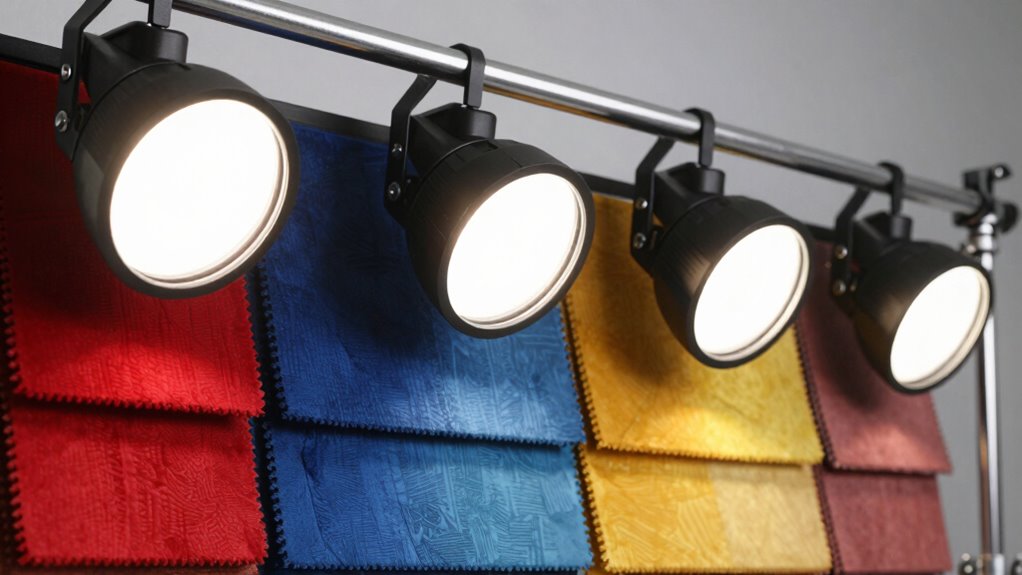
When choosing a light source, you should match the lighting conditions to guarantee accurate colors. Prioritizing high CRI scores helps you get consistent and true-to-life results. By focusing on these factors, you can select the best lighting for your specific needs. Additionally, avoiding scam companies and verifying the legitimacy of your lighting source ensures your investment remains secure and reliable.
Match Lighting Conditions
Choosing the right CRI for accurate color reproduction depends heavily on matching your lighting conditions. Your studio aesthetics and lighting setup influence how natural or vibrant colors appear. If you’re working in a space with ambient daylight, opt for lights with a CRI close to 100 to replicate natural light accurately. Conversely, in controlled environments like portrait studios, a slightly lower CRI may suffice, but high CRI is still preferable for true color fidelity. Consider the color temperature and the overall mood you want to create, ensuring your lighting aligns with your aesthetic goals. Properly matching your lighting conditions minimizes color shifts and ensures consistency across your work, making your colors pop and look true to life. Understanding color rendering capabilities can also help you manage your budget for high-quality lighting equipment, especially since CRI ratings directly impact color accuracy. Additionally, being aware of the lighting environment helps you select the most suitable lighting for your specific needs. This careful selection enhances your studio’s visual coherence and professionalism, and recognizing the impact of lighting quality can help you make more informed decisions about your gear.
Prioritize High CRI Scores
To guarantee accurate color reproduction, prioritizing high CRI scores is essential because they indicate the light source’s ability to render colors faithfully. The CRI significance lies in how well a light source can reproduce the true hues of objects, directly affecting color accuracy. When choosing studio lights, look for a CRI of 90 or above to ensure vibrant, true-to-life colors. Lower CRI values may cause colors to appear dull, washed out, or inaccurate, which can compromise your work’s quality. High CRI lights help you see the true colors under your setup, reducing guesswork and post-production corrections. Additionally, understanding the spectral power distribution of lights ensures that all visible wavelengths are adequately represented, further supporting accurate color rendering. Considering the lighting environment and how it interacts with your chosen lights can also impact color fidelity. Ultimately, selecting lights with high CRI scores ensures your colors stay consistent and accurate, which is critical for photography, videography, and any visual work that demands precise color fidelity. To make the most of high CRI lighting, paying attention to the spectral coverage can further enhance your color accuracy and overall visual results. Incorporating color rendering metrics into your selection process can provide additional insights into how well a light source performs across different color tones.

Torjim Softbox Photography Lighting Kit, 16'' x 16'' Professional Softbox Lighting Kit with 85W 3000-7500K LED Bulbs, Studio Lights for Photography/Video Recording/Live Streaming/Portraits Shooting
【Illuminate Your Creativity】 Torjim softbox lighting kit is made of high-quality PET fabric and a foldable nylon cover,…
As an affiliate, we earn on qualifying purchases.
As an affiliate, we earn on qualifying purchases.
Common Mistakes When Selecting Studio Lights Based on CRI
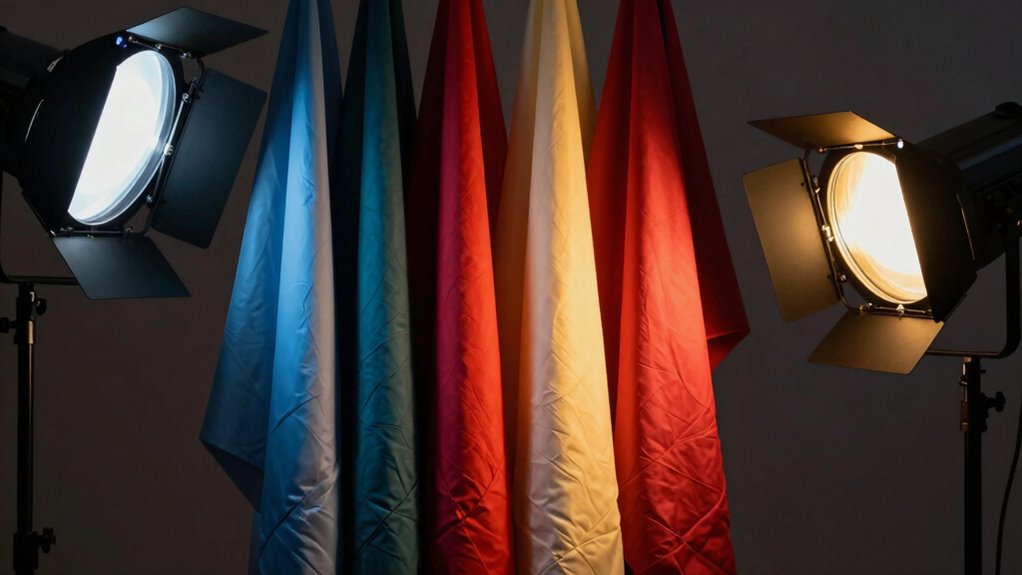
One common mistake is relying solely on the CRI number without considering other factors that influence lighting quality. While a high CRI is important, it doesn’t guarantee accurate color rendering if you ignore lighting accessories or power consumption. Some lights may have a good CRI but lack proper diffusion or adjustable color temperature, which affects the final image. Additionally, focusing only on CRI can lead you to choose powerful fixtures that consume more energy, increasing operational costs without improving color accuracy. Remember, the right lighting setup balances CRI with accessories like diffusers and filters, ensuring consistent results. Ignoring these aspects can result in poor color fidelity, wasted energy, and subpar lighting quality, undermining your entire shoot.
How to Test Your Lighting’s Color Accuracy Before Shooting
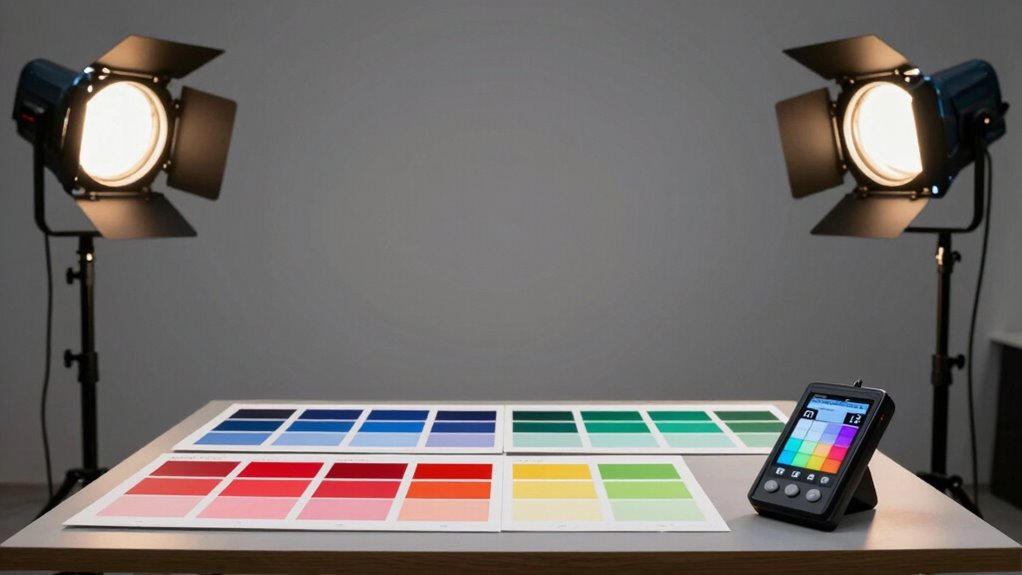
Ever wondered if your lighting truly renders colors accurately before you start shooting? To guarantee ideal color accuracy, follow these steps:
- Use a calibrated monitor to compare how your lighting displays color during setup.
- Perform lighting calibration with a color calibration tool to standardize your light output.
- Capture test shots of a gray or color chart under different lighting conditions.
- Analyze your test images in color grading software to check for color consistency and accuracy.
Are High-CRI Lights Worth It? Top Brands to Consider
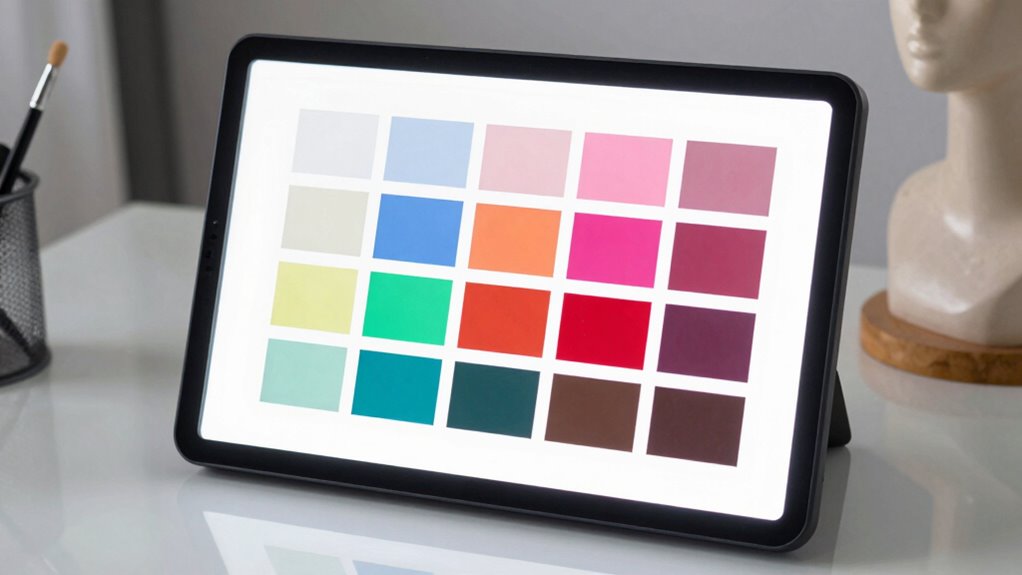
High-CRI lights can considerably enhance color accuracy and overall image quality, making them a worthwhile investment for professionals and serious hobbyists alike. When choosing lighting accessories, high-CRI options guarantee your colors stay true to life, saving you time in post-production. While high-CRI lights often cost more upfront, they can also be more energy-efficient, reducing long-term operating costs. Top brands like Aputure, Godox, and Nanlite offer reliable, high-CRI lighting solutions that balance performance and affordability. These brands provide a range of options suitable for studio setups or on-location shoots, ensuring you get consistent, accurate color rendering. Investing in high-CRI lighting might be a bit pricier initially, but the improved image quality and energy efficiency make it a smart choice for elevating your work.
Frequently Asked Questions
How Does CRI Compare to Other Color Accuracy Metrics?
CRI measures color accuracy based on how well a light source renders colors compared to natural light, but it’s just one measurement standard. Other metrics like TM-30 or TLCI offer a more thorough view, evaluating color fidelity, saturation, and hue shifts. While CRI is easy to understand, these newer standards provide deeper insights into color accuracy, helping you choose lighting that truly preserves true colors in your work.
Can CRI Be Manipulated or Faked by Manufacturers?
Like a master illusionist, manufacturers can perform deception through CRI manipulation, making lights appear more color-accurate than they truly are. They may cherry-pick test results or use selective data, masking true color rendering capabilities. Beware of this subtle deception, as CRI can be faked to impress buyers, but it doesn’t always reflect real-world performance. Always scrutinize independent reviews and ask for extensive testing to see through manufacturer’s deception.
What CRI Levels Are Suitable for Video Versus Photography?
For video, aim for a CRI of 95 or higher to guarantee accurate color rendering, especially with natural light matching your color temperature. For photography, a CRI of 90 or above works well, providing vibrant, true-to-life colors. Always consider your lighting’s color temperature compatibility with your scene. High CRI lights give you the best color fidelity, making your visuals look natural and professional, whether filming or shooting photos.
How Does Ambient Lighting Affect the CRI of Studio Lights?
Ambient lighting influences the perceived CRI of your studio lights by affecting spectral distribution and color temperature. When ambient light has a low CRI or mismatched color temperature, it can cause color shifts and reduce your lights’ effective CRI. This makes colors appear less accurate, especially under mixed lighting conditions. To maintain high color fidelity, verify the ambient lighting complements your studio lights’ spectral distribution and matches their color temperature.
Are There Alternatives to CRI for Assessing Color Quality?
Yes, you can assess color quality with alternatives like the TM-30-18 metric, which measures color fidelity and saturation, focusing on color stability and the light spectrum. Unlike CRI, TM-30-18 provides a more detailed view of how lighting impacts color accuracy, capturing nuances in color rendering. This helps you choose studio lights that deliver consistent, true-to-life colors, ensuring your work maintains high-quality visual standards.
Conclusion
Understanding CRI is key to achieving true-to-life colors in your studio photos. Did you know that lights with a CRI of 90 or above can accurately reproduce over 99% of the visible spectrum? Investing in high-CRI lighting isn’t just about quality—it’s about ensuring your images are vibrant and accurate. Don’t settle for less; choose wisely to elevate your photography and impress your clients with stunning, color-perfect results.