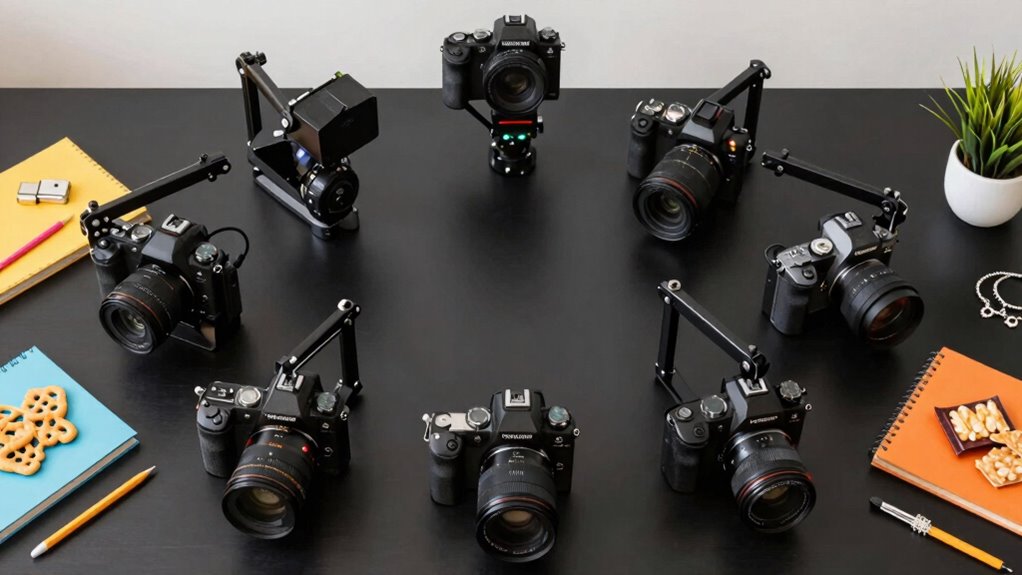
When it comes to flat lay photography, having a reliable overhead camera rig is essential for capturing clean, professional-looking shots from above. The Glide Gear OH100 stands out as the overall best choice for its sturdy metal build and versatility. For those on a tighter budget, the NEEWER Overhead Camera Mount Rig with Dual Ball Heads offers good flexibility at a lower price. The main challenge in this category is balancing stability with ease of setup, especially when working with different camera types or limited space. Continue reading for a detailed comparison of these options and more to find the perfect fit for your needs.

Get art and craft supplies delivered free — and shop member deals
- Fast, free delivery on millions of items
- Access to Prime Big Deal Days deals on October 6–7
- Prime Video, Amazon Music and more included
Key Takeaways
- Sturdy, metal construction generally offers better stability than lightweight aluminum or plastic options.
- Flexible mounting options, like dual ball heads, significantly improve shot versatility.
- Adjustable height and reach are critical for accommodating various shooting angles and workspace sizes.
- Budget rigs often trade off stability and durability for lower cost, so choose carefully based on your usage frequency.
- Ease of setup and portability differ widely, impacting workflow efficiency for different users.


| overhead camera rigs for flat lay photography | Material |
|---|---|
| Glide Gear OH100 Professional | High-grade aluminum and steel |
| NEEWER Overhead Camera Mount R | Anodized aluminum alloy |
| Glide Gear OH 75 Overhead Moun | Aluminum |
| JUSMO LS15 Pro Camera Desk Mou | Aluminum alloy |
| NEEWER Overhead Camera Mount R | Steel |
| EMART Overhead Camera Mount Ri | Aluminum alloy |
| NEWER Overhead Camera Mount Ri | Anodized aluminum alloy |
More Details on Our Top Picks
Glide Gear OH100 Professional Metal Overhead Table Top Mount Stand for Photography and Video
The Glide Gear OH100 stands out for its versatility and solid construction, making it ideal for a range of overhead projects like tutorials or art demos. Its adjustable height from 27″ to 34″ and multiple mounting points provide precise control over camera angles, surpassing simpler mounts like the NEEWER ST100 in flexibility. However, it’s limited to overhead mounting only and may require additional accessories for complex setups. Compared with larger rigs, its lightweight aluminum and steel design offers portability without sacrificing stability—great for mobile workflows but less suitable for very heavy or multi-angle configurations. This stand makes the most sense for creators seeking a stable, adjustable mount that is easy to transport and set up on a flat surface.
Pros:- Adjustable height for precise positioning
- Multiple mounting points for accessories
- Lightweight yet sturdy construction
Cons:- Limited to overhead mounting only
- May need extra accessories for full flexibility
Best for: Photographers and videographers needing a lightweight, adjustable stand for tabletop or studio use.
Not ideal for: Users requiring multi-directional or ceiling-mounted rigs, as this is purely overhead and lacks multi-angle flexibility.
- Material:High-grade aluminum and steel
- Height Range:27″ to 34″
- Mounting Points:Multiple 1/4-20″
- Weight:Lightweight and sturdy
Our verdict“This stand is perfect for creators who prioritize portability and adjustable overhead mounting on a flat surface.”
NEEWER Overhead Camera Mount Rig with 2 Ball Heads, Super Clamp, and Mobile Phone Holder
The NEEWER Overhead Camera Mount Rig offers exceptional versatility with dual ball heads and a super clamp, supporting up to 12kg, making it ideal for live streaming and multi-angle shots. Its height adjustment from 69cm to 122cm and width from 64cm to 120cm provide wide coverage, outperforming basic rigs like the EMART in adaptability. Despite its heavy-duty build, assembly can be challenging for beginners, and the maximum load for the phone mount is limited to 3.3 lbs, which may restrict some smartphone users. Compared with the Glide Gear OH100, it’s bulkier but supports heavier setups and more complex angles. This rig is suited for content creators who need a robust, flexible mount capable of supporting multiple devices and dynamic angles.
Pros:- Supports up to 12kg for heavy cameras or multiple devices
- Dual ball heads for versatile angle adjustment
- Wide height and width adjustment for various setups
Cons:- Assembly can be complex for beginners
- Maximum load for phone mount limited to 3.3 lbs
Best for: Streamers and videographers requiring a heavy-duty, flexible overhead rig for multiple devices and angles.
Not ideal for: Users with small or lightweight setups, as its size and weight may be cumbersome and overkill for simple flat lay photography.
- Max Load:12 kg
- Height Adjustment:69cm-122cm
- Width Adjustment:64cm-120cm
- Material:Anodized aluminum alloy
Our verdict“This rig is ideal for creators who need a heavy-duty, adjustable mount supporting multiple devices and angles for professional-grade content.”
Glide Gear OH 75 Overhead Mount – DSLR, Smartphone – 6ft Adjustable Pole, Top-Down Rig, 15lb Capacity, Aluminum Build
The Glide Gear OH 75 offers a reliable solution for overhead photography with a 6ft adjustable aluminum pole supporting up to 15 lbs, making it perfect for lightweight DSLR or smartphone setups. Its portable design and included mounting kit make it easy to assemble and customize, especially compared to bulkier rigs like the JUSMO LS15. However, it requires compatible C-stands (not included) to function effectively and is limited to pole diameters of 1-2 inches, which can restrict compatibility. This model excels for users who need a lightweight, adjustable pole for top-down shots but may not be suitable for heavier or multi-camera arrangements. The simplicity of its design makes it a good choice for hobbyists or professionals with existing C-stand infrastructure.
Pros:- Supports up to 15 lbs, suitable for most cameras
- Lightweight and portable at 2.3 lbs
- Includes comprehensive mounting kit
Cons:- Requires compatible C-stands (not included)
- Limited to pole diameters of 1-2 inches
Best for: Photographers and videographers seeking a lightweight, portable overhead rig for DSLR or smartphone use.
Not ideal for: Heavy-duty setups or those needing multi-camera support, as its weight capacity and design are limited.
- Maximum Payload:15 lbs
- Pole Length:6 ft
- Material:Aluminum
Our verdict“This pick makes the most sense for creators needing a lightweight, adjustable pole for top-down shots on existing C-stands.”
JUSMO LS15 Pro Camera Desk Mount Aluminum Overhead Camera Mount Rig
The JUSMO LS15 Pro offers a sturdy, adjustable overhead mount designed for desktop use, supporting up to 22 lbs, making it an excellent choice for streaming, product photography, or DIY projects. Its flexible assembly with adjustable length and height surpasses simpler desk mounts, and the included super clamp enables secure attachment to various surfaces. Compared to the Glide Gear OH100, it handles heavier loads and provides more robust support for multiple devices or larger cameras. However, the setup can be complex for beginners, and additional extension parts are sold separately. This rig is ideal for serious content creators who require a stable, customizable desktop overhead mount with high weight capacity.
Pros:- Supports up to 22 lbs, suitable for various devices
- Flexible and adjustable for different angles
- Includes super clamp for secure desktop mounting
Cons:- Assembly may be complex for newcomers
- Additional parts sold separately for expanded configurations
Best for: Streamers, product photographers, and DIY enthusiasts needing a heavy-duty, adjustable desktop overhead rig.
Not ideal for: Those with limited space or beginners who prefer plug-and-play setups, as assembly complexity may be a barrier.
- Material:Aluminum alloy
- Max Load:22 lb (10 kg)
- Clamp Width:90 mm
Our verdict“This rig is best suited for users seeking a robust, adjustable desktop overhead system for professional or hobbyist use.”
NEEWER Overhead Camera Mount Rig for Top Down Shots, Heavy Duty Steel Tabletop Stand for Photography, Lighting, Cooking, Drawing, Crafts, 3.3 ft (1m) Long, Model ST100
The NEEWER ST100 provides a durable steel stand for flat lay photography, with a 3.3 ft length and height adjustment from 24″ to 39″, supporting up to 10 lbs. Its sturdy T-shaped base and multiple mounting points make it a reliable option for stable overhead shots on a budget, especially compared to pricier, more complex rigs. However, its bulkiness can be a drawback for small desks, and the height adjustment range may be limiting for some setups. Despite these tradeoffs, it offers excellent stability and versatility for general flat lay photography, cooking demos, or crafts. It’s a good choice for budget-conscious users who need a solid, heavy-duty stand that’s easy to assemble and stable during use.
Pros:- Heavy-duty steel supports up to 10 lbs
- Adjustable height for flexible angles
- Stable T-shaped base with nonslip feet
Cons:- Requires separate clamps and mounts for devices
- May be bulky for small or cluttered spaces
Best for: Home cooks, artists, and hobbyists who want a reliable, affordable overhead stand for flat lay work.
Not ideal for: Professional studios or users requiring highly adjustable, multi-angle rigs, due to its limited height range and bulkiness.
- Material:Steel
- Max Load Capacity:10 lb
- Height Adjustment Range:24″ – 39″
- Length:3.3 ft
- Base Type:T-shaped
Our verdict“This stand is an excellent budget-friendly option for users who need a sturdy, adjustable overhead support for flat lay photography and demos.”
EMART Overhead Camera Mount Rig, Desk Mount & Adjustable Height/Width with Phone Holder, Supports DSLR, Smartphones & Webcams
The EMART Overhead Camera Mount Rig stands out for its impressive adjustability and support for heavier loads, making it ideal for creators who need a flexible setup. Its telescopic design allows for quick changes in height from 27.2″ to 48″ and width from 25.2″ to 47.2″, offering a wide range of overhead angles. Compared with the NEWER Dual Ball Head Clamp, this rig supports up to 26.5 lbs, providing a more stable platform for larger cameras or multiple devices. However, it requires a sturdy desk with a maximum edge thickness of 3.5″, which can limit placement options in smaller or unconventional spaces. Its ease of installation and disassembly makes it practical for frequent rearrangements, but additional accessories are sold separately, adding to the overall cost.
Pros:- Adjustable height and width for a wide range of setups
- Supports up to 26.5 lbs, offering stability for heavier equipment
- Compatible with a variety of cameras, smartphones, and webcams
- Easy to install and disassemble
Cons:- Requires a desk with an edge thickness up to 3.5″, limiting placement options
- Bulky design may be challenging in small spaces
- Additional accessories are sold separately, increasing total cost
Best for: Photographers or streamers needing a high-capacity, adaptable rig that can support substantial equipment with minimal setup fuss
Not ideal for: Users with very limited desk space or those who prefer a lightweight, portable solution for quick moves
- Max Load:26.5 lbs
- Height Range:27.2″ to 48″
- Width Range:25.2″ to 47.2″
- Phone Holder Width:2.2-3.3″
- Clamp Thickness:up to 3.5″
- Material:Aluminum alloy
Our verdict“This rig suits professionals or serious hobbyists seeking a durable, versatile overhead mount that can handle substantial gear, but it’s less ideal for tight or portable setups.”
NEWER Overhead Camera Mount Rig with Dual Ball Head Super Clamp and Phone Holder
The NEWER Overhead Camera Mount Rig emphasizes flexibility, featuring adjustable stands and a dual ball head system that allows for precise angle adjustments. Its ability to extend from 27.2″ to 48″ in height and 25.2″ to 47.2″ in length makes it comparable to the EMART Rig, but with a focus on fine-tuning shot angles via 360° rotatable dual ball heads. This setup excels for content creators who value exact framing and multiple device support, thanks to its versatile mounting options. On the downside, it involves a more complex assembly process, which can be time-consuming for beginners. The maximum load capacity of 26.5 lbs on the stand and 13.2 lbs on the crossbar could limit heavier camera setups, making it less suitable for large professional gear without careful planning.
Pros:- Flexible height and length adjustments for tailored overhead shots
- Dual ball heads enable precise, smooth angle changes
- Durable aluminum construction supports substantial loads
- Multiple mounting options for cameras and smartphones
Cons:- Assembly can be complex and time-consuming
- Maximum load on crossbar limits heavier camera use
- Component complexity may intimidate beginners
Best for: Videographers or streamers who prioritize precise angle control and flexible configurations in a semi-permanent studio setting
Not ideal for: Individuals seeking quick, minimal setup solutions or those with heavy, large cameras that exceed the load limits
- Max Load (Stand):26.5 lbs (12 kg)
- Max Load (Crossbar):13.2 lbs (6 kg)
- Stand Height Range:27.2″ to 48.0″ (69cm to 122cm)
- Crossbar Length Range:25.2″ to 47.2″ (64cm to 120cm)
- Phone Holder Width:2.2″ to 3.3″ (55mm to 85mm)
- Material:Anodized aluminum alloy
Our verdict“This rig offers excellent control for users who need detailed angle adjustments and multiple device support, though it may be overkill for simple or portable needs.”
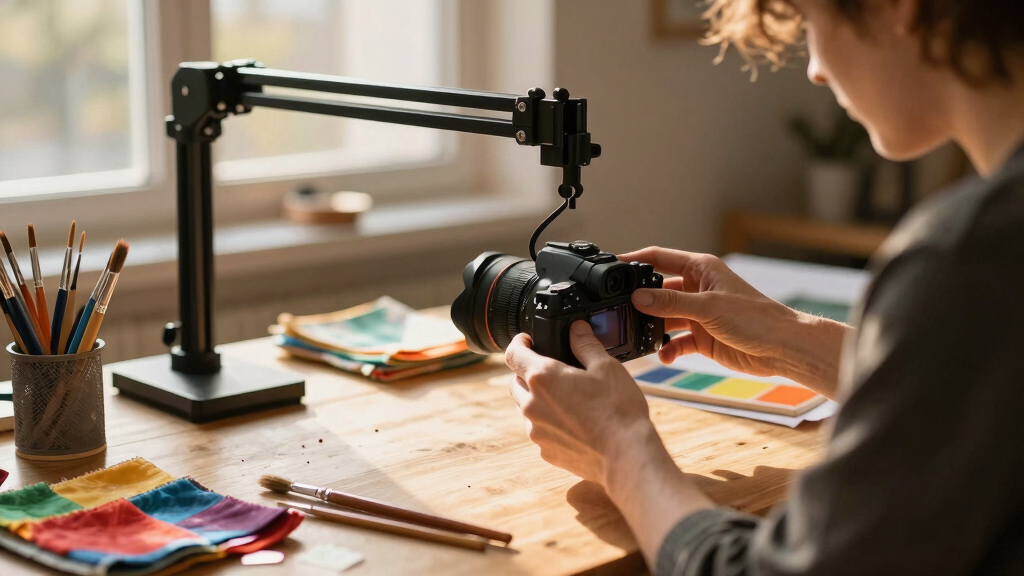
How We Picked
Products were selected based on their build quality, stability, ease of use, and versatility. We prioritized rigs that support a wide range of cameras, including smartphones, compact cameras, and DSLRs, to ensure broad applicability. Durability and ease of adjustment were key factors, as they directly influence workflow and shot quality. We also considered value for money, balancing feature set against price, to highlight options suitable for different budgets. The ranking reflects a combination of these criteria, favoring rigs that excel in stability and usability while remaining accessible to various skill levels.| overhead camera rigs for flat lay photography | Material |
|---|---|
| Glide Gear OH100 Professional | High-grade aluminum and steel |
| NEEWER Overhead Camera Mount R | Anodized aluminum alloy |
| Glide Gear OH 75 Overhead Moun | Aluminum |
| JUSMO LS15 Pro Camera Desk Mou | Aluminum alloy |
| NEEWER Overhead Camera Mount R | Steel |
| EMART Overhead Camera Mount Ri | Aluminum alloy |
| NEWER Overhead Camera Mount Ri | Anodized aluminum alloy |
Factors to Consider When Choosing Overhead Camera Rigs For Flat Lay Photography
Choosing the right overhead camera rig depends on several factors beyond just price. Understanding your specific needs, workspace constraints, and camera compatibility can make a significant difference in your results. This guide covers key considerations to help you select a rig that balances stability, flexibility, and ease of use, avoiding common pitfalls that can lead to shaky shots or cumbersome setups.Stability and Build Quality
Stability is paramount when capturing flat lay images, especially if you use heavier cameras or require sharp focus. Rigs made from robust materials like steel or high-grade aluminum tend to resist wobbling and vibrations better than plastic or lightweight options. Investing in a sturdy build can prevent frustrating blur caused by movement during shooting, but typically adds to the weight and bulk of the rig. Consider your workspace size and portability needs—if you frequently move your setup, a lighter but still stable option might be preferable.
Adjustability and Reach
Versatile rigs offer adjustable height, reach, and tilt angles, accommodating various product sizes and shooting angles. A rig with a long, extendable arm or pole provides greater flexibility for different compositions. However, increased adjustability sometimes comes with added complexity or less stability if not well-designed. Think about your typical shot dimensions and whether you need a fixed or adjustable setup, balancing ease of adjustment with the rig’s overall stability.
Camera Compatibility
Not all rigs support every camera type equally well. Some are optimized for smartphones, while others cater to heavier DSLRs or mirrorless cameras. Check the weight capacity and mounting options—quick-release plates, ball heads, or clamps—before buying. Using a rig with incompatible mounts can lead to slipping or damage. If you switch between devices frequently, look for a model that offers multiple mounting points or adjustable holders.
Ease of Setup and Portability
Time-efficient setup can make or break your workflow, especially if you shoot frequently or in different locations. Some rigs are quick to assemble and disassemble, while others require tools or more complicated adjustments. Portability is also crucial if you plan to travel or work in multiple spaces; lightweight, compact rigs facilitate this but may compromise stability. Aim for a balance that matches your shooting frequency and workspace constraints.
Value for Money
While premium rigs often deliver better stability and durability, they come at a higher price. Conversely, budget options can be tempting but often lack in longevity or stability, leading to potential frustrations. Consider how often you’ll use the rig and whether the investment aligns with your photography goals. Sometimes, spending a bit more upfront on a durable, versatile model can save money and headaches in the long run.
Frequently Asked Questions
Can I use a smartphone with any overhead camera rig?
Most overhead rigs are designed to accommodate smartphones, but it’s important to check the mounting mechanism and weight capacity. Many rigs include adjustable phone holders or clamps that fit various sizes, ensuring a secure fit. Be aware that some models may be optimized for heavier cameras and might not hold a lightweight phone as securely. If you frequently switch devices, choose a rig with adaptable mounting options to avoid stability issues.
What is the maximum weight capacity I should look for in an overhead rig?
The ideal weight capacity depends on your camera type. For smartphones and compact cameras, a capacity of 2-5 pounds usually suffices. For heavier DSLRs or mirrorless cameras, look for rigs supporting at least 10-15 pounds to ensure safety and stability. Overloading a rig beyond its capacity can cause wobbling, damage, or even accidents, so always verify the specifications before purchasing.
Are adjustable rigs difficult to set up and adjust during a shoot?
Adjustability varies widely among models. Well-designed rigs feature intuitive mechanisms such as quick-release clamps or smooth ball joints, making adjustments straightforward. Cheaper or more complex rigs may require tools or multiple steps, which can slow down your workflow. For frequent adjustments, prioritize rigs with simple, tool-free mechanisms that allow quick changes without sacrificing stability.
Should I prioritize portability over stability?
If you often shoot on location or need to transport your gear regularly, portability becomes a key factor. Lightweight rigs are easier to carry but may compromise stability, especially under heavier cameras or extended reach. Conversely, bulkier, more stable rigs are less portable but provide steadier shots. Consider your shooting environment and balance your need for mobility with the importance of stable, sharp images.
Is it worth investing in a premium overhead rig?
Premium rigs often offer superior build quality, enhanced stability, and greater versatility, making them ideal for professional or frequent use. They tend to last longer and provide smoother adjustments, which can significantly improve shot quality. However, if you only shoot occasionally or on a tight budget, a mid-range or budget model might suffice. Evaluate your shooting frequency and quality expectations before making a higher investment.
Conclusion
For casual shooters or those just starting out, the EMART Overhead Camera Mount Rig provides a reliable balance of stability and affordability. The Glide Gear OH100 remains the best overall choice for professionals seeking durability and versatility. Budget-conscious users will appreciate the NEEWER Dual Ball Head Rig for its flexibility without breaking the bank. For those requiring maximum adjustability and premium features, investing in a high-end model makes sense. Ultimately, your choice should align with your shooting frequency, camera type, and workspace size to ensure consistent, high-quality flat lay images.Fall Picks
fall essentials
As an affiliate, we earn on qualifying purchases.