

Artists comparing student-grade and professional-grade art supplies are deciding where performance justifies a higher cost—not choosing between materials that are useful and materials that are not. Both can support serious learning and finished artwork, but they differ in pigment concentration, consistency, durability, and price. Student-grade supplies are usually the sensible choice for practice, classes, and frequent experimentation. Professional-grade supplies make more sense when color behavior, archival quality, or predictable results matter enough to affect the work.

Get art and craft supplies delivered free with Prime
- Fast, free delivery on millions of items
- Prime Video, Amazon Music and more included
- Member-only deals all year
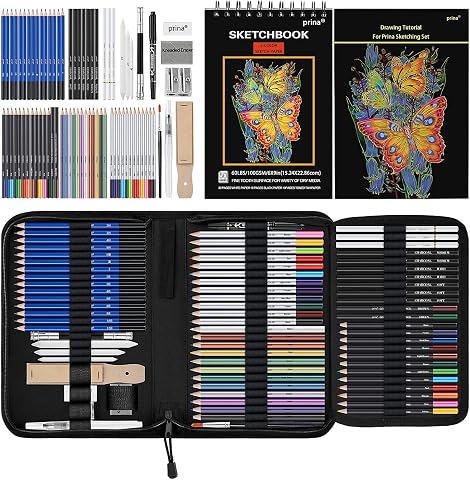
Prina 76-Piece Drawing Set Sketching Kit
- ✔ Total Pieces: 76
- ✔ Pencil Types: Graphite, Charcoal, Watercolor, Oil-Based, Metallic
- ✔ Sketchbook Size: 6 x 9 inches, 100 GSM

PRINA 120-Color Colored Pencil Set
- ✔ Number of Items: 120
- ✔ Pencil Type: Oil-Based Colored Pencils
- ✔ Core Type: Soft Thick Core

Soucolor 192-Piece Deluxe Art Set
- ✔ Total Pieces: 192
- ✔ Case Material: Wood with Dual Drawers
- ✔ Paint Types: Acrylic, Watercolor, Oil Pastels
The biggest tradeoff is paying more per tube, pan, pencil, or sheet for materials that may go further and perform more consistently. That premium can be worthwhile for a working artist or a committed painter who knows what they need; it can be wasteful for a beginner still testing mediums and techniques. The comparison below focuses on shared buying criteria so you can choose where to save and where to upgrade.
At a Glance
| Criteria | Student-grade art supplies | Professional-grade art supplies | Winner |
|---|---|---|---|
| Upfront cost | Lower; easier to assemble a starter kit | Higher; individual colors and tools can cost substantially more | A |
| Pigment strength and color | Often lower pigment concentration and more fillers | Generally higher pigment concentration and stronger color | B |
| Consistency and handling | Can vary more by brand, color, and product line | More predictable performance within a product line | B |
| Range and availability | Widely available in beginner sets and common colors | Often sold in focused ranges, with some colors carrying a premium | A |
| Durability of finished work | Depends on the specific medium and product; may offer fewer archival claims | More choices formulated or rated for lightfastness and longevity | B |
| Best use | Practice, classes, studies, and experimenting | Finished work, professional use, and demanding techniques | Depends |
Prina 76-Piece Drawing Set Sketching Kit
This kit stands out because it refuses to force a choice between media types. Unlike the PRINA 120-Color Colored Pencil Set, which focuses solely on oil-based pencils, the Prina 76-Piece set offers a hybrid approach. It includes graphite, charcoal, watercolor, and metallic pencils, allowing artists to blend dry and wet techniques in a single session. The inclusion of a refillable water brush pen and blending stumps means you can achieve watercolor effects with the watercolor pencils without needing a full studio setup.Compared to the Soucolor 192-Piece Deluxe Art Set, this kit is far more portable. The compact travel case fits easily into a backpack, making it ideal for sketching on location. However, the tradeoff is the lack of heavy-bodied paints like acrylics. While the pencil leads are smooth, they are not as durable as professional-grade alternatives, which can be a drawback for heavy-handed artists who break leads frequently. The multi-color sketchbook is a clever addition, providing a textured surface that complements the varied media included.
Pros:
- Wide variety of pencil types including watercolor, metallic, and charcoal
- Compact travel case enhances portability for on-the-go sketching
- Includes a multi-color sketchbook that supports various drawing styles
- Comes with essential accessories like blending stumps and erasers
Cons:
- Pencil leads are softer and may break more easily under pressure
- Lack of heavy-body paints limits its use for full painting projects
- Large component count can feel cluttered for minimalists
Best for: Beginner to intermediate artists who want to explore different drawing techniques without committing to a single medium.
Not ideal for: Professional illustrators who require highly durable, professional-grade pencil leads or artists who only work in one specific medium.
Bottom line: This is the most versatile kit for artists who want to experiment with mixed media in a portable format.
“This is the most versatile kit for artists who want to experiment with mixed media in a portable format.”
PRINA 120-Color Colored Pencil Set
If your primary focus is color, this set offers a depth that the Prina 76-Piece Drawing Set cannot match. With 120 oil-based colored pencils, the color spectrum is extensive enough to handle complex shading and gradient work. The soft thick core is a significant differentiator here; it allows for buttery application and easy blending, which is crucial for realistic portraits or vibrant landscapes. This makes it a better choice for artists who prioritize color fidelity over the variety of dry media found in mixed kits.However, this specialization comes at a cost. Unlike the Soucolor 192-Piece Deluxe Art Set, you are limited to dry media. There are no brushes, no paints, and no canvas boards included. You must supply your own paper if the included sketchbook runs out or isn’t suitable for your specific blending techniques. Additionally, oil-based pencils can smudge more easily than wax-based ones, so using a fixative is often necessary to preserve finished work. While the kit includes a tutorial, it is less comprehensive than the broader technique guides found in mixed-media sets.
Pros:
- Extensive 120-color range allows for nuanced shading and gradients
- Soft core pencils offer superior blending and layering capabilities
- Vibrant pigments provide professional-grade color intensity
- Includes a protective zipper case and sketchbook
Cons:
- Oil-based pencils may require fixative to prevent smudging
- Limited to colored pencils only, lacking other media types
- No specialized paper included for wet blending techniques
Best for: Artists specializing in colored pencil work who need a wide range of hues for realistic blending and shading.
Not ideal for: Mixed-media artists who need access to wet paints, charcoal, or graphite in the same kit.
Bottom line: This kit is the definitive choice for artists who want to master the art of colored pencil blending.
“This kit is the definitive choice for artists who want to master the art of colored pencil blending.”
Soucolor 192-Piece Deluxe Art Set
This kit is the most complete solution for artists who want to try everything from sketching to painting. Unlike the Prina 76-Piece Drawing Set, which focuses on dry media, the Soucolor kit includes 24 acrylics and 24 watercolors, along with oil pastels and crayons. The inclusion of three distinct types of artist-grade pads (acrylic, watercolor, and sketch) is a major advantage, as it provides the correct paper weights and textures for each medium right out of the box. This eliminates the guesswork for beginners who may not know which paper suits watercolors versus acrylics.The durable wooden case offers superior organization compared to the fabric cases of the Prina sets, but it adds significant weight. This makes the Soucolor kit less ideal for travel; it is better suited for a home studio or car-based transport. While the piece count is impressive, the sheer volume of items can be overwhelming for absolute beginners who might struggle to find what they need. Compared to the specialized focus of the PRINA 120-Color Pencil Set, the Soucolor kit is a jack-of-all-trades, offering breadth at the expense of specialized depth in any single medium.
Pros:
- Includes wet media (acrylics and watercolors) and canvas boards
- Comes with three specialized pads for different painting techniques
- Robust wooden case with dual drawers for organized storage
- Includes a wide variety of tools including brushes, crayons, and pastels
Cons:
- Wooden case is heavy and less portable than fabric alternatives
- Large number of items can be overwhelming for new artists
- Quality of individual items may vary across such a broad range
Best for: Hobbyists and beginners who want a complete studio-in-a-box experience with both wet and dry media.
Not ideal for: Traveling artists who need a lightweight kit, or professionals seeking high-end, single-medium tools.
Bottom line: This is the ultimate starter kit for artists who want to explore multiple mediums without buying separate supplies.
“This is the ultimate starter kit for artists who want to explore multiple mediums without buying separate supplies.”
As an Amazon Associate we earn from qualifying purchases.
Key Differences
The price gap is not simply a matter of branding. Professional paints often contain a higher proportion of pigment, which can mean stronger color, better coverage, or more usable washes from a smaller amount. Professional pencils may offer more consistent cores or a broader set of lightfast ratings, while professional papers can be manufactured to suit specific techniques. Those advantages matter most when an artist needs repeatable results or plans to sell, exhibit, or keep the work for many years. They matter less when the goal is to practice composition or learn how a medium behaves.
Student-grade materials also vary widely. A well-made student line can be reliable and enjoyable, while a low-cost set may include weak colors, inconsistent tools, or a large selection of shades that are rarely used. Professional grade is not a guarantee that every product suits every artist, either: a high-performance paint can be difficult to control for a beginner, and premium supplies cannot replace sound technique. A useful compromise is to buy affordable supplies for broad experimentation and upgrade the materials that directly limit a specific process.
For most new artists, student-grade supplies offer better value because they reduce the cost of learning. For artists who have settled on a medium and make finished work, professional-grade materials are more likely to repay their cost through consistency, concentration, and product specifications. The right choice depends less on an artist’s title than on what the work demands.
Detailed Comparison
Upfront cost and affordability (Student-grade art supplies wins — major)
Student-grade supplies win by a clear margin on purchase price. Starter sets and individual products are usually less expensive, making it easier to try watercolor, acrylic, drawing, or mixed media without a large initial commitment. Professional-grade supplies cost more upfront, sometimes substantially more for selected pigments or specialist tools. The gap is major for someone building a complete kit, but the cheaper option is not automatically better value if poor performance leads to replacement. For learning and uncertain interests, start with student grade; upgrade only when you can name the limitation you are paying to solve.
Pigment strength and color (Professional-grade art supplies wins — major)
Professional-grade materials generally win on pigment concentration and color intensity. In paints, that can produce more vivid mixtures or stronger coverage with less material; in colored pencils and similar tools, product lines may offer more dependable color payoff. Student-grade products may use more fillers or substitute pigments, though the exact difference varies by medium and individual color. The gap is moderate to major for artists mixing nuanced colors or working in thin layers, and minor for basic exercises where exact color behavior is not central.
Consistency and handling (Professional-grade art supplies wins — moderate)
Professional-grade supplies usually have the advantage in predictability within a line: a color, tool, or sheet is more likely to behave as expected from one purchase to the next. Student-grade performance can be uneven across colors or products, particularly in inexpensive multipacks. This difference is moderate for casual practice but can be frustrating when a technique depends on smooth blending, even washes, reliable coverage, or repeatable results. Choose professional grade when surprises in the material interfere with the process; otherwise, a student line is often adequate.
Selection and ease of access (Student-grade art supplies wins — minor)
Student-grade sets and common colors are often easier to find at general art and craft retailers, and they provide a convenient way to get started. Professional ranges may offer more specialized choices, but artists often need to select products individually and confirm that the particular line fits their technique. Student grade wins for convenient, low-cost entry; professional grade can win for depth within a chosen medium. The practical gap is minor once an artist knows what to buy, but it can be moderate for a beginner seeking one ready-made kit.
Longevity and archival considerations (Professional-grade art supplies wins — major)
Professional-grade products more often provide detailed information about lightfastness, pigment composition, and other longevity-related properties. That makes them the stronger choice when work is intended for sale, display, or long-term preservation. Student-grade supplies may be entirely suitable for studies and sketchbooks, but their durability depends on the specific product, and a lower price alone does not establish how a piece will age. This is a major difference for finished work meant to last and a minor one for disposable exercises. Check the manufacturer’s ratings rather than assuming every professional product is archival.
Value over time (moderate difference)
Student-grade supplies have the better value when an artist is still learning, changes mediums often, or uses materials for studies that will not be sold. Professional-grade supplies can offer better value per use when higher pigment concentration means using less, or when dependable performance prevents wasted work. The winner depends on consumption and purpose: paying more is justified if the material’s behavior or longevity matters to the result, not simply because the label says professional. For a developing artist, upgrading one high-impact item is often wiser than replacing an entire kit.
Student-grade art supplies: Pros and Cons
Pros:
- Lower upfront cost makes practice and experimentation less risky.
- Beginner sets offer a convenient way to try a medium.
- Widely available and suitable for classes, studies, and everyday sketching.
- A sensible choice when finished work does not need specialized longevity.
Cons:
- Pigment strength and color payoff may be lower.
- Handling can be less predictable, depending on the product line.
- Some products provide fewer details about archival performance.
- A low-cost set may include colors or tools that are not useful to the artist.
Professional-grade art supplies: Pros and Cons
Pros:
- Generally stronger pigment and more dependable color behavior.
- Often more consistent within a product line.
- More options with documented lightfastness or other performance specifications.
- Can be more economical per use when a small amount delivers the desired result.
Cons:
- Higher upfront cost can make a full kit expensive.
- Premium features may go unused by beginners or casual hobbyists.
- Specialized ranges can require more careful selection than a starter set.
- A professional label does not guarantee that a product suits a given technique.
Who Should Choose What
Choose Student-grade art supplies if:
- You are learning a medium and want to practice without spending heavily.
- You are buying supplies for a class, studies, or sketchbook work.
- You are still exploring which materials and techniques you enjoy.
- You want a broad starter kit and do not yet know which colors or tools you use most.
Choose Professional-grade art supplies if:
- You make finished work for sale, exhibition, or long-term keeping.
- You need reliable color mixing, coverage, blending, or repeatable results.
- A specific student-grade product is limiting a technique you use often.
- You are willing to pay more for documented longevity or higher performance in materials you use regularly.
Skip both if: If you already know the exact medium and technique you need, skip generic all-in-one kits and buy the specific paper, pigments, tools, or surfaces suited to that work.
Value for Money
Paying more is worthwhile when an upgraded material changes the result in a way you can use: stronger pigment, better control, consistent handling, or clearer information about a finished piece’s durability. Professional-grade supplies can also stretch further in some applications, so the higher purchase price may not translate directly into a higher cost per painting. But that is not guaranteed across every product, color, or medium.
For beginners, student grade is usually the better overall value because the main benefit is learning, not maximum pigment performance. For experienced artists, a selective upgrade is often the best use of money: buy professional-grade versions of the colors, paper, or tools that have a real effect on the work, and keep student-grade options for rough studies. Pay the premium for a performance need, not for status.
Final Verdict
Choose student-grade supplies if you are starting out, taking a class, or producing studies and want to learn without committing to an expensive kit. For most beginners, this is the clearer recommendation: lower cost leaves room to practice and discover preferences, and professional performance cannot compensate for limited experience.
Choose professional-grade supplies if you already know your medium and need stronger color, more predictable handling, or better-supported longevity for finished work. The biggest deciding factor is whether the material affects the result you intend to keep or sell. If it does, the premium can be worthwhile. If it does not, save the money and upgrade only the items that are holding you back.
Frequently Asked Questions
Are student-grade art supplies good enough for beginners?
Yes. Student-grade supplies are generally a practical way to learn basic techniques and discover which materials you prefer. Look for a reputable product line, and avoid judging a whole medium by the cheapest set available.
Do professional-grade supplies make better art?
They can make some techniques easier by offering stronger pigment or more predictable handling, but they do not replace practice, composition, or technique. Upgrade when a specific material limitation is affecting your work.
Should I buy a complete professional art set?
Usually not if you are new to the medium. A lower-cost starter set lets you learn what you use; later, buy professional versions of the colors, tools, or surfaces that matter most to your process.
Are professional-grade supplies always archival?
No. Professional grade does not automatically mean every color or product will last indefinitely. Check the manufacturer’s lightfastness and product information, and use suitable paper, surfaces, and storage for work you want to preserve.