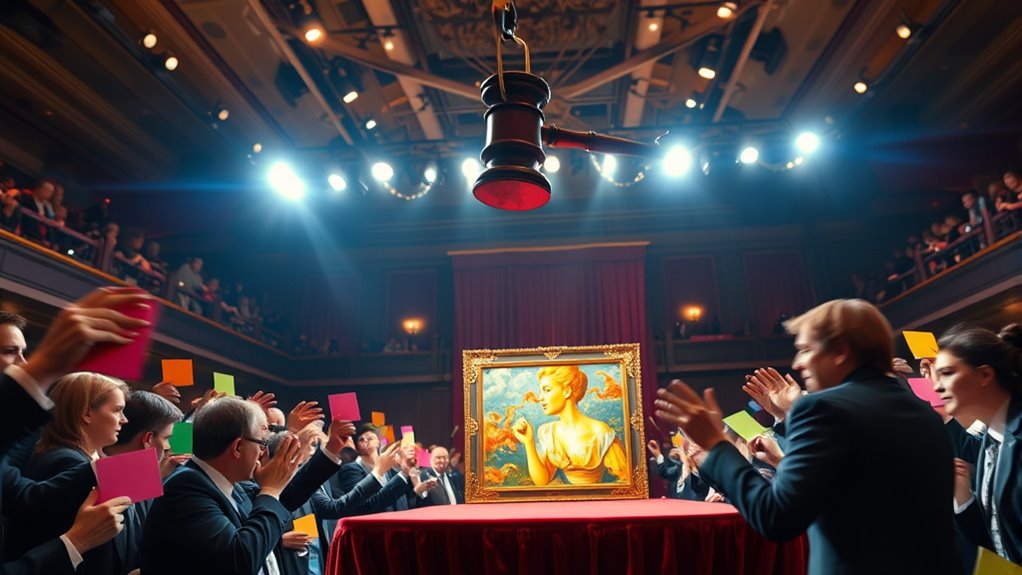

In art auctions, bidding wars happen when buyers strategically outbid each other, influenced by market trends, perceived value, and timing. Fees like premiums and additional costs can push prices higher, making it vital to manage bids wisely. Knowing how to escalate or hold back bids helps avoid overpaying. By understanding these dynamics, you can increase your chances of winning at a fair price—discover more about how to master this process as you continue exploring.
Key Takeaways
- Bidding wars drive prices upward as participants strategically outbid each other, often beyond intrinsic artwork values.
- Auction fees, including premiums and commissions, significantly impact total costs and can inflate final prices.
- Setting maximum bids and timing bids effectively helps participants avoid overpaying during competitive bidding.
- Market demand, supply dynamics, and artist popularity influence bidding intensity and final sale prices.
- Transparent fee structures and strategic bidding techniques are essential for managing costs and maximizing value.
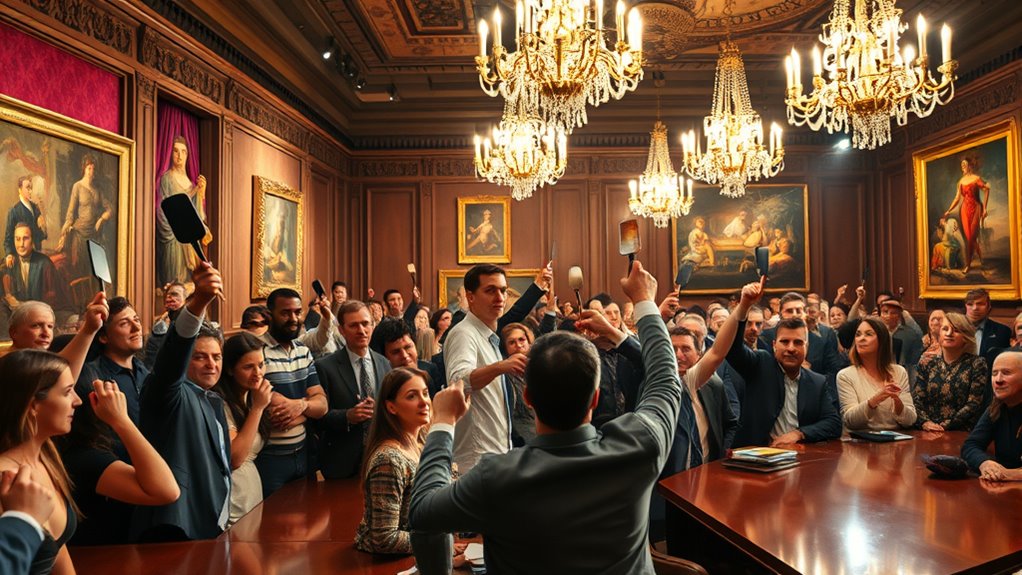
Art auctions are dynamic marketplaces where prices fluctuate based on supply, demand, and perceived value. When you step into an auction, you quickly realize that bidding isn’t just about offering the highest price; it’s a strategic game where your moves influence the final outcome. Understanding bidding strategies can help you navigate this environment more effectively. Whether you aim to secure a piece at a fair price or to outbid competitors, your approach to bidding can considerably impact the final price. For example, you might choose to bid early to set a ceiling or wait until the last moment to make a quick, decisive bid. Each tactic carries risks and rewards, and experienced bidders often combine techniques to stay ahead.
Strategic bidding influences final prices in art auctions—timing and technique are key to winning without overspending.
As you plan your bids, it’s essential to keep auction house fees in mind. These fees, which can include buyer’s premiums, registration costs, and other charges, add to the final price you pay. Auction house fees are usually calculated as a percentage of the hammer price and can range from 10% to 25% or higher, depending on the auction house. This means that even if you win a lot at a seemingly reasonable price, the total cost might be substantially more once fees are included. Being aware of these additional costs helps you avoid overspending or overestimating the value of a piece. Some auction houses are more transparent about their fee structures, but it’s always wise to review the terms beforehand.
Your bidding strategies also involve understanding how to manage your maximum bid, known as your “reserve.” If you’re willing to pay a certain amount, you might set a ceiling and stick to it, avoiding emotional bidding wars that push prices beyond your comfort zone. On the other hand, if you see others bidding aggressively, you might need to decide whether to escalate your bid or step back. The key is to stay disciplined and avoid getting caught up in the excitement, which can lead to overbidding. Also, consider the auction house’s fee structure, as winning at a high bid could mean paying more in fees, eroding your potential profit or value. Moreover, understanding how market dynamics influence bidding can give you an edge in predicting price movements during the auction. Additionally, understanding how bidding strategies can be employed effectively will further improve your chances of success.
Furthermore, being aware of the Efficient General Ledger Coding can help auction houses streamline their operations, potentially leading to more transparent and fair fee assessments. This can also impact the overall transaction transparency and trustworthiness of the auction process. Analyzing the supply and demand trends for specific artists or styles can give you an advantage in anticipating price fluctuations. Ultimately, successful participation in art auctions requires a combination of strategic bidding and clear awareness of costs. By mastering bidding strategies and understanding auction house fees, you position yourself better to make informed decisions. This approach not only helps you secure desirable pieces but also ensures that you don’t overpay, preserving the true value of your purchases. Whether you’re a seasoned collector or a first-time bidder, knowing how these elements work together can make your auction experience more rewarding and financially sound.

50 PCS Blank Fans Handheld Double Sided Paddles DIY Paper Fans with 50 PCS Blank Cardboard and Plastic Handle Auction Answer Paddles for Crafting Classroom Voting Painting Celebration and Wedding
- Complete Set of Fans and Handles: 50 blank fans with handles for various uses
- Premium Durable Materials: Made of 400g cardboard and sturdy plastic handles
- Ideal for DIY Crafts: Perfect for decorating, painting, and personalizing
As an affiliate, we earn on qualifying purchases.
As an affiliate, we earn on qualifying purchases.
Frequently Asked Questions
How Do Art Auction Houses Set Their Starting Bids?
You might wonder how art auction houses set their starting bids. They usually base this on reserve pricing, which is the minimum price they’ll accept, and catalog estimates, which predict the artwork’s value. These estimates help determine a competitive starting point to attract bidders while safeguarding the seller’s interests. By carefully balancing these factors, auction houses create an engaging bidding environment and ensure the artwork’s value is appropriately represented.
What Psychological Factors Influence Bidder Behavior During Auctions?
Bidder psychology and auction anxiety greatly influence how you behave during auctions. When you feel excited or pressured, you might bid impulsively, driven by the fear of missing out or competitive desire. These emotional responses can lead you to overbid or hesitate, impacting your overall strategy. Understanding these psychological factors helps you stay focused, manage auction anxiety, and make more rational decisions, rather than acting solely on emotion.
How Do External Market Trends Affect Auction Prices?
Like a boat reacting to shifting tides, your auction prices are influenced by external market trends. When market sentiment is optimistic and economic indicators are strong, bidding surges, driving prices higher. Conversely, negative trends can dampen enthusiasm, lowering bids. You should watch these external factors closely, as they can sway bidder confidence and ultimately determine the final hammer price, making market trends a essential part of your auction strategy.
What Role Do Absentee Bids Play in Auction Outcomes?
Absentee bids play a vital role in auction outcomes by allowing you to participate digitally without being physically present. Using an absentee strategy, you can submit your maximum bid in advance, giving you a chance to win without ongoing bidding wars. This approach helps you stay competitive, especially when bidding wars escalate, ensuring your interests are represented even if you can’t attend in person or engage in real-time bidding.
How Can Collectors Avoid Overpaying in Bidding Wars?
Imagine you’re in a bidding war for a rare piece, and bidder psychology ramps up your bid strategy. To avoid overpaying, set a firm maximum bid beforehand, sticking to it regardless of the competition. Recognize when emotions influence your decisions and stay disciplined. This way, you control the auction, prevent impulsive bids, and secure valuable art without exceeding your budget.
As an affiliate, we earn on qualifying purchases.
Conclusion
In the fascinating world of art auctions, understanding the intricate interplay of bidding battles and market mechanics truly perks your perspective. By recognizing the rhythm of rivalry and the ripple effect of rising prices, you grasp how dollars dance and demand drives decisions. Staying savvy amid the spirited spectacle helps you see the subtle strategies behind each sale, shaping your savvy stance and sparking your spade of smart, strategic art shopping.
As an affiliate, we earn on qualifying purchases.
As an affiliate, we earn on qualifying purchases.