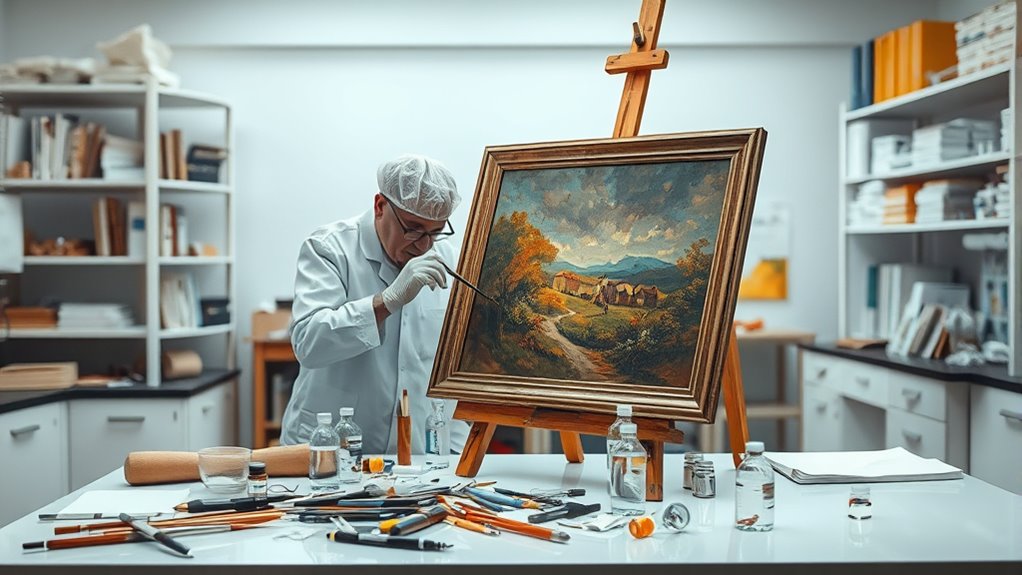

In an art restoration lab, experts combine scientific tools like X-ray imaging and infrared technology with traditional craftsmanship to carefully evaluate and preserve masterpieces. You’ll see delicate cleaning, repairs, and filling of damages done with materials that match the original. Every step respects the artwork’s history and authenticity, ensuring it’s protected for future generations. If you stay curious, you’ll discover how science and art work together to breathe new life into timeless treasures.

Get art and craft supplies delivered free — and shop member deals
- Fast, free delivery on millions of items
- Access to Prime Big Deal Days deals on October 6–7
- Prime Video, Amazon Music and more included
Key Takeaways
- Art restoration involves thorough examination using advanced imaging techniques to assess damage without causing further harm.
- Conservators follow strict ethical standards, blending traditional craftsmanship with modern scientific methods for authentic preservation.
- The process includes gentle cleaning, consolidating fragile areas, and filling losses with materials matching the original artwork.
- Detailed documentation of each intervention ensures transparency, reversibility, and respect for the artwork’s history.
- Restoring masterpieces helps safeguard cultural heritage, revealing their full story and ensuring they can be appreciated by future generations.

Have you ever wondered what goes into bringing a damaged masterpiece back to life? When you step into an art conservation lab, you’re entering a space where science and history collide. Here, skilled conservators work meticulously to preserve artworks that hold immense historical significance. Each piece isn’t just a painting or sculpture; it’s a window into the past, telling stories that shaped cultures and civilizations. Restoring these works isn’t about making them look new but about respecting their age, authenticity, and the stories they carry. That’s why art conservation is so essential—it’s a delicate balance of preservation and restoration, ensuring that future generations can appreciate the original artist’s intent.
When you observe the process, you’ll notice that it begins with a thorough examination. Conservators use magnification tools, infrared imaging, and even X-ray technology to assess the artwork’s condition without causing further damage. This research helps them identify previous restorations, underlying problems like cracking or flaking, and any signs of deterioration. Every detail uncovered guides the decisions on how to proceed, always prioritizing the artwork’s integrity. The goal is to stabilize the piece, preventing further decay while respecting its original materials and techniques. In doing so, conservators honor the historical significance embedded within every brushstroke and chisel mark. Additionally, understanding ethical practices in conservation ensures that interventions remain respectful of the original work, maintaining its authenticity and cultural value. Modern restoration techniques often combine traditional craftsmanship with cutting-edge scientific methods, further enhancing the preservation process. Employing scientific methods helps conservators create more precise and effective restorations.
The actual restoration process often involves gentle cleaning, consolidating fragile areas, and filling in losses with materials that match the original as closely as possible. You might think that restoring a masterpiece means making it look perfect, but it’s more about restoring its soul. Every intervention is carefully documented, so the work remains transparent and reversible if needed in the future. The conservator’s hands move with precision, blending modern scientific methods with traditional craftsmanship. This approach guarantees that the artwork retains its authenticity, allowing viewers to experience it much like the artist intended. Restorers also consider the materials used by the original artist to ensure that any repairs are compatible and durable over time. The ongoing research and technological advancements continue to improve the effectiveness of conservation efforts.
Throughout the process, you’ll realize that the true value of art conservation lies in its respect for history. Restoring a masterpiece isn’t about erasing age or damage but about revealing its full story once again. It’s a commitment to safeguarding cultural heritage, ensuring that these treasures remain relevant and meaningful long after their creators have passed. When you see the finished work, you understand that behind every restored piece is a careful dance between science, art, and history—one that breathes new life into a piece that once seemed lost to time.
As an affiliate, we earn on qualifying purchases.
Frequently Asked Questions
What Are the Most Challenging Repairs Artists Face?
You face many challenges with repairs, especially when it comes to conservation techniques and preservation challenges. Restoring delicate details without damaging the artwork requires precision and skill. You must carefully address issues like paint flaking, tears, or discoloration while maintaining the piece’s original integrity. Balancing thorough cleaning with gentle handling is essential, as improper techniques could worsen the damage. Ultimately, your goal is to preserve the masterpiece for future generations.
How Do Restorers Determine the Original Materials Used?
You think restoring art is just about guessing? Think again. Restorers use scientific methods like analyzing historical pigments and applying conservation techniques to identify original materials. They scrutinize tiny samples under microscopes, decode aging signs, and consult archives. This meticulous detective work guarantees they match original hues and textures, proving that restoring masterpieces isn’t a game of guesswork but a precise, artful science—where every detail counts and history whispers its secrets.
What Ethical Considerations Guide Restoration Decisions?
When you make restoration decisions, you must consider cultural significance and preservation ethics. You weigh whether adding new materials respects the artwork’s original intent or risks compromising its authenticity. You also think about how your choices impact future generations’ understanding of the piece. By balancing respect for the artist’s original work with the need to preserve its integrity, you ensure the restoration safeguards its historical and cultural value.
How Long Does a Typical Restoration Process Take?
You might wonder how long a typical restoration takes, but it varies based on conservation techniques and the artwork’s condition. Some projects can be completed in weeks, while others take months or even years. Your restorers carefully plan restoration timelines to guarantee each detail receives the attention it needs. Patience is key, as preserving the integrity of the piece often requires meticulous work and precise conservation techniques.
Can Restorations Be Reversed if Needed Later?
You might worry about reversibility concerns, but restoration techniques aim to preserve the artwork’s integrity and make future preservation easier. Usually, restorations can be reversed or adjusted if needed, especially with modern, reversible materials. Skilled conservators carefully document every step, ensuring that future restorations or conservation efforts won’t damage the original. So, yes, restorations are often designed with reversibility in mind, safeguarding the artwork’s long-term health.
As an affiliate, we earn on qualifying purchases.
Conclusion
As you step into the world of art restoration, you realize that nearly 70% of artworks can be saved from deterioration with expert care. Every brushstroke and careful cleaning breathes new life into these masterpieces, preserving history for future generations. It’s incredible to think that your work can turn faded, fragile pieces into vibrant treasures once more. With each restoration, you help keep the stories and beauty of art alive, ensuring they endure for centuries to come.
As an affiliate, we earn on qualifying purchases.
conservation materials for paintings
As an affiliate, we earn on qualifying purchases.
As an affiliate, we earn on qualifying purchases.
Fall Picks
fall essentials
As an affiliate, we earn on qualifying purchases.