You’ll see graphic novels gaining respect in academic circles because they help you develop essential visual literacy skills by combining images with text, making complex ideas easier to understand. Teachers use them to boost engagement and encourage critical thinking through visual analysis. They also support diverse learning styles and make content more accessible for all students. If you’re curious about how they can transform education, continue exploring to discover more about their impactful role.
Key Takeaways
- Graphic novels enhance visual literacy, critical thinking, and interpretative skills vital for modern education.
- They support inclusive, differentiated instruction, accommodating diverse learning styles and improving accessibility.
- Their interdisciplinary applications in literature, history, and social studies foster cross-curricular learning.
- Visual storytelling promotes deeper engagement, participation, and critical analysis among students.
- Increasing recognition of their educational value aligns with evolving literacy standards and digital media literacy.
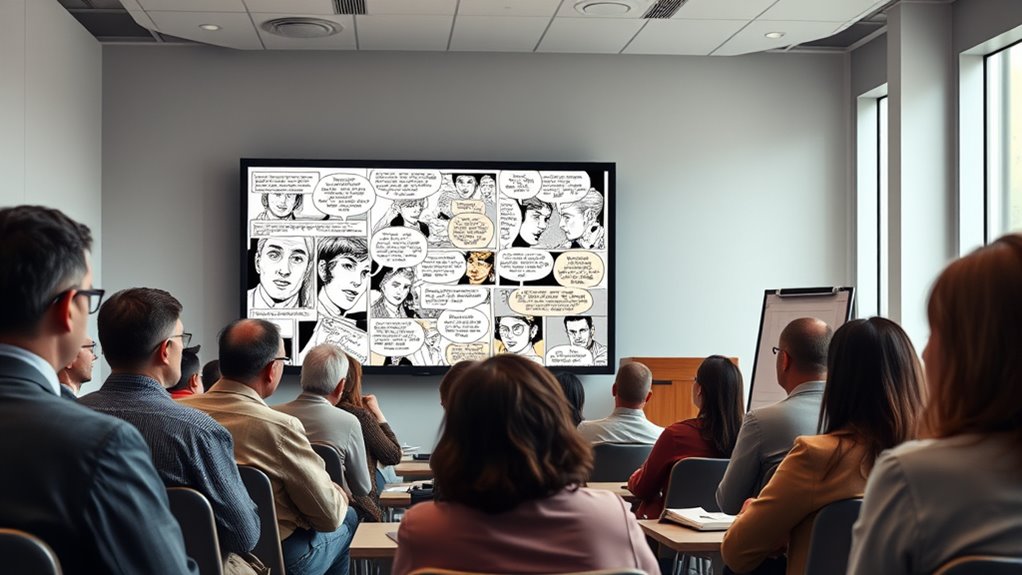
Have you ever considered how graphic novels can enhance learning in the classroom? These visually engaging texts are more than just entertainment; they’re powerful tools for developing students’ visual literacy. When you incorporate graphic novels into your teaching, you’re offering students an opportunity to interpret images and text simultaneously, sharpening their ability to decode visual information. This combination helps students grasp complex ideas through a combination of imagery and narrative, making abstract concepts more concrete. As a result, they become more adept at analyzing visual cues, which is an essential skill in today’s multimedia-driven world.
Using graphic novels also encourages the application of effective pedagogical strategies. Instead of relying solely on traditional lectures or textbooks, you can create dynamic lessons that incorporate discussion, analysis, and creative responses to the material. For instance, assigning students to analyze the visual storytelling techniques used in a graphic novel invites them to think critically about how images convey mood, character development, and themes. This approach not only increases engagement but also fosters deeper comprehension. You’re helping students see how visual elements support narrative meaning, strengthening their ability to interpret and evaluate visual media.
Moreover, graphic novels can serve as an inclusive teaching resource, accommodating diverse learning styles. Visual learners, in particular, benefit from the combination of images and words, which can bridge gaps in understanding. By integrating these texts into your curriculum, you’re offering multiple avenues for students to access and connect with content. This flexibility supports differentiated instruction, making learning more accessible for students who might struggle with traditional texts. Additionally, understanding cultural differences enhances students’ global awareness and prepares them for cross-cultural communication in diverse settings. Incorporating culturally relevant graphic novels can further enrich this understanding and foster empathy among learners.
In addition, graphic novels can facilitate cross-disciplinary teaching. They’re useful in literature classes for exploring storytelling and character development, in history for visualizing historical events, or in social studies to examine cultural narratives. This versatility allows you to design pedagogical strategies that are both engaging and relevant, encouraging students to make connections across subjects. When students analyze the artwork alongside the narrative, they develop a richer understanding of context and perspective, which enhances their overall learning experience. Furthermore, integrating visual storytelling techniques aligns with the development of visual literacy skills, a critical competency in contemporary education. Recognizing the importance of digital literacy can also help students navigate the increasing presence of visual media in modern communication. Additionally, fostering an awareness of mindfulness during analysis can improve students’ focus and interpretation skills, leading to more meaningful engagement with visual content.

The Graphic Novel Classroom: POWerful Teaching and Learning with Images
As an affiliate, we earn on qualifying purchases.
As an affiliate, we earn on qualifying purchases.
Frequently Asked Questions
How Do Graphic Novels Enhance Visual Literacy Skills?
You enhance your visual literacy skills through graphic novels by practicing visual analysis, where you interpret images, symbols, and layouts. These stories require you to connect visuals with text, sharpening your interpretive skills. As you analyze artwork and narrative flow, you become more adept at understanding complex visual information, which improves your ability to interpret visual messages across various media. This active engagement boosts your overall comprehension and critical thinking.
Can Graphic Novels Effectively Teach Complex Historical Concepts?
You might think complex historical concepts are best taught through textbooks, but graphic novels use visual storytelling to clarify intricate ideas. By combining vivid imagery with accurate historical details, they make history accessible and engaging. This blend helps you grasp events deeply, encouraging critical thinking. Graphic novels can effectively teach complex history by making learning both memorable and enjoyable, bridging the gap between storytelling and historical accuracy.
What Criteria Are Used to Evaluate Academic Quality in Graphic Novels?
You evaluate academic quality in graphic novels through literary analysis, examining their narrative structure, themes, and visual storytelling. Peer review plays an essential role, ensuring the work meets scholarly standards and contributes meaningful insights. By evaluating both the artistic and textual elements, you determine if the graphic novel effectively communicates complex ideas and holds academic rigor, making it a legitimate resource for educational and research purposes.
How Do Educators Address Misconceptions About Comic Book Content?
You can address misconceptions about comic book content by actively discussing visual stereotypes and ensuring content appropriateness. When students or parents raise concerns, emphasize how educators critically select graphic novels that challenge stereotypes and promote meaningful themes. By highlighting the educational value and thoughtfully curated content, you help shift perceptions, demonstrating that these works are valuable tools for engagement and learning rather than just entertainment.
Are There Specific Disciplines Where Graphic Novels Are More Impactful?
You’ll find graphic novels especially impactful in disciplines like literature, history, and social sciences. Their visual storytelling transforms complex ideas into accessible narratives, making learning more engaging. By employing interdisciplinary approaches, you reveal new ways to explore themes and analyze data. These fields harness graphic novels’ power to evoke emotion and deepen understanding, proving they’re not just entertainment but essential tools for education across diverse academic landscapes.

Allergic: A Graphic Novel
A heartfelt graphic novel about a girl who discovers she has multiple food allergies and must navigate a…
As an affiliate, we earn on qualifying purchases.
As an affiliate, we earn on qualifying purchases.
Conclusion
So, next time you see a comic book in a classroom, don’t dismiss it as just “kid stuff.” It turns out, graphic novels are sneaking into academic circles, proving they’re more than just pretty pictures—they’re literacy’s new best friend. Who knew that mastering the art of visual storytelling could actually make you smarter? So go ahead, embrace the colorful revolution. Your textbooks might soon be feeling a little jealous of all that graphic novel fame.

Teaching Visual Literacy: Using Comic Books, Graphic Novels, Anime, Cartoons, and More to Develop Comprehension and Thinking Skills
Used Book in Good Condition
As an affiliate, we earn on qualifying purchases.
As an affiliate, we earn on qualifying purchases.

Roxanne Dunbar-Ortiz's Indigenous Peoples' History of the United States: A Graphic Interpretation (ReVisioning History)
As an affiliate, we earn on qualifying purchases.
As an affiliate, we earn on qualifying purchases.