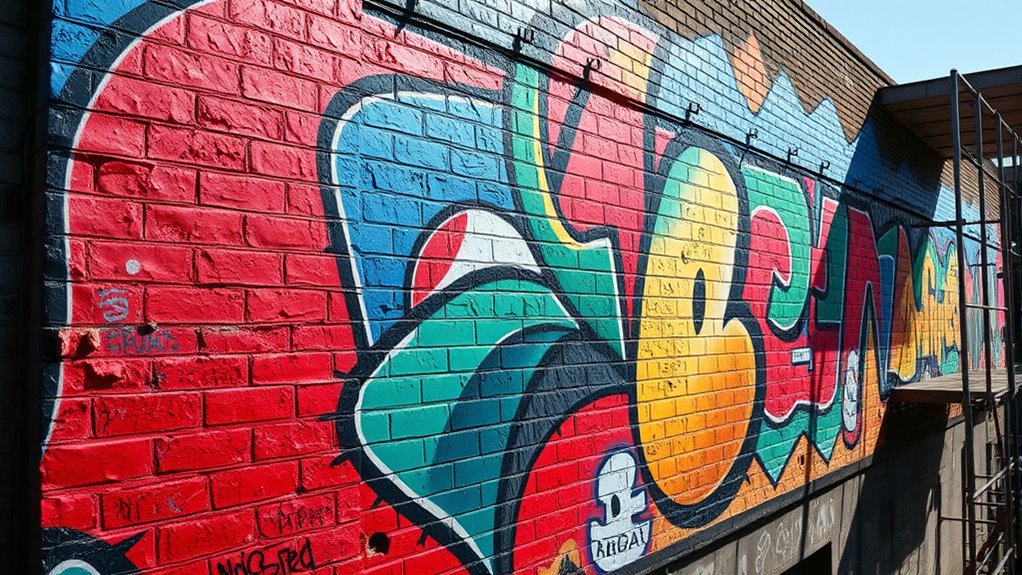

Preserving murals that can’t be moved is challenging because you must navigate legal issues like ownership rights and city regulations, which can slow down protection efforts. Community support is crucial, but balancing the art’s significance with urban development pressures can be tough. Weather, vandalism, and neglect threaten their survival, so maintenance and restoration are vital. To guarantee murals endure, understanding these obstacles is key—exploring solutions can help safeguard these irreplaceable artworks for generations to come.

Get art and craft supplies delivered free — and shop member deals
- Fast, free delivery on millions of items
- Access to Prime Big Deal Days deals on October 6–7
- Prime Video, Amazon Music and more included
Key Takeaways
- Legal restrictions and property rights often prevent relocating murals, making preservation on-site essential.
- Securing legal protection requires navigating complex bureaucratic processes and gaining community and official support.
- Environmental factors like weather, vandalism, and neglect threaten the longevity of immovable murals.
- Urban development pressures can lead to mural removal, necessitating proactive legal and advocacy efforts.
- Preservation strategies include documentation, professional restoration, protective coatings, and ongoing maintenance.
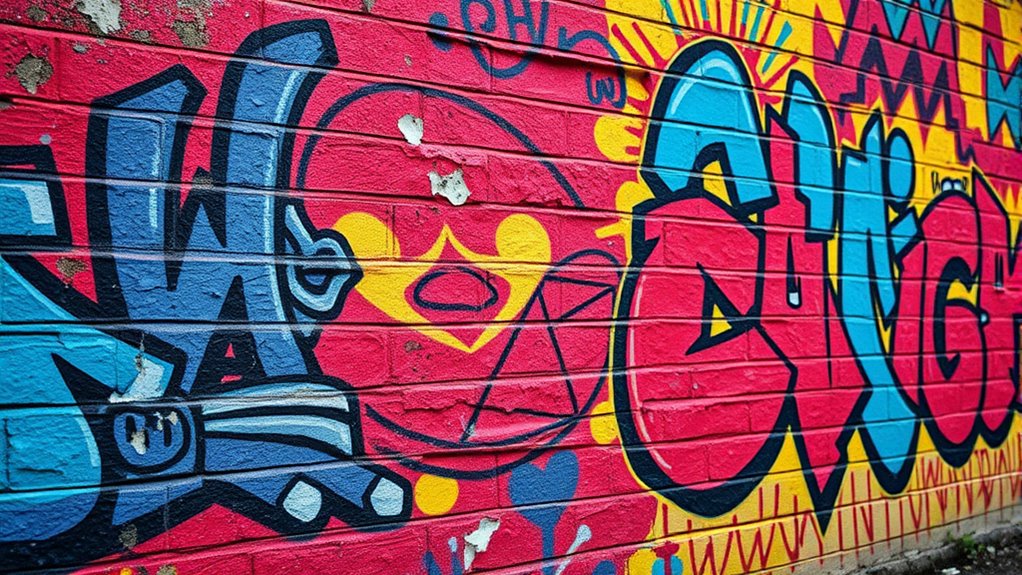
Have you ever wondered how to protect the vibrant, often fleeting murals that define our city streets? Street art is more than just colorful images on building walls; it’s a reflection of community identity, culture, and history. But preserving these artworks isn’t straightforward. Unlike sculptures or installations that can be moved or stored, murals are painted directly onto buildings, making their preservation a complex challenge. You need to consider legal challenges, community engagement, and the delicate balance between artistic expression and urban development.
Legal obstacles often stand in the way. Many murals are created on privately owned buildings, which means the artist or community typically needs permission from property owners. If a mural is painted without consent, it may be considered vandalism, risking removal or legal action. City ordinances and regulations can also restrict mural creation or preservation, especially if they violate zoning laws or building codes. Securing legal protection for murals requires maneuvering bureaucratic processes, which can be time-consuming and uncertain. Some cities have started implementing policies or landmark designations to safeguard certain murals, but these efforts often face opposition from property owners or developers eager to alter or demolish the buildings involved. Understanding how urban spaces are managed and regulated is essential for effective preservation.
Legal hurdles and property rights complicate mural preservation efforts.
Community engagement plays a vital role in the preservation process. When local residents and artists are involved from the start, they’re more likely to support efforts to protect murals. Building strong relationships with property owners, neighborhood associations, and city officials helps foster a sense of collective responsibility. Community-led initiatives, such as mural preservation committees or public art programs, can rally support and provide resources for conservation. Public awareness campaigns highlight the cultural significance of murals, encouraging locals to see them as assets worth defending. When communities rally behind these artworks, they’re less likely to be erased in the name of urban renewal or modernization. Additionally, educating the public about the cultural value of murals can strengthen community support and involvement. Recognizing the economic benefits of public art can also motivate stakeholders to prioritize mural preservation.
However, even with legal protections and community backing, murals face threats from neglect, weather, and vandalism. The paint can fade or peel, and the building’s structural changes might inadvertently damage the artwork. Preservation efforts often involve careful documentation, professional restoration, and sometimes applying protective coatings to extend the mural’s life. Additionally, understanding local regulations can help artists and communities navigate the legal landscape more effectively. An important aspect of preservation involves long-term maintenance to address ongoing deterioration and environmental exposure. Ultimately, protecting murals requires a proactive approach—balancing legal strategies with ongoing community support. You have a role in advocating for these public artworks, ensuring they’re not just temporary visual statements but lasting parts of your city’s cultural landscape.
As an affiliate, we earn on qualifying purchases.
Frequently Asked Questions
How Do Weather Conditions Affect Mural Preservation?
Weather conditions directly impact mural preservation by affecting their durability and longevity. Climate variability, like heavy rain, intense sunlight, or freezing temperatures, can cause paint to fade, peel, or crack over time. You should consider how weather fluctuations weaken the mural’s surface and materials, making it harder to maintain its original appearance. Proper protective coatings and regular upkeep help mitigate weather-related damage, ensuring your mural stays vibrant longer.
What Legal Protections Exist for Street Art?
You might think street art isn’t protected, but copyright enforcement helps artists safeguard their work. Property rights also come into play since landowners control what stays or gets painted over. While some cities offer legal protections or permits, these aren’t absolute. To truly preserve murals, you need to support laws that recognize street art as cultural property, ensuring artists’ rights are respected and their work remains accessible.
Can Digital Technology Help Preserve Murals?
You can use digital technology like virtual reality and digital archiving to preserve murals effectively. Virtual reality lets you experience murals in a simulated environment, capturing their details and atmosphere. Digital archiving creates a detailed record of the artwork, ensuring future generations can appreciate it even if the mural is lost or damaged. These tools help you protect and celebrate street art, overcoming physical limitations and enhancing long-term preservation efforts.
How Do Community Attitudes Influence Mural Conservation?
Ever wondered how community attitudes shape mural conservation? Your perception greatly impacts efforts to preserve murals; if the public values the artwork, they’re more likely to support vandalism prevention and maintenance. Positive public perception fosters respect, encouraging community involvement and protecting murals from damage. Conversely, apathy or negative attitudes can lead to neglect or vandalism. By engaging with locals and raising awareness, you help make certain these murals are cherished and preserved for future generations.
What Funding Options Are Available for Preservation Efforts?
You should explore various funding options like grant opportunities and sponsorship options to support preservation efforts. Grants from government agencies or arts organizations can provide substantial financial aid, while local businesses or community sponsors might contribute through sponsorship programs. By actively seeking out these funding sources, you can secure the necessary resources to maintain murals, ensuring they remain a vibrant part of your community for years to come.
professional mural restoration kit
As an affiliate, we earn on qualifying purchases.
As an affiliate, we earn on qualifying purchases.
Conclusion
So, next time you marvel at a vibrant mural, remember it’s basically a ticking time bomb of impermanence. Sure, we can try to preserve it, but let’s face it—art that can’t be moved is basically begging for a permanent home, or a permanent erasure. Maybe the true masterpiece is the fleeting nature of street art itself, reminding us that nothing lasts forever—except, of course, the graffiti cleanup crew’s busy schedule.
As an affiliate, we earn on qualifying purchases.
As an affiliate, we earn on qualifying purchases.
Fall Picks
fall essentials
As an affiliate, we earn on qualifying purchases.