Hyperlocal storytelling in community murals transforms public spaces into visual narratives that showcase your neighborhood’s unique history, culture, and identity. Through collaborations with local artists and community members, these murals capture authentic perspectives and foster pride. They turn walls into open-air galleries, preserving stories and sparking curiosity about your area’s past. To discover how these vibrant projects create meaningful connections and celebrate local spirit, explore further.

Get art and craft supplies delivered free with Prime
- Fast, free delivery on millions of items
- Prime Video, Amazon Music and more included
- Member-only deals all year
Key Takeaways
- Community murals serve as visual narratives that highlight local history, culture, and identity, fostering neighborhood pride.
- They are created through collaborative processes involving community members, artists, and historians, ensuring authentic storytelling.
- Murals connect residents to their neighborhood’s roots by incorporating historical symbols, key figures, and local stories.
- They transform public spaces into open-air archives, promoting cultural preservation and collective memory.
- Hyperlocal storytelling via murals enhances community engagement, education, and long-term neighborhood enrichment.
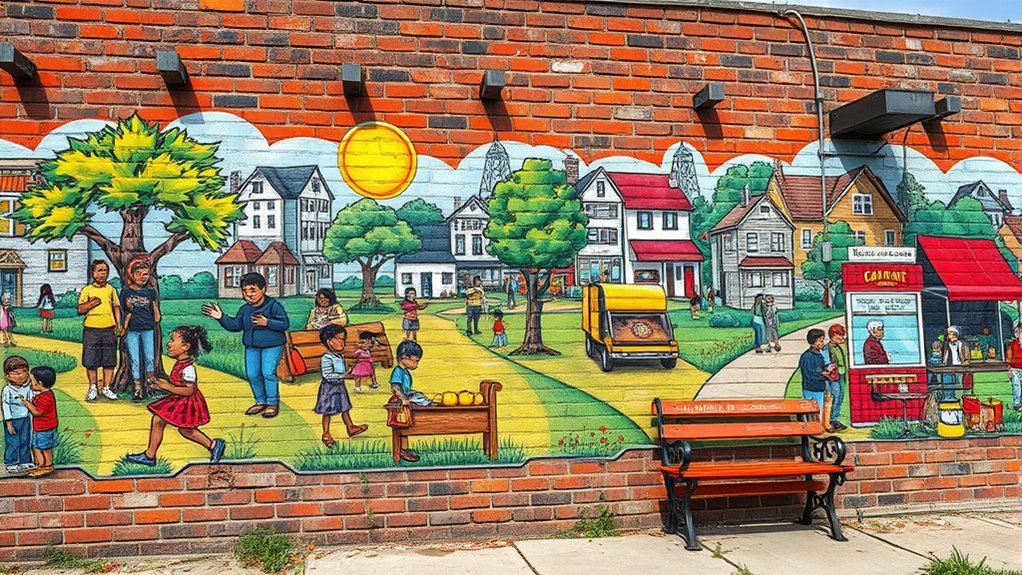
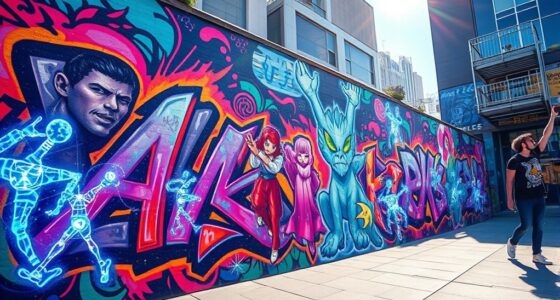
Community murals have become powerful tools for telling local stories, capturing the unique history, culture, and identity of neighborhoods. When you walk through a vibrant neighborhood, you might notice murals that seem to breathe life into the walls, each telling a story that’s deeply rooted in the community’s past. These murals often result from local artist collaborations, where painters, illustrators, and community members come together to create something meaningful. By working with artists from within the neighborhood, the murals reflect authentic perspectives, ensuring that the stories told are genuine and resonate with residents. This approach fosters a sense of ownership and pride, as people see their history and culture visually celebrated in public spaces.
Community murals tell authentic local stories, celebrating neighborhood history and culture through collaborative, meaningful art.
The process of developing these murals often begins with an in-depth exploration of neighborhood history. Community organizers and artists collaborate to identify key moments, figures, or symbols that define the area. This could be anything from historic events, local traditions, or notable personalities who shaped the community’s identity. When you engage with these murals, you’re not just admiring artwork; you’re experiencing a visual narrative that connects you to the neighborhood’s roots. It’s a way to preserve and promote local history, especially in areas where oral traditions or archives may be limited. By integrating historical elements into the artwork, the murals serve as educational tools, sparking conversations and curiosity among residents and visitors alike. Incorporating local history into public art helps ensure that the stories conveyed are accurate and meaningful.
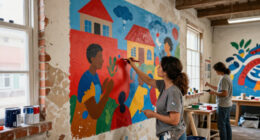
Local artist collaborations are essential because they bring a diverse range of skills, styles, and perspectives to the project. These partnerships often include community members, historians, and youth groups, making the mural a collective effort that embodies the neighborhood’s spirit. When you see a mural created through such collaborations, it’s clear that the artwork is more than just a visual display; it’s a community effort rooted in shared history and identity. This collective creation process ensures that the mural isn’t just imposed from the outside but is instead a reflection of local voices. It makes the artwork more meaningful and relatable, strengthening the bonds between residents and their community.
In essence, community murals driven by local artist collaborations and neighborhood history turn public spaces into open-air galleries of storytelling. They highlight what makes each neighborhood unique and provide a visual archive of its journey. As you stand before these murals, you gain insight into the community’s identity, feeling connected to its past while witnessing its ongoing story. These murals are more than art—they’re a celebration of local culture, history, and collective memory, enriching the fabric of the neighborhood for generations to come.
community mural painting supplies
As an affiliate, we earn on qualifying purchases.
As an affiliate, we earn on qualifying purchases.
Frequently Asked Questions
How Do Community Murals Influence Local Youth Engagement?
Community murals inspire local youth by fostering teen empowerment and strengthening cultural identity. When you get involved, you can express your unique stories and values through art, making a positive impact on your neighborhood. These murals create a sense of ownership, boost confidence, and encourage collaboration among peers. As a result, you feel more connected and motivated to contribute to your community’s growth and vibrancy.
What Funding Sources Support Hyperlocal Mural Projects?
You can find funding for hyperlocal mural projects through grant opportunities and sponsorship partnerships. These sources support your vision by providing financial backing, fostering community involvement, and encouraging local artists. Applying for grants from arts organizations, local government programs, or cultural foundations can open doors. Building sponsorship partnerships with businesses or community groups strengthens your project’s resources and impact, making your mural a vibrant symbol of local stories and collective pride.
How Is Community Consent Obtained for Mural Themes?
You obtain community consent for mural themes by conducting community surveys to gather input and understand residents’ preferences. You also engage in artist negotiations to make sure the mural aligns with community values. This collaborative process helps you build trust, ensure the project reflects local identity, and foster a sense of ownership among residents, ultimately making the mural a meaningful and accepted addition to the neighborhood.
What Are the Best Practices for Maintaining Mural Longevity?
To maintain mural longevity, you should prioritize mural preservation by applying weatherproofing techniques, such as sealants and UV-resistant coatings. Regular inspections help you spot early signs of damage, allowing prompt touch-ups. Keep the mural clean by gently washing it and avoid harsh chemicals. Protect it from extreme weather conditions whenever possible, and engage the community in preservation efforts to guarantee the mural remains vibrant and impactful over time.
How Can Digital Media Enhance Storytelling in Murals?
Digital media enhances storytelling in murals through augmented reality, allowing you to bring static images to life and create immersive storytelling experiences. When viewers scan the mural with their smartphones, they can access interactive content, videos, or audio that deepen the story behind the artwork. This tech integration engages your audience more deeply, making the mural a dynamic conversation and fostering a stronger community connection through innovative, immersive storytelling.
As an affiliate, we earn on qualifying purchases.
Conclusion
You’ll find that community murals truly transform neighborhoods, making stories come alive visually. Did you know that nearly 70% of residents feel more connected to their community when murals reflect local history and culture? By embracing hyperlocal storytelling, you help foster pride and unity. So, next time you see a mural, remember it’s more than art—it’s a powerful way to share your neighborhood’s unique story and strengthen community bonds.
As an affiliate, we earn on qualifying purchases.
As an affiliate, we earn on qualifying purchases.
Fall Picks
fall essentials
As an affiliate, we earn on qualifying purchases.