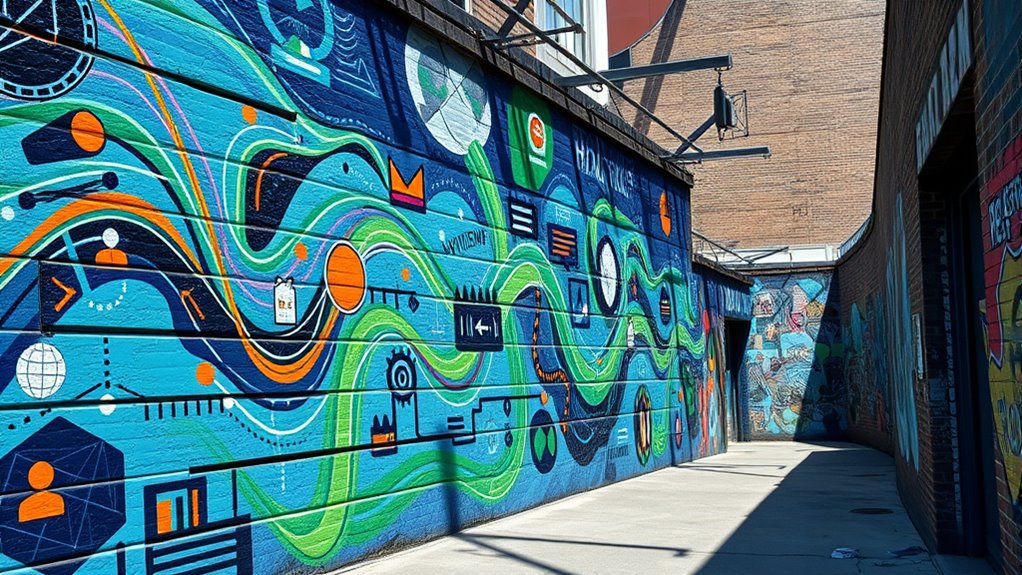

Data visualization murals for public awareness transform neighborhoods by blending striking art with crucial information about community issues. They invite you to engage directly, revealing insights through interactive visuals like maps and infographics, making complex data easily understandable. These murals foster community involvement, spark conversations, and inspire action on topics like health, climate, and social justice. If you’re curious about how these innovative murals can boost awareness, keep exploring—they hold powerful stories and solutions.

Get art and craft supplies delivered free with Prime
- Fast, free delivery on millions of items
- Prime Video, Amazon Music and more included
- Member-only deals all year
Key Takeaways
- Integrate vibrant visuals with impactful data storytelling to transform public spaces into engaging awareness hubs.
- Employ interactive elements like touch or scan features to deepen community engagement and understanding.
- Use accessible infographics, charts, and maps to simplify complex data for diverse audiences.
- Highlight local social, health, and environmental issues to foster community participation and collective action.
- Leverage advanced visualization techniques to enhance clarity, inspire dialogue, and promote social awareness through murals.

Have you ever wondered how art and data can come together to create powerful storytelling? When you see a mural that combines vibrant visuals with compelling information, it’s not just eye-catching—it’s a tool that can inform, inspire, and mobilize communities. Data visualization murals are transforming public spaces into interactive art hubs, where complex data is translated into accessible, engaging stories. These murals serve as a bridge between raw numbers and everyday experiences, making information more relatable and memorable. By integrating data into public art, you help foster community engagement, encouraging residents to connect with issues that matter most. This approach transforms passive viewers into active participants, sparking conversations that can lead to tangible change.
Art and data merge to create engaging murals that inform, inspire, and activate communities.
Interactive art plays an essential role in this process. When you encounter a data visualization mural designed to be interactive, you’re invited to engage directly with the information. This might mean touching, moving, or even scanning parts of the mural to reveal additional insights. Such interactivity stimulates curiosity and deepens understanding, turning passive observation into active exploration. For example, a mural about local air pollution might include touch-sensitive elements that show real-time data or personal stories from community members affected by environmental issues. This dynamic interaction makes the data feel immediate and relevant, encouraging you to reflect on your own role within the community. It’s a powerful way to foster community engagement, as people feel more connected when they can participate directly and see the tangible impact of their involvement.
Furthermore, data visualization murals are effective because they transform abstract or intimidating data into visually compelling narratives. When you see charts, maps, or infographics integrated into street art, you don’t need a background in statistics to grasp the message. The visual storytelling captures your attention and makes complex issues more approachable. This accessibility invites more community members to get involved, regardless of their familiarity with data analysis. As more people engage with the mural, conversations emerge, and collective awareness grows. These murals often highlight local problems—such as public health, climate change, or social justice—making the issues feel urgent and personal. When you see your community reflected in these visuals, you’re more likely to feel motivated to participate in solutions.
In essence, data visualization murals are more than just art—they’re catalysts for community engagement through interactive storytelling. They leverage the power of visual and tactile experiences to make data meaningful and memorable. By merging art with information, these murals inspire you and your neighbors to take action, fostering a sense of shared purpose and collective responsibility. When art becomes a platform for data, it transforms public spaces into vibrant arenas for awareness, dialogue, and change. Additionally, incorporating data visualization techniques into public art can enhance the clarity and impact of the message, making complex information more digestible for diverse audiences.
interactive data visualization murals
As an affiliate, we earn on qualifying purchases.
As an affiliate, we earn on qualifying purchases.
Frequently Asked Questions
How Do Murals Impact Long-Term Public Awareness?
Murals crucially boost long-term public awareness by fostering mural engagement that sticks with viewers. As people encounter the vibrant visuals, they’re more likely to remember the message, leading to increased awareness retention. You notice that murals turn passive viewers into active participants, encouraging ongoing conversations and community involvement. Over time, this sustained engagement helps embed essential messages deeply into the public consciousness, creating lasting awareness that outlives temporary campaigns.
What Materials Are Best for Outdoor Data Murals?
You should choose durable materials like weather-resistant vinyl, high-quality exterior paints, or ceramic tiles for outdoor data murals. These materials withstand environmental factors, ensuring longevity. Incorporate interactive storytelling elements and focus on environmental sustainability by selecting eco-friendly paints and sustainable materials. This approach not only enhances engagement but also emphasizes your commitment to sustainability, making your murals more impactful and lasting in outdoor settings.
How Do Artists Ensure Accuracy in Data Visualizations?
You guarantee data accuracy by thoroughly investigating the underlying data sources and verifying their credibility. You cross-check figures, consult experts, and stay updated on recent research to maintain artistic integrity. By meticulously fact-checking and choosing clear visual elements, you prevent misinterpretation. This careful approach guarantees your murals accurately represent complex ideas, fostering trust and understanding among viewers while upholding the integrity of your artistic message.
What Are the Costs Associated With Creating Data Murals?
You should start with cost estimation to understand the expenses involved in creating data murals. Budgeting strategies help you allocate funds effectively for design, materials, labor, and installation. Keep in mind that costs vary based on mural size, complexity, location, and the artist’s rates. Planning ahead and comparing quotes guarantees you stay within your budget while achieving a powerful visual impact for public awareness.
How Can Community Feedback Shape Mural Design?
Have you ever wondered how community feedback can transform a mural? Your input fuels community engagement and guides design collaboration, ensuring the mural resonates deeply with local values. By involving residents early, you help identify what messages matter most, making the artwork more impactful. This collaborative process fosters a sense of ownership, inspiring pride and awareness. Isn’t it powerful when a mural truly reflects the community it serves?
public awareness mural art supplies
As an affiliate, we earn on qualifying purchases.
As an affiliate, we earn on qualifying purchases.
Conclusion
As you step back, the vibrant murals come alive, their swirling colors and intricate patterns telling stories of data woven into the very fabric of the city. You feel the pulse of awareness radiate from each brushstroke, transforming blank walls into powerful narratives. These murals don’t just catch the eye—they ignite curiosity and inspire change, turning public spaces into open books of knowledge. In this vivid tapestry, data becomes a shared vision, waiting to be explored.
As an affiliate, we earn on qualifying purchases.
digital interactive mural displays
As an affiliate, we earn on qualifying purchases.
As an affiliate, we earn on qualifying purchases.
Halloween Picks
halloween
As an affiliate, we earn on qualifying purchases.